Insurance & Legal Matters

Experts on insurance and legal matters in the restoration and remediation industries offer advice and guidance for legal issues facing your company, and liability insurance questions you may have.

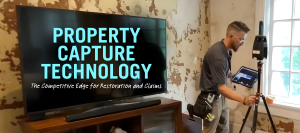
Property Capture Technology: The Competitive Edge for Restoration and Claims

Introduction Documenting a kitchen fire in a two-bedroom home is typically straightforward. Capturing damage across a 24-unit apartment building, fast, accurately, and in a way that stands up months later? That’s a different challenge. For Deft Group, a Florida-based claims adjustment firm, this challenge grew as their projects became larger and more complex. They needed a way to scale without sacrificing accuracy or client trust. Meanwhile, Flood Out Restoration in East Texas, a firm specializing in water damage restoration, faced a similar challenge from a different angle. Manual documentation of property damage was consuming

Read More »

Ask Kris Anything: How Do I Get Paid for the Work the Adjuster Says “Isn’t Necessary”?

If you’ve been in this business for a while, you’ve probably had an adjuster look at your estimate and tell you, “We don’t pay for that; it isn’t necessary.” You know the feeling. You completed the work, took the photos, logged the moisture readings, sent the invoice, and still, they say no.  Here’s the hard truth: adjusters don’t pay for work; they pay for proof. It’s not that your work was wrong. It’s that your estimate didn’t speak their language. Now, before you criticize me for this, this doesn’t include bad actors, people dealing

Read More »

Right Help, Right Time

Growth in a restoration or trade contracting business often presents an intriguing paradox. In the early days, the challenges revolve around finding jobs, doing good work, and keeping customers happy. But once a business begins to scale—moving past the owner’s immediate reach and into that stage where more employees, more systems, and more money are in play—new challenges often surface. Suddenly, it’s no longer about whether the work can be done. It’s about whether the team, the systems, and the leadership can keep up with the work already in hand. For many contractors, it’s

Read More »

M&A Q&A: The Real Question Very Few Are Asking… But Should

Currently, the two most common questions in the transaction world are: “What’s happening with ‘multiples’?” and “Are deals still getting done in 2025?” A brief foundation as to why these questions are being asked. First, it’s clear ’23–’24 was a mild winter, then again in ’24–’25.  According to various industry consultants, slightly more than 70% of contractors reported reduced gross sales during this period.   Secondly, we’re in a particularly dark time when viewing carrier/contractor relationships.  Over the past 24-36 months, disasters in California and Florida have (in theory) placed a strain on the

Read More »

Closing the Confidence Gap: How the Industry Can Lead with Clarity

The insurance experience has a reputation for being a confusing, frustrating process that homeowners must endure to protect their assets. Yet, recent data from DocuSketch, focused on US-consumers aged 25 and older, shows 74% say they feel confident in their understanding – though that confidence may be rooted more in assumption than actual clarity.  Additionally, DocuSketch’s data shows that 23% of homeowners admit to feeling confused by policy language. Misconceptions around vague or misunderstood policy terms can slow down the claims cycle, creating further frustrations and misunderstanding between policyholders and carriers, especially as extreme

Read More »

How Vendors Are Treated in an Acquisition

When companies are purchased, they are often purchased mid-stride. That is, the closing occurs at a point in time when receivables and payables are outstanding for ongoing work, services, equipment, and supplies. How vendors and subcontractors of an acquired company are treated may depend on the nature of the transaction and the underlying vendor contracts. Acquisitions may be of stock or assets, and in the latter situation, a purchase of the assets of a distressed company (as opposed to the shares) could leave some vendors of the acquired company exposed and vulnerable. These assets

Read More »

The Future of Claims Management: How to Utilize Technology to Build Back Stronger Amid Disaster Recovery

In the wake of large-scale disasters—whether wildfires, hurricanes, or flooding—insurance carriers and restoration professionals face the challenge of processing an overwhelming volume of claims quickly and accurately. For instance, following the aftermath of the LA wildfires, insurance carriers and restoration professionals have been inundated with claims as damage estimates total more than $250 billion. The increasing severity and frequency of catastrophic (CAT) events demand faster, tech-driven solutions to accelerate claims processing and reduce friction between contractors, carriers, and policyholders. Restoration professionals can help transform the claims cycle by leveraging emerging technology and enhanced collaboration.

Read More »

Should I Join a TPA?

The “million dollar question” – should your restoration company take on TPA work? With 18 years of experience, including running a large firm heavily involved with TPA claims, I’ve seen it all. Now, as a consultant, I’m struck by the amount of confusion surrounding this decision. So, instead of speculation, let’s break down the five critical factors you need to evaluate before entering the TPA arena. Five Things You Should Know Before Joining a TPA Third-party administrators (TPAs) are a significant part of the property and casualty insurance world, and deciding whether to partner

Read More »

A Closer Look at the New ANSI/IICRC S590 HVAC Assessment Standard

The Heating, Ventilating, and Air Conditioning (HVAC) assessment process in the ANSI/IICRC S590 identifies impacted and non-impacted HVAC internal surfaces after a water, fire, or mold damage event. This Standard contains procedures to perform HVAC assessments and create a written report and Restoration Work Plan (RWP) of work for residential, commercial, institutional, and healthcare buildings. The document lists methods and procedures to determine visual deposition and odor retention.  HVAC systems may be impacted by event-related particulates regardless of whether the unit was operational during the event. Conversely, the presence of event-related particulates in the

Read More »

Motor Truck Cargo Coverage for Restoration Contractors in California

In California, restoration contractors doing pack outs must adhere to specific state licensing requirements.  These requirements apply to those companies that move or store clients’ belongings. The Bureau of Household Goods and Services (BHGS) oversees these regulations to ensure consumer protection.​  If your restoration services include transporting or storing clients’ household goods, such as during a “pack-out” for cleaning or repairs, one is required to obtain a Household Mover permit from BHGS. This mandate has been in effect since July 1, 2018, under the Household Movers Act. Operating without this permit can lead to

Read More »
Latest Posts
Most Popular