Atop a Milwaukee-area high school sits a century-old copper dome — a landmark that has gained both local and national attention for its historic integrity and beauty. On the outside, the dome gleamed in the morning sun as students filed into the school for class, and architectural enthusiasts snapped photos from the sidewalk. The inside of the dome, though, was a different, darker place.
PROJECT OVERVIEW
Below the 34-feet-wide dome (17 feet and 2 inches high from floor to central ceiling) was a classroom — its domed ceiling below the exterior copper. Water damage from the area between the two domes was causing the ceiling plaster to disintegrate and fall. An indoor environmental professional (IEP) was concerned that birds and bats may have been trapped inside the dome for an extended period of time, and upon visual inspection, it was determined that this was accurate.
The assignment was to remove all debris from the dome and then to inspect and clean the dome’s century-old wood truss system. The scope of the project changed dramatically after the Kelmann Restoration team arrived on-site to set engineering controls and make inspection openings. “Based on our initial inspections, we had a sense of what type of contaminated debris was involved,” says Dave Schultz, environmental services manager at Kelman. “However, we were surprised as we started the removal phase. The amount was far greater than we had originally accounted for. The debris was not only under the dome but continued into the wall cavities. It became apparent that we were removing contaminated remains that had origins of around a century.”
Before the dome could be restored to its original, historic essence, the substrate had to be cleaned of any debris.
Between the domes were layers upon layers of dead birds and bats, their droppings, and even petrified eggs. Guano and feces completely coated the dome’s wood truss system. The health and safety issues of removing these extremely hazardous materials from the school had multiplied significantly.
GETTING IT DONE
On-site, there were 10 technicians, project lead Scott Kohls, and project manager, Dan Zimmerman. Regular communication with all parties at the school and the IEP was essential, mostly because of the potential challenges, uniqueness, and sensitivity around the project. “This project was unique in that it had so many elements,” Schultz says. “It was a school. It was a historic dome and building. It is an icon in the community. The nature of contamination was both extreme and abundant. The project was sensitive due to those issues.”
The team highlighted several potential problem areas that were focused on throughout the project’s duration:
A closer look at the high school’s copper dome.
Water damage from the area between the two domes was causing the ceiling plaster to disintegrate and fall.
HISTORICAL SITE
The historic nature of the building meant that particular care would need to be taken as they cleaned the interior of the dome, as its wood truss system was over 100 years old.
PUBLIC SENSITIVITY
The dome’s “fame” and architectural value meant that eyes would be on the project. The school was sensitive to any kind of attention since the project dealt with potential health and safety issues of students. Discretion and expediency were key.
TIME CONSTRAINTS
The students had to come back. Summer school and other programs were taking place during the time of the project, but this particular classroom was not in use.
HEALTH AND SAFETY ISSUES
The biggest challenge was the amount of debris inside the dome — accessing it and removing it from the dome and the building. With this issue came myriad health and safety concerns, as well as cost constraints. The workers and the school community needed to be protected from potential avian pathogens as well as other bacteria or diseases carried within the remains.
The classroom was sealed-off to everyone except Kelmann authorized personnel. Engineering controls including containment, barriers, and decontamination chambers were established. The classroom was prepared for remediation, and all efforts were made to maintain the integrity of the space both during and after construction.
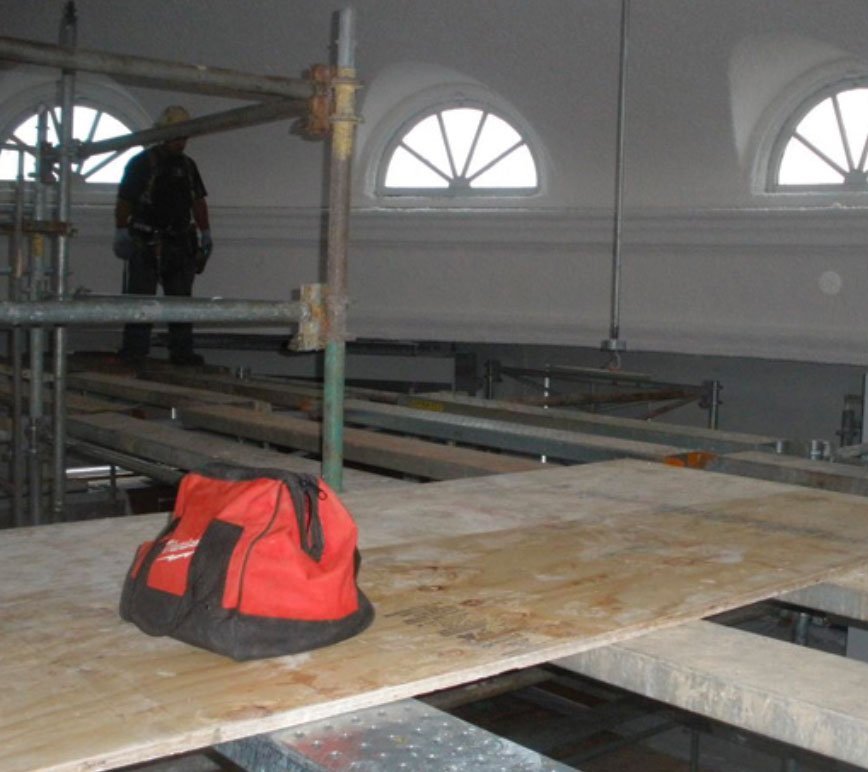
Kelman designed a platform scaffolding system, allow- ing the team to work safely at the level of the project rather than on lifts or ladders, while also increasing efficiency. Due to concerns with avian pathogens and other airborne bacteria, HEPA scrubbers were deployed to produce a negative air pressure within the workspace, and all workers wore full PPE, including full-faced HEPA respirators, Tyvek suits, gloves, and boots.
It was time to actually remove all of this hazardous debris. Once the 6-mil plastic bags were filled, they were gooseneck tied and lowered onto the floor of the classroom below. More than 1,000 bags (40,000 pounds) of debris were removed and disposed of. Taking the debris out through the many flights of stairs in the school was not an option, so Kelmann designed a way to dispose of the hazardous material by taking the bags up and off the roof with a special lift. A safe path was established to deliver bags of materials up from the dome and to the
This temporary work platform allowed workers to access the dome safely and quickly, and for a reduction in remediation and restoration time.
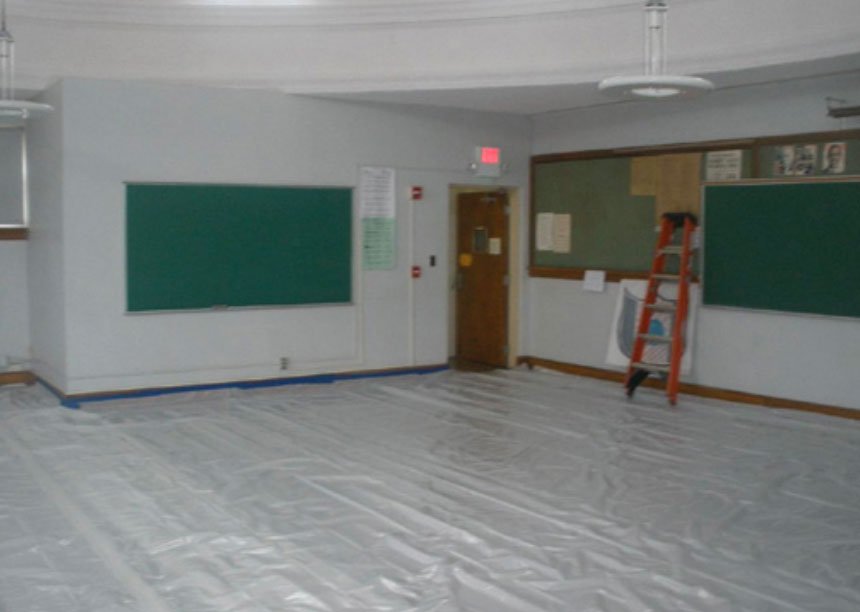
The classroom is prepared for remediation. All efforts were made to maintain the integrity of the space both during and after construction.
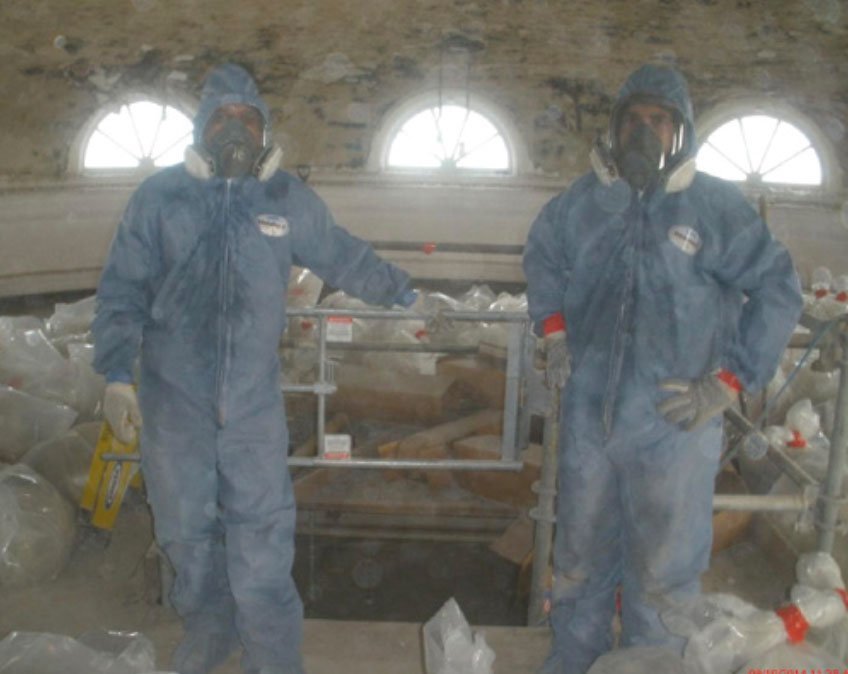
All workers wore full PPE, including full-faced HEPA respirators, Tyvek suits, gloves, and boots.
The RIA Phoenix Awards are presented each year to recognize achievement in the industry, and the winning projects exemplify the skills and talents required to return a structure to pre-loss condition. This is Kelmann’s sixth Phoenix Award. edge of the school’s roof, where it was lifted down to a dumpster waiting below. Several dumpsters were filled and removed.
After the waste was disposed of, it was time to remove the debris from the historic wood truss system. Several methods of wood restoration were suggested, and Kelman determined dry ice blasting would yield the most cost-savings benefits. Dry-ice blasting cleaned the dome’s wood beams, as blasting with another media would have introduced material that would have become contaminated. Dry ice sublimates, reducing clean-up. Extensive dry-ice blasting was required to clean all of the exposed beams.
Upon completion, the project passed the post-remediation verification test ran by the school’s environmental consultant on the first try. The project took a total of 10 weeks to complete.
“Being in business for over 42 years, you think you have seen it all,” Schultz says. “This, however, is the restoration industry. Each day brings us new challenges. At Kelman, we believe we are especially resourceful. Also, we have team members that have been with us for many years. Our project manager, Dan Zimmerman, has been with us for nearly three decades. This project was unique, yet it was Dan’s years of experience that were key in both the planning and the execution of this sensitive mission.”
INNOVATIVE PROCEDURES
Because of the uniqueness of this project, Kelman was able to find creative solutions to ensure its overall success, through its safety precautions, decision to use cryoblasting, its communication system, and waste removal system.
Related Posts