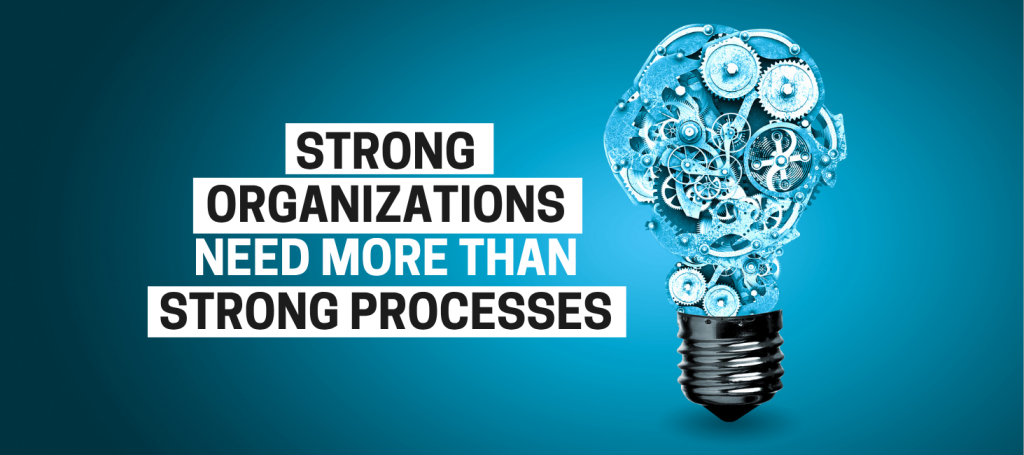
In restoration, operational discipline matters. But so do belonging, coaching, growth, and trust. The strongest organizations are built when leaders stop treating people and performance as separate priorities.
In restoration, weak systems and weak leadership rarely stay hidden for long.
The pace is too fast, the stakes are too high, and too many people depend on one another for the work to move smoothly. A single unclear hand-off can affect documentation, estimating, customer communication, job progress, and ultimately the financial outcome of a project. That environment has shaped how I think about organizational leadership.
Over time, I have become convinced that the strongest organizations are not built by choosing between people and performance. They are built by intentionally developing both. One approach to leadership emphasizes performance: standards, processes, accountability, execution, measurement, and results. Another emphasizes people: culture, belonging, coaching, development, purpose, and trust.
But both matter; neither is enough by itself.
A process can provide structure, but a person still has to execute it. A standard can define what good looks like, but someone still has to be coached toward it. A leader can demand accountability, but employees first need clarity around what they own. And an organization can invest heavily in culture, but belonging without expectations, will not create sustainable results.
People need structure to succeed, and they need connection to care about succeeding together.
Clarity Is a Form of Respect
One of my strongest leadership beliefs is that clarity is one of the highest forms of respect we can give an employee.
When people do not know what is expected, they are forced to guess. They guess what the priority is. They guess who owns the next step. They guess when something should be escalated. They guess what success looks like. In restoration, those guesses can become delays, rework, frustrated customers, missed documentation, and financial consequences.
Clarity removes the guesswork.
But communication is not complete simply because something was said. A message can be delivered without being understood. It can be understood without being believed. And it can be believed without ever being executed. Leaders have a responsibility to make sure people understand where they fit, what they own, and how their work connects to others. That connection is also where belonging begins.
This “belonging” is more than being included socially or getting along with coworkers. It is the belief that I have a place here, my contribution matters, and I am a part of something larger than my own task list.
In restoration, no role operates in isolation. A technician’s documentation can affect an estimator. An estimator’s accuracy can affect a project manager. A project manager’s communication can affect the customer experience. A coordinator’s follow-through can affect cash flow.
When people understand these connections, they stop seeing their work as a collection of isolated tasks and begin seeing it as part of a shared outcome.
That creates unity.
Standards Need Coaching
I also believe people deserve to know what good looks like. Without clear standards, accountability becomes subjective. Employees can be told they are falling short of expectations they never fully understood. But standards alone are not enough. If we expect people to grow, leaders also have to coach. Training teaches the skill. Coaching develops the person.
That distinction matters in restoration because technical knowledge alone rarely makes someone successful. Employees also need judgment, communication skills, confidence, decision-making ability, and the ability to respond when a job does not go according to plan. And jobs rarely go exactly according to plan.
Coaching can sometimes be viewed as time away from production. I see it differently. A lack of coaching often shows up later as repeated mistakes, poor judgment, unnecessary escalations, weak delegation, unresolved conflict, and dependence on senior leaders. The time is going to be spent somewhere.
The question is whether we invest it proactively in development or spend it reactively correcting preventable problems.
Great Processes Should Create Great People
Processes matter for the same reason.
I do not believe companies need to depend on rock stars. I believe great processes and willing employees create rock stars. Most restoration companies have experienced the person who seems to know everything. They know what documentation is missing. They know how a particular carrier wants the file. They know which subcontractor to call. They know the workaround when the normal process breaks down.
That person can be incredibly valuable. But when the organization cannot function without them, their value may also be exposing a weakness. Heroics solve today’s problem. Strong systems help prevent tomorrows. A good process allows knowledge to be shared, instead of protected. It creates consistency, helps people understand what happens next, and reduces dependence on individual memory. But processes should not become a substitute for professional development.
As people become more capable, the organization’s capacity grows with them. Sustainable growth cannot depend on the same few people doing more and more. Eventually, organizations have to expand the capability of the people within them. That means teaching skills, developing judgment, creating opportunities for greater responsibility, and allowing people to grow into more complex work.
Confidence Is Built Through Evidence
Execution gives people the opportunity to experience their own capability.
I believe confidence is built through evidence. It grows when someone successfully completes a project. It grows when a manager gives an employee an important responsibility because they trust them. It grows when someone is asked to help because their knowledge or ability has value.
In restoration, that may be leading a complicated loss for the first time, managing a difficult customer conversation, training a newer employee, or completing a project that once would have required constant managerial involvement.
Encouragement matters, but confidence cannot simply be handed to someone. Meaningful responsibility and successful execution are what give people proof.
They begin to think, “I can do this.”
That creates pride in their work.
And when execution does not go well, strong leaders diagnose before they correct. The first question should not always be, “Why didn’t this person execute?” Sometimes the better question is, “Did they understand the task?”
Was the expectation clear? Was the standard defined? Was the process workable? Did the employee have the skill, training, resources, and authority needed to succeed?
If those things were missing, leadership has something to own. If all of those things were present and the employee chose not to execute, then accountability matters too.
Strong leadership is knowing the difference.
Leadership Owns More as Authority Increases
Accountability should protect the standard without becoming a shortcut to blame.
Employees should understand what they own, have the resources and authority required to perform, communicate when something is preventing success, and ultimately take responsibility for the result. The same expectation applies to leadership.
In fact, I believe the higher someone sits in an organization, the broader their ownership should become. Authority and accountability should rise together.
Restoration will always involve urgency, uncertainty, emotional customers, complex jobs, and imperfect conditions. We cannot eliminate all of that. But we can build organizations that are better prepared for it.
Clear expectations matter. Strong standards and processes matter. Execution and accountability matter.
So do belonging, coaching, professional development, personal growth, confidence, and purpose.
These are not competing ideas. They strengthen one another.
Leadership is not simply the discipline of producing results through people. It is the responsibility of creating an environment where people understand what is expected, grow in their capability, take pride in their contribution, and consistently produce meaningful results together.
That is where organizational strength is built. Not by choosing between people and performance.
But by recognizing that the strongest organizations need both.
Marcie Richardson
 With over 20 years of HR experience, Marcie understands the struggles companies face in compliance regulation and policy structure. She recognizes that effective company culture and policies start with how we treat employees. As the COO of Guarantee Restoration Services in Baton Rouge, Louisiana, she values the need for a strong company culture to ensure operational continuity. Marcie obtained her IICRC in WRT and ASD because she believes to truly understand the needs of each employee, you need to understand their job. Marcie also holds a Louisiana Department of Insurance License in Health, Life & Accident.
marcie@guaranteerestoration.
www.guaranteerestoration.com
Related Posts