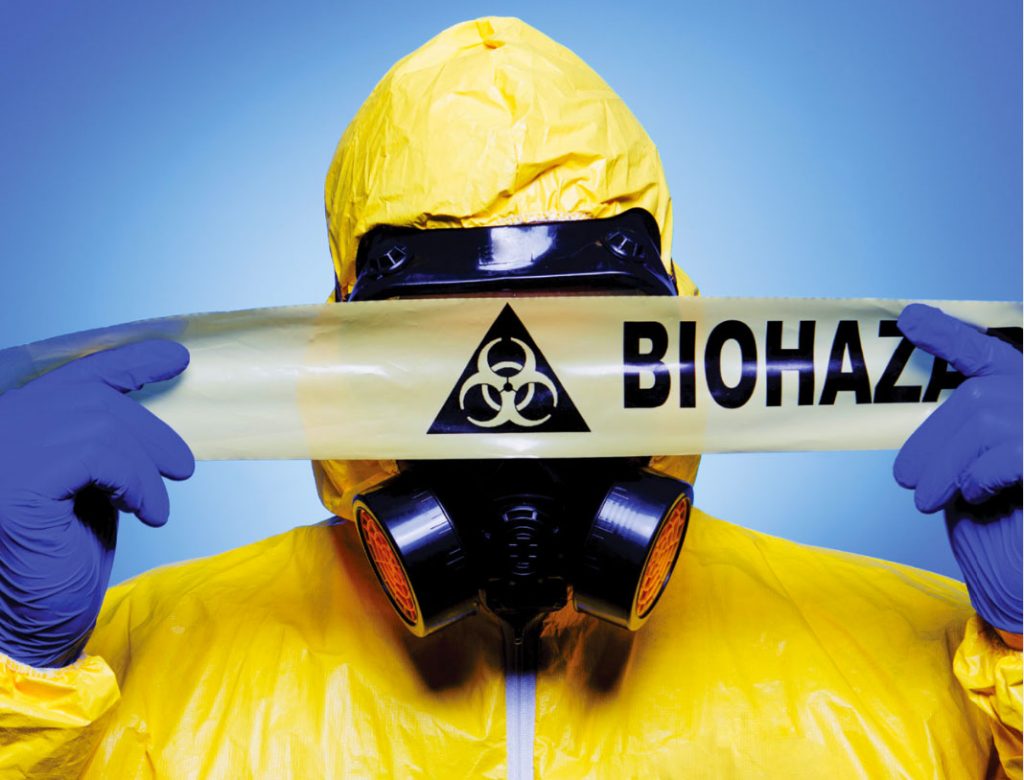
Forensic restoration is the comprehensive and complete remediation of biologically contaminated structures and or areas to pre-event conditions, finding its essence in the arts (acquired skills) and sciences of proper cleaning, disinfecting, and restoration techniques. Contact RIA for more information at 202.367.1180 or [email protected].
The Restoration Industry Association (RIA) has prepared this summary to help contractors and consultants understand both the basics and methods for employee protection and cleaning. This material is offered so that restoration professionals can begin thinking about a proper response protocol in their area. However, it is crucial to remember that a summary, in order to bring clarity and perspective, leaves out many details. Also, it is important to note that the following information is gleaned from a variety of credible sources and is based on an accumulation of industry best practices.
Forensic restoration includes, but is not limited to, incidents of:
- Crime and trauma
- Unattended death
- Unsanitary dwellings
- Hoarders
- Infectious disease
- Animal fecal matter contamination
- Bioterrorism
Forensic restoration also encompasses the remediation of contamination of:
• Tear gas
• CS gas
• Illicit drug labs and grow ops
A forensic restoration specialist is a highly trained and skilled operator in:
• Biology
• Pathology
• Epidemiology
• Psychology
• Contents
• Architectural studies
The following is a basic primer overview of trauma scene restoration.
While explained in the specifics below, it is critical to further emphasize here that such work falls under OSHA’s regulations for bloodborne pathogens. Those rules require a specific exposure control plan (ECP) for such projects. Professionals needing assistance with developing a scope of work or ECP, or who want advice about forensic restoration concerns not covered in this document, should contact RIA.
1. Understand the Basics
The first priority of any restoration professional under- taking work that involves forensic restoration is to protect themselves and their crew. An emphasis on safety will be demonstrated on such projects in many ways (as detailed in the following sections), but the primary approach to employee welfare is attitudinal. Restoration professionals working in this area should conduct frequent risk assessments and, when faced with limited or conflicting information, err on the side of worker protection until a solid consensus is in place.
2. Review Information from Multiple Sources
Matching a safety perspective with an understanding of forensic restoration means that restoration professionals need to keep up to date with evolving information regarding tools and techniques that are effective in addressing forensic restoration situations. Those undertaking forensic restoration cleanup projects must be conscious that the standard of care for such efforts is still a work in progress. Like every activity controlled by a standard of care rather than by formal regulations, the standard is a product of ideas contained in multiple documents.
Therefore, a close eye needs to be kept on information from a variety of sources, both national and international. Credible organizations that should be checked regularly for updates include:
- U.S. Centers for Disease Control and Prevention (CDC)
- Public Health Agency of Canada (PHAC)
- U.S. Environmental Protection Agency (EPA)
- World Health Organization (WHO)
- U.S. Occupational Safety and Health Administration (OSHA)
- United Kingdom’s Health Safety Executive (HSE)
- U.S. Department of Transportation (DOT)
- GlobalPublicHealthIntelligenceNetwork(GPHIN)
3. Use the OSHA Bloodborne Pathogen (BBP) Rules as a Basis for Forensic Restoration Procedures
Anyone responding to a forensic restoration situation must comply with all of the OSHA regulations included in that standard. Of particular significance is the requirement for a program of protective vaccinations and extensive employee training. It is important to note that the bloodborne pathogens regulations have been updated recently to require input from workers when developing a written exposure control plan. This means that, in addition to management personnel, the workers tasked with dealing with a forensic restoration situation must be involved in the development of programs aimed at addressing possible exposure situations.
Even before any actual work is undertaken, restoration professionals can lay out the basics of various exposure control plans, sub-categorized by risk.
4. Choose Personal Protective Equipment (PPE) as if there Is Airborne Transmission
Even though there is a difference between diseases that are spread through airborne distribution and those like hepatitis B that can be spread by direct contact, the practical distinction for a restoration contractor is negligible. Disturbance of bodily fluids during clean-up activities can produce microdroplets at many stages of the work. This means that the minimum respiratory protection practical for individuals conducting such work is a full-face respirator with HEPA filters. Such respirators offer better protection than filtering facepieces and safety glasses, and more protection than a half-face respirator and face shield.
The first priority of any restoration professional undertaking work that involves forensic restoration is to protect themselves and their crew.
Other crucial PPE includes impermeable suits or other full-body coverings with edges sealed, boots or shoe covers, and long cuff surgical style gloves worn over a pair of short cuff gloves. Consideration should also be given to what clothes the workers wear under the protective gear, as many government guidelines recommend showering directly after the work shift is over.
One other special approach to PPE that should be considered is restricting work for those individuals with open wounds, even if they will be under PPE. An alternative approach would be to require that minor wounds be coated with “liquid skin” that is allowed to cure prior to donning PPE.
5. Emphasis on Safety
Basic safety considerations cannot be ignored in the effort to comply with the specialized efforts needed for forensic restoration work. Proven practices like using a buddy system to increase the likelihood of compliance with the ECP are essential in forensic restoration situations. This teamwork can include watching for indications of heat stress and breaches of PPE — two serious problems in such work environments.
A buddy system works best with a detailed checklist of work practices. Though the workers may have extensive experience with similar PPE use and work practices, a checklist helps to ensure that every critical item is completed every time forensic restoration work is performed. Checklists with photos can be helpful to individuals who use English as a second language.
6. Set Up Forensic Restoration-Style Work Areas
The forensic restoration concept of establishing three distinct work zones (operation zone, transition zone, and clear zone) is matched with the asbestos abatement standard practice of utilizing a three-stage decontamination chamber with an operational shower.
Other engineering controls recommended for forensic restoration work include properly constructed isolation barriers and implementation of negative pressure in a controlled zone through the use of HEPA-filtered negative air machines.
7. Use of Disinfectants
Choosing effective chemicals is only part of the process. Application methods are needed that allow surfaces to hear is no doubt that forensic restoration can be scary, and the psychological aspects of the work are just as critical as the physical aspects.
stay wet for designated dwell times; therefore, repeated spraying or the use of foam applicators rather than a sprayer may be necessary. The chemical application should follow the dictum of disinfectant use before, during, and after each activity associated with the cleaning.
8. Package Waste Properly
Items matching the definition of “regulated waste” in OSHA Bloodborne Pathogens Standard (29 CFR 1910.1030) require specific methods of disposal in accordance with federal, state, and possibly local regulations.
9. Focus on the Details
Due to its pathogenicity, forensic restoration operations projects can pose a serious risk to individuals who are dealing with contamination by these infectious materials. The extra risk that forensic restoration presents as compared to other hazards routinely faced by restoration professionals such as mold or black water remediation deserves extra attention.
One of the best methods for ensuring that these projects are conducted properly is for contractors to utilize experienced supervisors as on-site managers for such work. Such supervision must focus on 100 percent enforcement of safety rules since a seemingly trivial exposure could quickly lead to serious, and even fatal, consequences. The supervisors should constantly be assessing the progress of the undertaking and anticipating potential difficulties with the crew. And, needless to say, supervisors on forensic restoration projects should collect extensive documentation, including photographs of each aspect of the work.
There is no doubt that forensic restoration can be scary, and the psychological aspects of the work are just as critical as the physical efforts. Everyone involved in a forensic restoration project must use great skills when dealing with people in times of stress. A calm, professionall approach is crucial to making sure that the situation is neither overblown nor blown off, and is the best way that members of RIA can “make it better.”RIA
Related Posts