Publisher’s Note: According to C&R/KnowHow’s 2022 State of the Industry study, getting paid is a top pain point for a majority of restoration contractors. Costs, labor burden, and overall pricing methodology are part of that equation, along with working with adjusters, having mortgage carriers involved, and so on. In this brand new 2-part series, Anthony Nelson pours his years of learning and knowledge gained as a restorer on customized price lists onto paper. This series is NOT on specific prices or costs; it is a textbook of sorts on equations to ethically and logically figure out true costs for materials, labor, benefits, and more.
Ever since I ran into Ben Justesen in a Las Vegas hotel bar and spent the night getting weird and nerdy on Xactimate pricing, I’ve been obsessed.
As restoration contractors, we have become far too dependent on third parties for our pricing. I would go so far as to argue that we’ve lost institutional knowledge as an industry of how we should be setting prices. In other markets, where insurance carriers are not a party, pricing is driven by several factors and is a perpetual topic of conversation at the company.
In our companies, I’ll bet the conversation is more about how current pricing isn’t sufficient. I would like to shift that narrative to one where we are discussing pricing openly within our companies. Let’s take an analytical approach to the problem as opposed to an emotional one.
What This Article Is and What it is Not
Since this is a topic loaded with nuance, I want to be clear. Everything contained below are my interpretations and opinions. I have done my absolute best to remain unbiased but also admit that as a restorer, I have a bias towards restorers and their success.
This article is…
- Intended to be a catalog of pricing resources.
- To educate restorers on what costs goes where relative to Xactimate.
- A “how-to” guide for those who never have changed prices.
- The ultimate conversation starter for our industry’s hottest topics.
This article is not…
- An opinion on the pricing methodology of Xactimate.
- Representative of any individual or group’s opinion other than my own.
- Hard and fast rules you must follow, merely a collection of facts I hope help.
What I can promise is if you hang with me through this article, you will be smarter about Xactimate pricing and how to price your labor on the open market.
Part 1: Resources for Customized Labor Pricing
Before we get into the nuts and bolts of how to customize labor pricing, it’s important to answer a few questions.
- CAN I create custom labor pricing for my Xactimate pricelist? YES. The referenced documents below have created a path to articulate not only that you can, but it’s the intent of the software.
- SHOULD I create custom labor pricing for my Xactimate pricelist? Sincerely, if Xactimate pricing is working for you? No. If not, then yes.
Over the past decade a collection of white papers and other resources have been presented to us as restorers to support our right to create custom pricing. Below is a list of those resources, with direct links, and a summary of their contents. If you are considering creating custom labor prices, this is a required reading.
The Restoration Industry Association’s (RIA) Position Statement on Deviation from Standardized Price Lists
- WHERE CAN I FIND IT?
Originally, you had to be a member to access copies of this document. Now, it’s available to the entire industry in exchange for joining RIA’s mailing list. https://tinyurl.com/yyde4taf - WHAT DOES IT SAY?
This jointly prepared document between the RIA and Xactware makes the following points….- Standardized prices may not accurately represent the usual and customary price.
- Software providers do not set restoration prices.
- Insurers and their partners must not prohibit or preclude deviations from standardized price data.Labor Rates, Overhead and Profit should be customized.
The Xactware Solutions Inc. License Agreement
- WHERE CAN I FIND IT?
https://www.xactware.com/en-us/eula/ - WHAT DOES IT SAY?
This license agreement specifically states that users of the software are not to “prohibit or preclude deviations from the Price Data where contractor requirements, market conditions, demand or any other factor warrants the use of a different line-item price for the specific situation.”
An Xactware Solutions Inc. white paper titled “Pricing Methodology Summary.”
- WHERE CAN I FIND IT?
https://eservice.xactware.com/esc/showme/PDF/2021/3312PricingMethodologySummary2a.pdf - WHAT DOES IT SAY?
This white paper explains the overall pricing methodology Xactware uses. Some key points are…- Profit or markup may appear at a line-item level by increasing the cost of specific materials or labor, or at the estimate level using a general profit percentage in the Estimate Parameters window.
- Within Xactimate, job-related overhead costs should be added to each estimate as line item costs
- Within Xactimate, job personnel overhead costs are reflected in the Labor Overhead portion of the Retail Labor rate. Examples include vehicle expenses, uniforms, hand tools, mobile phones, etc.
An Xactware Solutions Inc. white paper titled “Retail Labor Rates and Supporting Events.”
- WHERE CAN I FIND IT?
https://xactware.custhelp.com/ci/fattach/get/77536/1355517791/redirect/1/filename/retail_labor_rates.pdf - WHAT DOES IT SAY?
This white paper explains how ALL the markup required to operate a restoration business is applied to the Labor Overhead component in the software. Xactware makes no markup assumptions for materials and equipment.
In summation, with the above papers you should be equipped with two things. The fact that you can create your own pricing and a road map for how to do it. Now I understand that most restorers rarely have enough time to devote to their families and keeping the heads screwed on straight between the emergency calls. Xactimate breaks retail labor rates up into three separate sections: the base wages, the labor burdens, and the labor overhead. Keep reading and I’ll walk you through my key learnings and how I’d recommend everyone go through the process of creating their own labor pricing in Xactimate’s pricing method.
Part 2: Base Wages
Whenever someone is looking at whether to customize their pricing, my first piece of advice is to look at what base wages look like for their in-house trades in their market. This is easily done by viewing the industry trend reports on Xactanalysis.
How Do I View Industry Trend Reports?
- Log in to Xactanalysis using your Verisk credentials, usually the same username and password you use to log into Xactimate. Xactanalysis is located at www.xactanalysis.com.

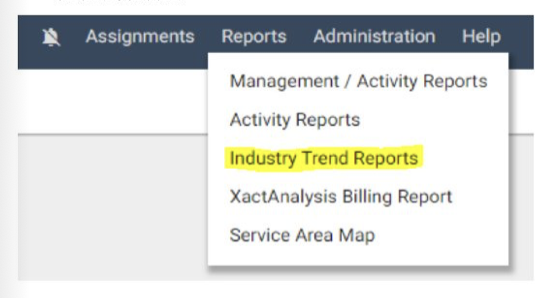
- Once you log on, you’ll select “reports” then “industry trend reports” from the top right side of the screen.
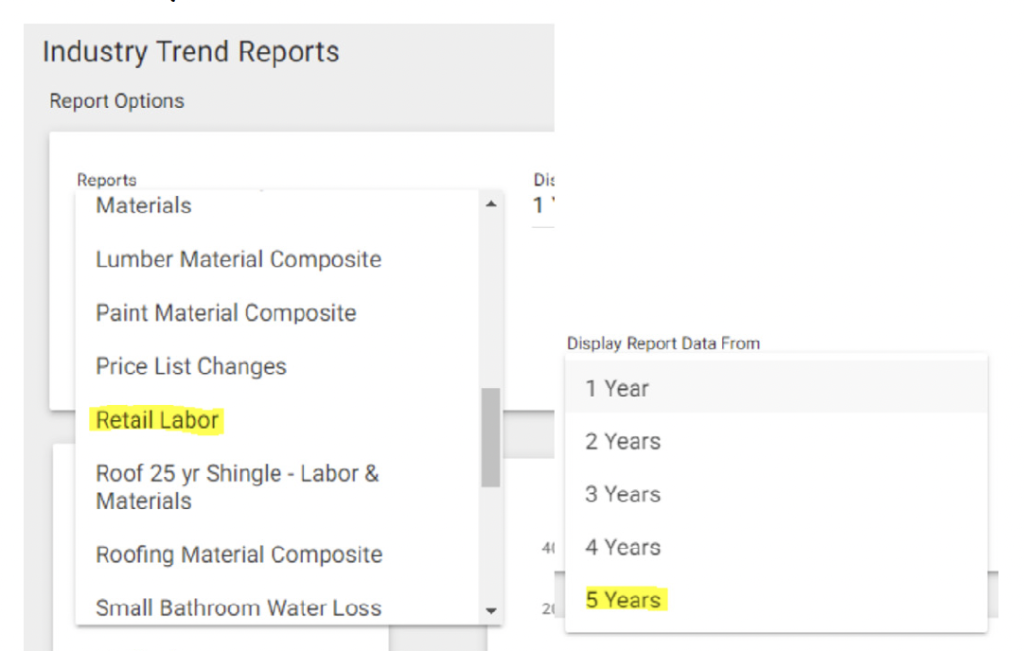
- Once you are in, change the report view to “Retail Labor” and “5 years”. This will let you see the changes in your market historically over the past five years.
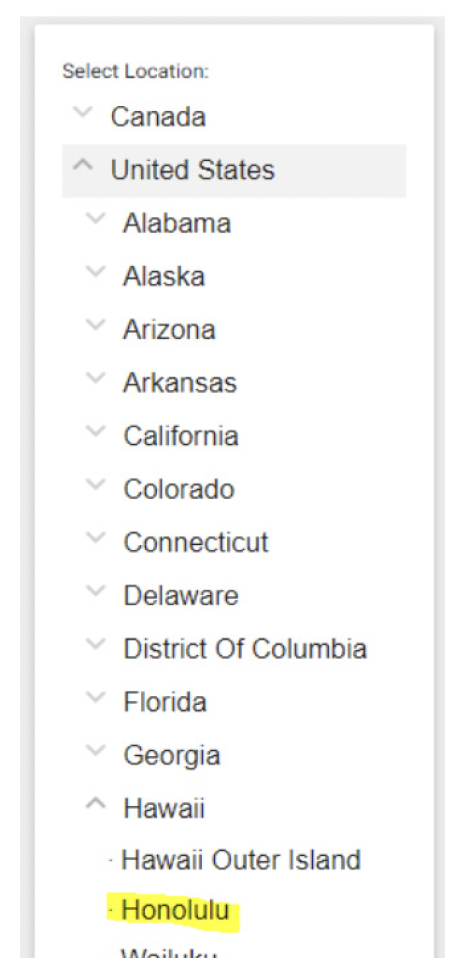 After that you’ll need to select your market on the left side of the screen. For me, this is Honolulu, HI.
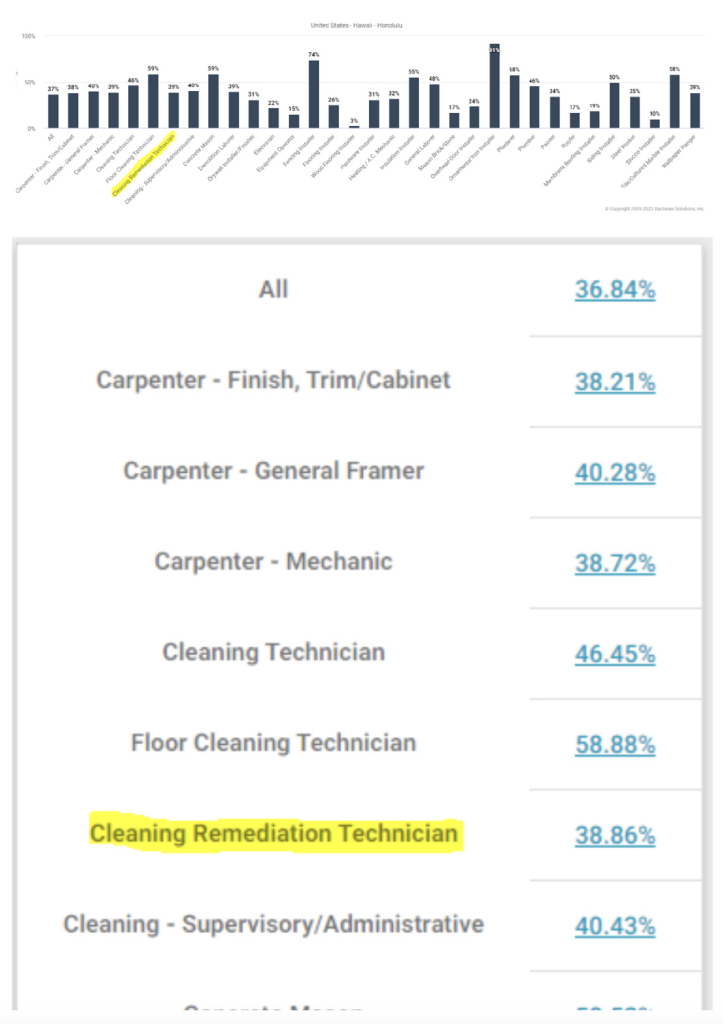
- With your market selected, you’ll need to choose the trade you wish to look at. For our example, let’s look at Cleaning Remediation Technician. You can select it either from the horizontal bar graph or the table.
- Once you’ve narrowed it down to a specific trade, you have three different ways to view the data in the graph (above) and table (on the next page). They are the following:
a. “Percent Change” – this will show you the percentage in change in total labor trade price over the past five years.
b. “Dollar Value Change” – this will show you the dollar change in total labor trade price over the past five years.
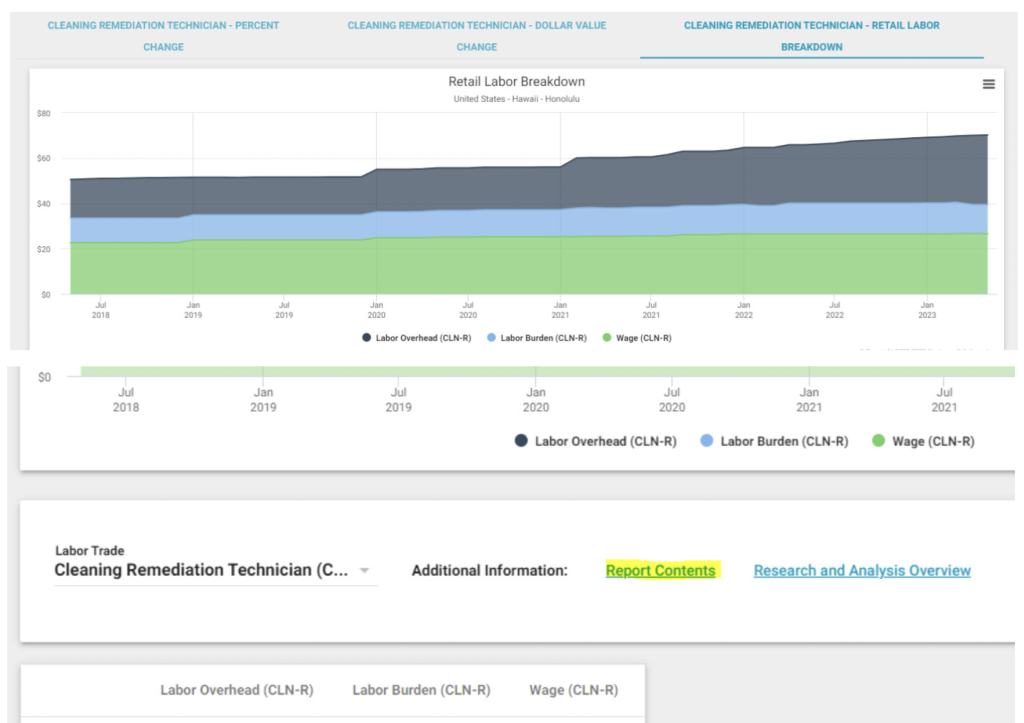
c. “Retail Labor Breakdown” – This will show you the breakdown between the base wages, labor burdens and labor overhead in dollars over the past five years. For our purposes, this provides us with the information we want to see. If you select this, your screen should look like this, with three colors in the graph indicating base wages, labor burdens and labor overhead respectively.
OK, Anthony, I’m In, Now What?
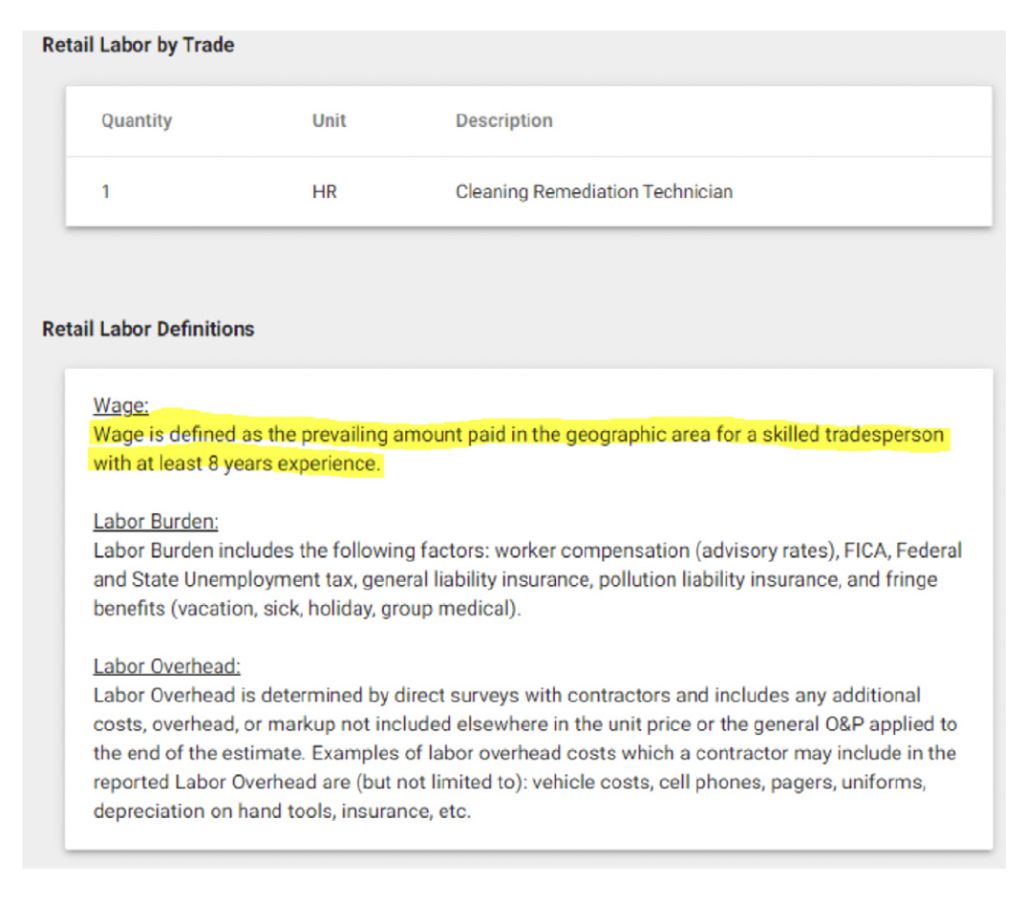 If you hover over the various points in the graph or scroll down to the tables below, you’ll be able to see what the base wages are for this trade for your market. I would encourage you to click through all the trades to see what Xactimate pricing looks like. Write them down and compare them to your own. One thing that is important to know about production efficiencies (how fast Xactimate expects work to be performed) is the profile of the tradesperson Xactimate is basing all their assumptions on. Within this screen, if you click on “report contents” you’ll find the following definition.
Just in case you missed my crude highlighting above, I’ll state it again. Per Xactimate, “Wage is defined as the prevailing amount paid in the geographic are for a skilled tradesperson with at least 8 years’ experience.” For most of us, this means that all Retail Labor Prices are based on our most senior technicians and tradespeople. Take a moment, write these base wages down and compare them to your own wages. If they are lower, then this means that you have some opportunity to customize your pricing to reflect what your actual costs are. Take note on what your Base Wages are. We’ll need them to calculate burdens and other costs later.
Ok Anthony, But What if I Don’t Have Specific Trades In-House?
Most restorers do not keep some trades in house. Not a problem, you can survey retail labor prices just like Xactimate does. Call your current vendors and ask them what their retail labor prices are. I would ask them for a bid with those rates indicated for supporting documentation. You can then enter those rates into your customized pricelist and you’re done.
However, if you have in-house labor, stay tuned for part 2 of this series in the September/October issue.
Anthony Nelson

Anthony Nelson is Peer Group Facilitator at Pivot My Biz, a peer advisory organization serving independent property restoration and field service company owners. He brings twenty-six years of restoration industry experience as an operator, an executive, and a consultant. He is a former RIA Executive Board Member, current Co-Chair of the RIA AGA Independent Pricing Taskforce, and a restorer devoted to making the industry better for our technicians. He can be reached at [email protected].
Related Posts