Part 2 of 8
As we venture into the second part of our series, we reflect on the unsettling reality of common water damage scenarios that underscore the crucial need for safety training. The question arises: How can one effectively identify and address health hazards in such situations?
Hazards
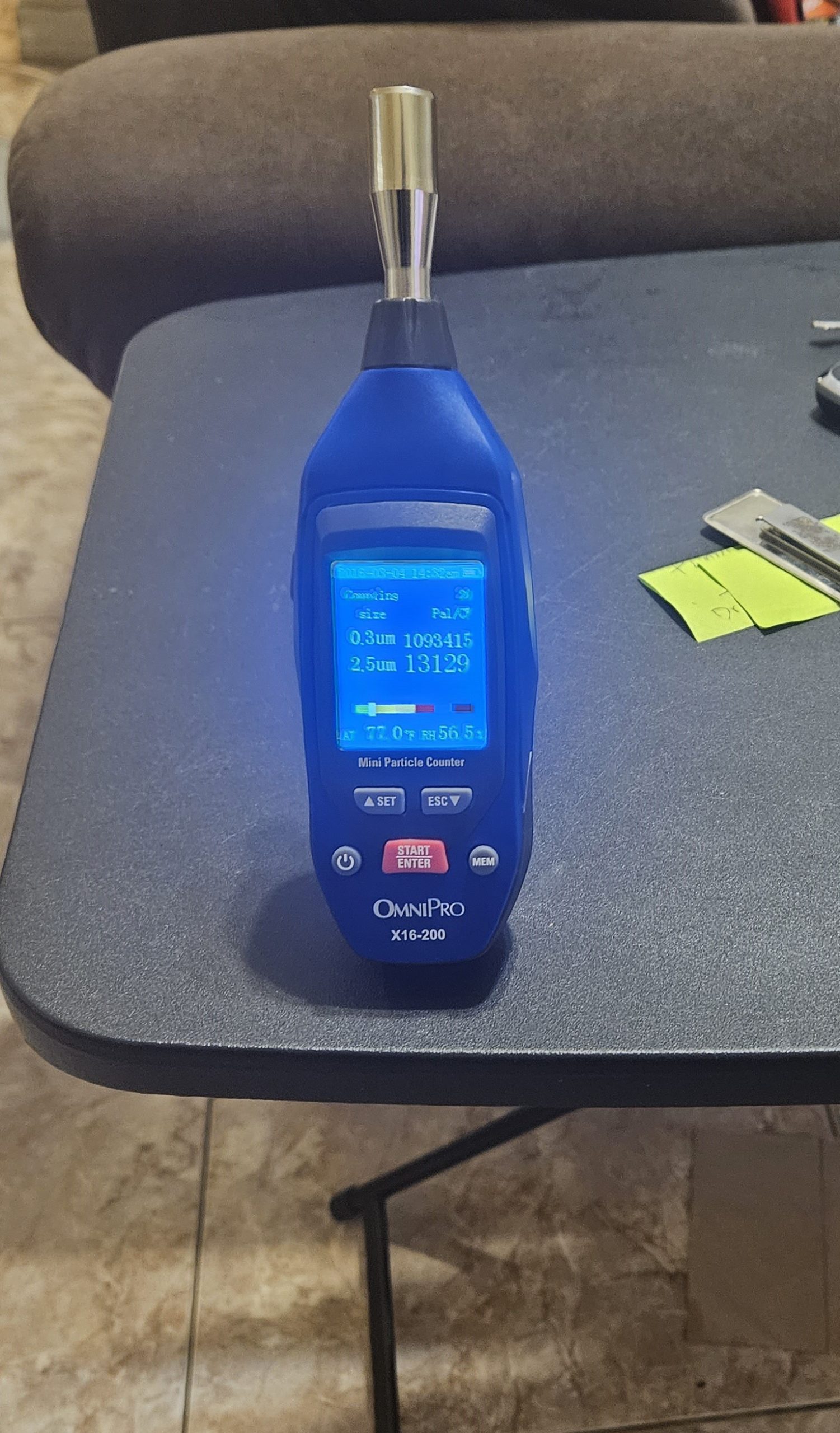
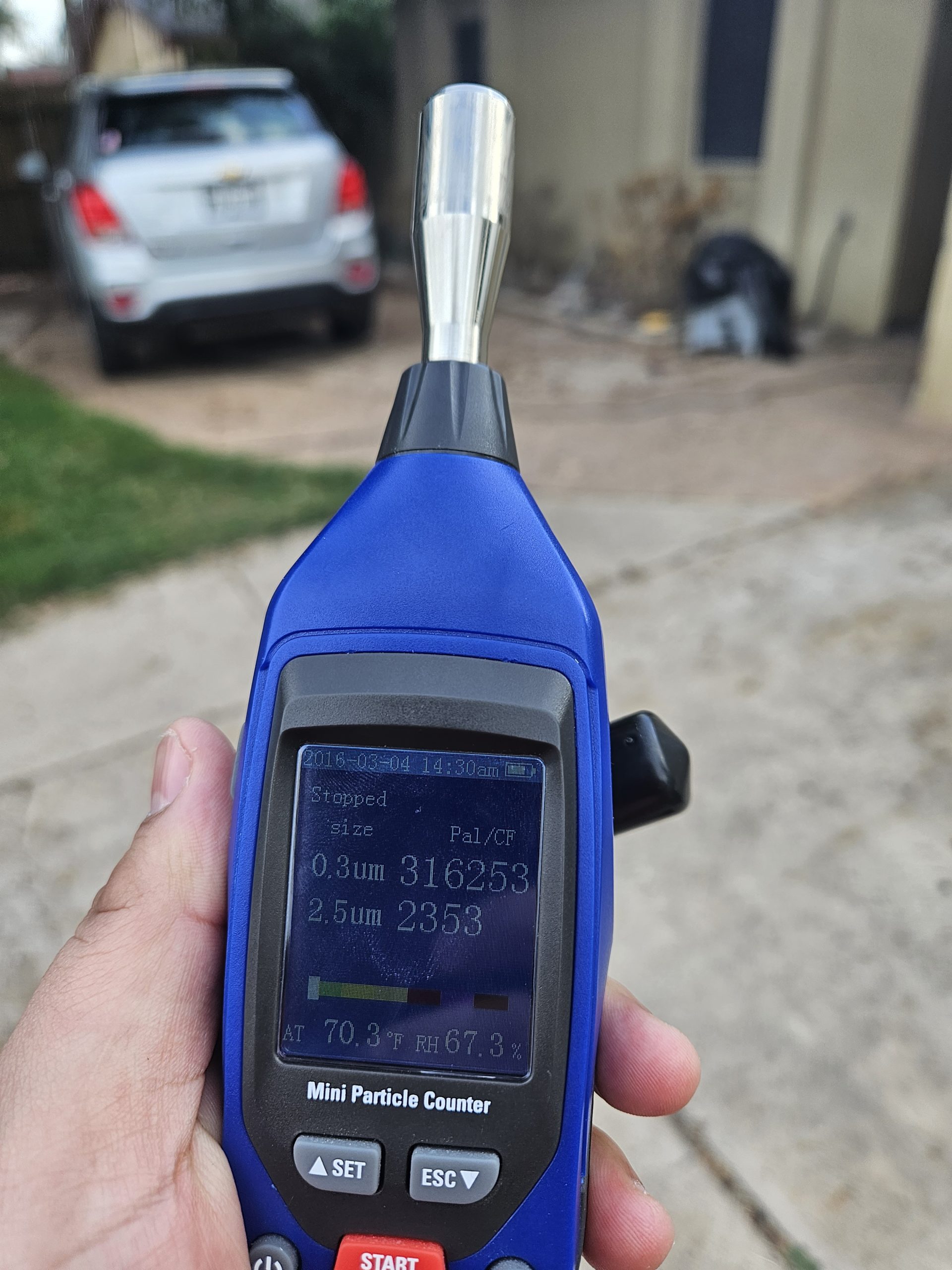
The reality is that these scenarios are not uncommon, and they underscore the vital importance of safety training. The question then arises: How can you effectively determine the presence or absence of these health hazards? Well by testing. Let’s start with a particle counter as it can be an invaluable tool. It measures micron-sized particles in the air, typically ranging from 0.3 to 10 microns. To put that in perspective, the tip of a human hair is about 50-70 microns, while some mold spores and bacteria can fall within the 0.3-2.5 micron range.
Standard N-95 masks are not effective in filtering particles of this size.
When you observe that the total count of 0.3-micron particles are higher indoors compared to the outside or unaffected areas, it’s an indicator of compromised air quality.
This discrepancy may reveal hidden issues not immediately visible, emphasizing the need for thorough testing. Professionals such as Indoor Environmental Professionals (IEPs) or, in more complex cases, Industrial Hygienists (IHs) with specialized knowledge become invaluable. This information serves as the basis for making informed recommendations or determining the necessity of consulting one of these professionals.
This is just one of many scenarios you can encounter. Typically, the particle count can serve as a baseline, indicating the threshold not to exceed or justifying the necessity of using an air scrubber. Ideally, the indoor air quality should be cleaner than the outside, especially in situations that do not initially appear to be major.
I strongly recommend creating a Job Hazard Analysis (JHA) for every job your team undertakes each day. Not only is this an OSHA requirement, but it also serves as a valuable tool for identifying potential project delays due to safety measures. This analysis is crucial for factoring in labor costs, especially considering situations such as the permissible heat exposure threshold value mandated by OSHA. In some cases, teams are required to take a work rest period, working only 15 minutes and taking a 45-minute break every hour for their safety. Imagine the impact on your daily labor costs. Failing to document these JHAs not only puts compensation at risk but, more importantly, jeopardizes the well-being of the individuals involved.
Now, it’s crucial to distinguish between regulated/hazardous materials and mold, and categories of water damage for a clearer understanding. Regulated or hazardous materials, such as chemicals, lead, or asbestos, are subject to specific legal controls. Mold, while not heavily regulated at the federal level, is subject to varying state rules, with a primary concern being mycotoxins.
Water categories, on the other hand, help gauge the level of bacteria or pathogen load, which can harm humans or pets. Additionally, endotoxins are a concern, particularly in households with pets, smokers, or poor living conditions, where their concentration may be higher, sometimes dormant until exposed to water. The presence of odors can indicate water has progressed beyond Category 1. Depending on various factors, this can lead to discomfort, illness, and, in severe cases, life-threatening situations.
This knowledge is essential to avoid unnecessary disputes arising from overlooked details. The image above serves as a visual guide for considerations that should always be documented. Your statements, without proper documentation, are vulnerable to challenges based on opinions rather than facts. In the next segment, we will delve deeper into the categorization of water, shedding light on aspects that many are unaware of or tend to overlook.


 Luis Suarez is a seasoned technical educator and consultant with over a decade of experience in the Restoration industry. His journey in this field is marked by a passion for education and a strong commitment to helping others succeed.