Photo courtesy of James Copeland
Defining Cleanliness in Fire, Mold, and Compliance Driven Industries
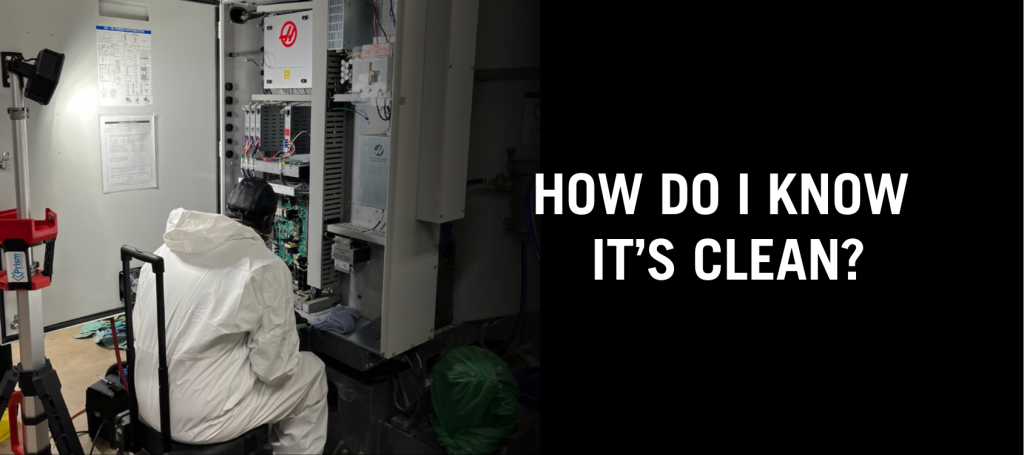
As building materials, consumer electronics, appliances, art and textiles continue to evolve, new materials are constantly being introduced into homes and structures. When these materials and components burn, the by-products from fire damage become more complex, water and mold remediation becomes more challenging, and compliance expectations rise across commercial and industrial settings. As a result, the industry is being asked a simple but increasingly difficult question: How do you know it’s clean?
This simple question demands a fact based, measurable answer; it is no longer acceptable to say that it “looks” clean. It is expected to have measurable, repeatable and defensible evidence. Cleanliness has transitioned from subjective to objective, from an art to a science, and the restoration industry is moving with it at lightning speed. Standards for fire, water, and mold damage restoration were created to establish a consistent, science-based approach to the work, providing clear protocols for insurance claims and legal liability. Standards like IICRC S700 (fire), S520 (mold), S760 (wildfire), and even niche guidance like IPC Standards for electronics, medical devices, and industrial machinery are expanding what “clean” actually means. Clean is not what you can see. Clean is what you can prove.
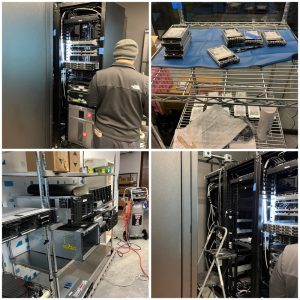
Photo courtesy of James Copeland
The New Expectation: From Visual Clean to Scientifically Proven Clean
For years, the industry has relied on surface level visual inspection, but it is now shifting toward evidence-based restoration, where it emphasizes that “clean” is no longer a feeling or visual assessment or a technician’s intuition, but a defensible, measurable standard. Fire damage, water damage, and mold remediation all require different verification methods, but the underlying principle is the same. Clean is what you can prove. Visual cleanliness is only the beginning. The demand for documentation that withstands scrutiny is the new expectation.
The force driving this shift is that restoration professionals are increasingly being asked to provide test results, logs and documentation. The by-products from fire losses introduce corrosive residues, volatile organic compounds (VOCs), and semi-volatile compounds (SVOCs) that cannot be seen with the naked eye. Mold environments require proof of contamination removal and proper moisture control. There are also higher expectations for defensible outcomes, such as code compliance and OEM validation for equipment and electronics. These require evidence, not opinion.
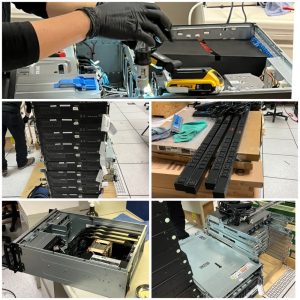
Photo courtesy of James Copeland
Fire Damage: Why Contamination and Corrosive Residues Must be Removed
A typical structure, whether it’s a residential home, commercial facility or industrial manufacturing space, each contains various materials such as plastics, elastomers, polyurethane foams, polymers, adhesives, fabrics, wood products, and even asbestos-containing materials. In the manufacturing space, additional materials such as hydraulic fluids, machining fluids, industrial coatings, epoxies, plastics used in injection molding, composite materials, rubber compounds, and chemicals can dramatically influence the composition of smoke and residue. The incomplete combustion of these materials during a fire can produce an array of toxic organic compounds such as volatile organic compounds (VOCs), semi-volatile organic compounds (SVOCs), and polycyclic aromatic compounds (PAHs).
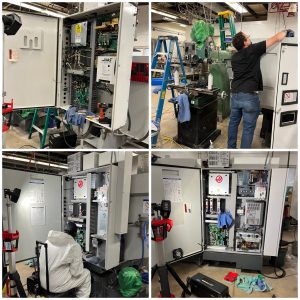
Electronics are extremely sensitive, and when compromised by smoke and soot, they quickly become a safety hazard. Damage from smoke and soot primarily stems from increased resistance in circuits and connections due to corrosive metal loss, short-circuiting caused by current leakage, and overheating. The metal surfaces within equipment, steel, aluminum, copper, and precision alloys are highly susceptible to flash rusting and accelerated corrosion. Combustion by-products such as chlorides, sulfates, and acidic particulates create a conductive, hygroscopic layer that attracts moisture and initiates corrosion within hours, even a thin layer of conductive residue can cause intermittent faults, phantom signals, erratic readings, or catastrophic failure under load.
If these contaminants are not fully removed, failure can occur rapidly and without warning. Flash rusting can distort mating surfaces, degrade bearings and shafts, seize precision assemblies, compromise electrical contacts, and create instability in sensors and control systems. The longer contaminants remain on surfaces, metal or electronic, the greater the likelihood of progressive corrosion, insulation breakdown, and irreversible component damage.
Art and textiles are equally vulnerable to smoke and soot contamination, as fine soot particulates and acidic residues can embed deep within fibers, canvases, and frames. If not properly removed, these contaminants can lead to permanent staining, odor retention, fiber degradation, discoloration, and long-term chemical breakdown of dyes, finishes, and binding materials.

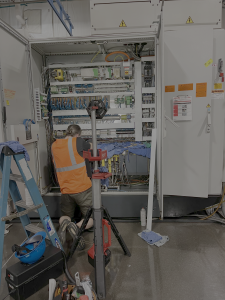
Photo courtesy of James Copeland
Mold Remediation: Clean Means More Than No Visible Growth
Unlike animals, mold does not ingest its food. It must absorb nutrition from other organisms, by secreting enzymes that break down the food substance into smaller organic molecules that can then be absorbed. Mold reproduces by releasing tiny, microscopic spores into the air, which can trigger allergies, asthma and other respiratory issues.
Mold grows well on paper products, cardboard, ceiling tiles, and wood products. Mold can also grow in paints, wallpaper, insulation, drywall, carpet, fabric, and upholstery. The enzymes excreted by mold can cause permanent staining, odors and decomposition of paper. Mold on electronics can lead to corrosion, overheating, short circuits and component failure.
Cleaning mold effectively is impossible if the materials are still wet. Technicians must use a combination of non-invasive moisture meters, penetrating meters, and thermal imaging to confirm dryness.
In mold projects, “clean” means, that all growth has been removed, biofilm eliminated, surfaces are free of dust and debris, moisture content returned to acceptable levels, and the environment stabilized so regrowth is not likely.
Surface Residue and Contamination Verification
Ionic contamination testing such as Ion Chromatography (IC) verifies the presence and quantity of ionic residues, commonly chlorides, sulfates, and nitrates, that drive corrosion and conductivity, especially after smoke and soot exposure. This type of testing is well suited for electronics, control panels, industrial machinery, metallic surfaces, and precision equipment. It’s typically done by using specialized wipes and solvents that are sent to a lab for ion analysis.
Swab Sampling (Dry wipe / Wet wipe)
Swab sampling is a method used to test surfaces for contamination by wiping a defined sample area, using either dry wipes or wet wipes. Dry wipes are best when testing dry residues, particulates and dust, but are less effective on sticky residues. Wet wipes are pre-moistened with a specific solvent or distilled water and work well on sticky surfaces and have a higher collection rate than dry wipes. Depending on the solvent and the surface being sampled, the process may damage or alter the surface itself. It is important to follow established sampling standards when deciding which test to perform.
Tape Lift Sampling (clear tape lift)
Tape lift sampling uses a pressure sensitive tape that lifts surface particulates directly from the surface and is often reviewed microscopically. It is useful on smooth surfaces, and is commonly used for mold, dust verification and post-clean surface assessment. Using lift tape sampling post-clean, validates particulate removal.
It’s not ideal for oily, greasy residues and doesn’t quantify ionic contamination, only the presence of ionic contamination.
Conductivity Testing
Conductivity testing is primarily used to measure the presence of dissolved salts and ionic contaminants and can be used as a before and after benchmark to show residue reduction after cleaning.
Conductivity will not identify the exact ions that are present, but it’s a strong field-friendly indicator that there is contamination present. Dry building materials do not readily conduct electricity, but the addition of water increases electrical conductivity. Restoration professionals use specialized tools to measure conductivity, such as pin-type moisture meters to drive pins into materials to get accurate, quantifiable readings of moisture content, ensuring thorough drying.
Summary
Cleanliness in restoration can no longer be defined by appearance alone. Fire damage, mold contamination, and compliance-driven environments require objective verification supported by appropriate testing, documentation, and adherence to industry standards.
Selecting the correct verification method, whether wipe sampling, tape lift analysis, conductivity testing, or ionic contamination testing, is critical to demonstrating that contaminants have been effectively removed. Pre- and post-cleaning documentation, test results, equipment usage logs, and clearly defined scopes of work tied to recognized standards provide the defensible evidence required by carriers, consultants, and regulatory stakeholders.
In today’s restoration landscape, “clean” is no longer a matter of opinion or guess, it is a condition that must be proven. Verification and testing provide a measurable, defensible answer to the question, “How do you know it’s clean?”.
James Copeland
 James Copeland is the Director of Technical Services at Prism Specialties, where he has spent the last 11 years providing technical training, business consultation, and support on commercial losses for the Prism Specialties franchise network. Previously, he honed his expertise in the drycleaning and commercial laundry field as a service technician and high-pressure boiler technician, designing and installing dry cleaning plants. Outside of work, James enjoys spending time with his family, especially his grandson. For more information, contact James at 734-718-8802 or [email protected]
Related Posts