Publisher’s Note: We asked some of the sharpest minds in the restoration and property claims industry to do what most of us rarely make time for: stop, look around, and tell us the truth. Within this article, these leaders share their unfiltered perspectives on where the industry has made real progress, where it continues to fall short, and what opportunities and threats lie ahead. Our hope is that their candor gives you not just a clearer picture of where we stand as an industry, but a sharper sense of where you stand — and where you might need to go.
Meet the Contributors


1. What Is the Property Claims Industry Doing Especially Well Right Now Compared to 3–5 Years Ago?
Autumn & Lance:
- AI adoption has transitioned from exploratory to embedded; improving cost, operational efficiency, accuracy, and cycle times.
- Claims operations are far more data-led and increasingly integrated with cloud and modern analytics tools.
- Deeper digitalization of workflows, easier integration:
- Research from McKinsey & Company and Deloitte shows carriers are expanding digital triage and alternative handling channels for low severity claims.
- Digital-first models reducing administrative workload by 30 to 40%, while automation improves routing accuracy and reduces manual errors.
- Enhanced CAT modeling – better preparedness and response to catastrophes.
- Compared to 3 to 5 years ago, the property claims industry is doing a significantly better job at optimizing the front end of the claim, particularly through higher quality FNOL and structured claim segmentation models.
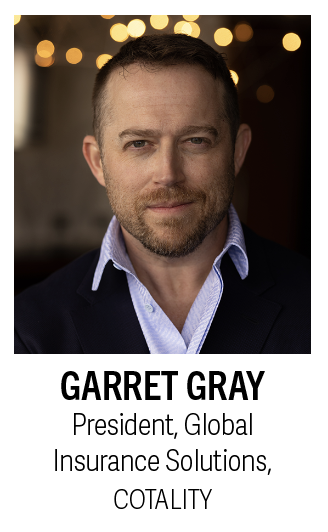
Garret: A few things stand out to me. Our industry is having more productive conversations about how to improve things for all stakeholders. Five years ago, there was a lot of discontentment on all sides, but no one was leading the conversation to a productive end. I have to say I think the RIA has been a very helpful force for this progress, especially under the leadership of Jeff Moore.
We are also seeing a huge leap in technology adoption. As someone who has been pushing the limits of what contractors were ready for, I have been heartened to see a step towards change as restoration contractors adopt this new technology. During a fireside chat about AI with Google at our recent INTRConnect Conference in Washington, D.C., I noticed a significant trend: nearly every contractor in the room was now leveraging AI—something that was not true just a year ago. I am proud to see this group embrace the future as I think it will benefit all involved.
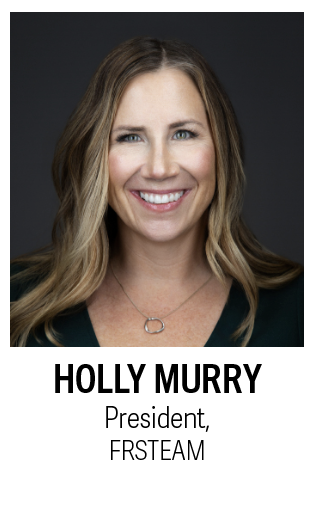
Holly: The industry has made real progress in speed and front-end responsiveness. Claims are being acknowledged faster, virtual inspections are more accepted, and there is clearer segmentation between simple and complex losses. That didn’t exist at scale 3–5 years ago.
From a restoration standpoint, there’s also better recognition that not all claims are created equal. High-severity losses, CAT events, and specialty scopes like contents, electronics, and large-loss commercial work are increasingly being routed with more intention—at least in theory.
That said, while claims intake has improved, execution after first contact still varies wildly, especially once a loss moves beyond basic mitigation.
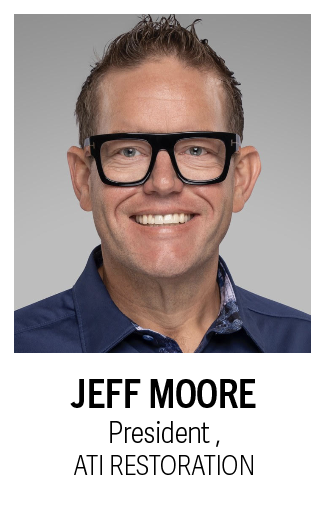
Jeff: When I refer to the property claims industry, I mean the full ecosystem that restores a building to its pre-loss condition: policyholders, carriers, lienholders, adjusters (staff and IA), TPAs, public adjusters, plaintiff attorneys, and restoration contractors — all operating through shared pricing platforms and documentation standards.
Compared to 3–5 years ago, the industry is more disciplined.
- Process control is tighter. More firms are operating from structured playbooks rather than relying on “hero mode.”
- Specialization has deepened — contents, IAQ/mold, complex loss, reconstruction integration are more sophisticated.
- Data is driving more decisions — cycle time, job costs, margin, morale, and performance metrics matter more than ever.
- Estimating and documentation are improving, and early AI adoption is helping to reduce avoidable rework.
- Contractor voice is increasingly present in national insurance and legislative conversations.
The counterpoint is equally important: we are also more divided. Carriers on one side. Public adjusters and plaintiff attorneys on another. TPAs and aligned contractors are in their own lane. And contractors are split across camps. The customer often sits in the middle trying to determine who is right. That lack of trust creates friction on nearly every claim.
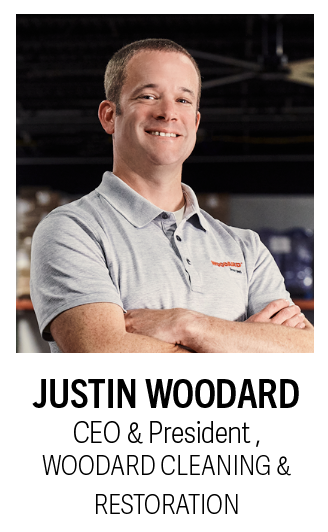
Justin: Five years ago, the world was steadily entering the post-Covid world and folks in the property claims industry were reflecting on how our day to day lives in the emergency services industry had prepared us fairly well to navigate a global pandemic. Since then, I see organizations throughout our industry advancing along two fronts in a strong way.
First, we continue to put the customer at the center of our work and go above and beyond to help people who have been impacted by disasters, even though it is hard to get paid, we have more and more requirements around documentation, and new technology tools are requiring more and more effort to justify the important work that we do. We have always taken great care of the customer, and I continue to see us doing that extremely well.
Second, I believe that we are seeing important growth and momentum in how we are working together and learning from each other. RIA’s membership has grown significantly over the last five years, there are more people coming to all types of industry events, more companies involved in benchmarking activities, and more individuals craving a community that can share experiences and support each other.
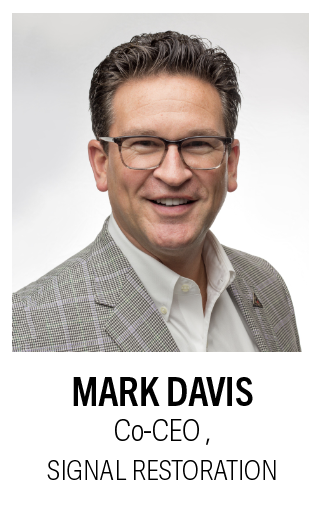
Mark: The industry has elevated the operational standards for several measured activities; primarily due to the Service Level Agreement benchmarks set by the carriers and the TPAs representing the carriers. For those restorers not doing program work, there has still been a natural evolution to focus on many of these measured metrics which include response time, estimate turnaround time, and loss severity. Being able to perform at a high level, to achieve the elevated performance levels, is something that our industry has become increasingly more efficient at.
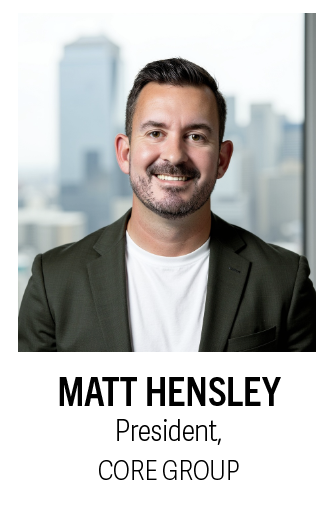
Matt: Technology adoption has accelerated. Remote scoping, digital documentation, AI-assisted estimating, and real-time communication tools have drastically increased over the past few years.
There is also more professionalism at scale. Many restoration companies have invested in process, compliance, and training.
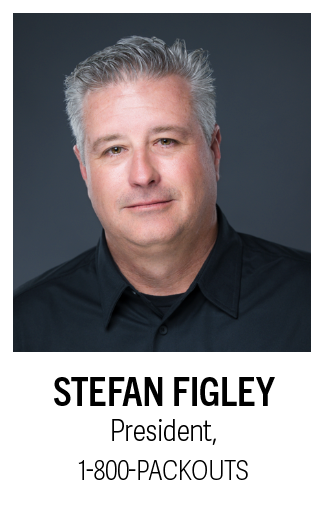
Stefan: Compared to even five years ago, the industry is far more operationally mature. There’s been real progress in standardization, documentation, and compliance. Carriers are clearer about expectations. Restoration companies are better at processing, estimating accuracy, and understanding the downstream impact of their work on claims outcomes.
Another big improvement is in specialization. Five years ago, too many companies tried to be everything to everyone. Today, we’re seeing stronger niche players who know exactly where they fit in the claims ecosystem and are building systems around that. That’s a clear sign of a healthier industry.
Technology adoption has also accelerated. Not perfectly, but faster. Platforms for estimating, job management, and carrier communication are more widely used; so, the baseline competency is higher than it was before.
2. Where Do Restoration Companies Continue to Struggle the Most Today?
Autumn & Lance:
- Persistent labor shortages, impacts cycle times, higher labor costs.
- Supply chain delays/constrictions/costs; tariffs impact on building materials, particularly flooring and construction components.
- Cash flow instability due to slow payments.
- Administrative burden to keep up with documentation and update requirements.
Garret: The inconsistency of work is one of the biggest struggles for restoration companies. Last year was a very low-claim volume year, and everyone felt it. There are several reasons for this, but the top companies are noticing and finding solutions. Doubling down on local marketing, relationship building, and tracking is key to not just surviving during periods like this, but in thriving. CRM sales tools and building a local sales/marketing force are also key to winning the jobs that do exist. Additionally, for those doing program work, it has never been more important to know and deliver on the expectations of those sending claims; your performance on each job has never mattered more.
Holly: The biggest struggle is the alignment between real-world restoration work and claims expectations, particularly in contents.
Contents restoration is labor-heavy, documentation-heavy, emotionally charged, and operationally complex—yet it’s still often treated like an add-on instead of a specialty discipline. That creates friction in several areas:
- Pricing vs. reality. Estimating platforms and program guidelines rarely reflect the true labor, handling, inventory, storage, and logistics required for contents and specialty cleaning.
- Documentation overload without consistency. Everyone agrees documentation matters, but many contractors lack repeatable, scalable processes that hold up under carrier review—especially during CAT or surge conditions.
- Labor and leadership gaps. Contents jobs require trained techs, strong project management, and disciplined warehouse operations. Those roles are harder to hire, harder to train, and harder to scale.
- Cash flow pressure. Longer AR cycles, supplements, and scope disputes disproportionately impact contents-heavy operators because of the upfront labor and storage costs.
In short: contents aren’t broken—but often chronically underestimated.
Jeff: Getting paid.
For many contractors, after working through carrier or TPA channels, payments routinely land around 90 days. That is not sustainable for emergency-service businesses that front payroll, materials, and subcontractors.
So, we must adapt. Collect deductibles consistently. Tighten front-end authorizations. Improve documentation quality. Set expectations early.
The reality? If 90-day payment cycles become normalized, they become permanent — and that pressures the entire ecosystem.
Justin: Again, two items come to mind.
First, since we live in the emergency services industry, we can get very used to responding to the next emergency. When we are so used to doing so daily, it can be very challenging to slow down enough to work on the fundamentals, improve processes, take time in interviewing, train our new technicians, and do all the other things that we know we should be taking time to do. That said, they are super hard to do when there is another mitigation job to respond to.
Second, I believe that technology and software tools continue to be a challenge for the average restorer. We continue to struggle with having a unified solution that can be utilized effectively for a CRM, job management, job-site documentation, scheduling, reporting, and accounting. Tools have come a long way and there are several that have solid individual applications, but a unified tool, that could be used by everyone in our company, in a consistent way, remains elusive.
Mark: One of the greatest struggles in our industry for the last few years has been staffing at the entry level. The services we provide are very demanding, not only physically, but also when it comes to our employee’s time. The generation entering our industry has a greater focus on work-life-balance and working in an industry that is operational 24 hours a day can be very challenging for them. To become a proficient technician takes time, and without employee longevity, we will continue to struggle in meeting the demands of our ever-evolving industry.
Matt: Margin discipline remains a major challenge.
Too many companies still chase volume at the expense of profit. Labor costs are up. Materials are volatile. Insurance scrutiny is tighter. Yet pricing strategy often has not evolved.
Consistent lead source generation is another struggle. Many restoration firms rely heavily on one or two referral channels, often a single carrier program or a small group of agents. When that flow slows, revenue drops quickly. Few companies have built diversified, predictable pipelines across carriers, agents, property managers, and commercial relationships.
Leadership depth continues to be a challenge. Strong field operators are promoted without training in finance, culture, or sales leadership. That gap shows up in turnover, inconsistency, and stalled growth.
Collections and cash flow management remain a pain point. As carriers push harder on review and compliance, restoration firms feel the strain.
Stefan: In clarity of identity and in discipline.
Too many restoration companies still chase volume without understanding margin, capacity, or long-term brand consequences. They grow quickly, but then wonder why they’re so exhausted, cash-strapped, and constantly putting out fires.
There’s also the persistent struggle over the labor force. Not just finding people but then developing them. Leadership development is lagging badly. We promote technicians into management roles without training them to lead, communicate, or manage financially.
And candidly, a lot of companies still struggle to see the claims process through the carrier’s lens. They talk about being in partnership with them, but they don’t always act like they are. Unfortunately, inconsistency, poor communication, and a lack of transparency erodes trust quickly.
3. What Represents the Biggest Opportunity for Growth or Competitive Advantage in the Property Claims Industry in the Next 2–3 Years?
Autumn & Lance:
- AI adoption and intelligent automation – reduction in cost due to time savings, improvements in speed and accuracy. Improved fraud detection.
- Customer experience as a differentiator – harmoniously balancing and leveraging AI predictive analysis with the human component.
- Smarter, data-driven CAT response & readiness – investment in scalable CAT workflows, remote adjusting tools, contractor networks and predictive analysis.
Garret: The biggest opportunity comes from embracing your customers’ evolving expectations and being the leader in delivering them. These values are key for growth over the next few years. To do that, you need to have systems in place, technology, and a good understanding of your organization’s data footprint. Once you know what kind of performance you show in the data, you can take steps to improve that performance and then monitor it over time. Decisions for claim distribution are based on this data, and the more you know, the more you can move the needle and lead the pack. Yes, AI is important, but AI reflecting bad data is worse than having no AI at all. Get your data right while you embrace these new technologies.
Holly: The biggest opportunity is doing complex work exceptionally well.
For restoration companies, especially in contents and specialty niches, competitive advantage will come from:
- Operational excellence at scale. Faster contact, tighter scheduling, cleaner inventories, real-time status updates, and documentation that tells a clear, defensible story without constant rework.
- Specialization, not generalization. Companies that lean into contents, electronics, specialty cleaning, and large-loss support—rather than trying to be everything—will create stronger carrier trust and better margins.
- Technology that helps operations. Not flashy tools, but practical solutions that reduce admin time: auto-generated notes, inventory validation, photo QA, exception flagging, and clearer handoffs between field, warehouse, and office.
The next phase of growth won’t come from volume alone—it will come from precision and reliability.
Jeff: Customer experience combined with disciplined technology adoption.
The next leaders in this industry will deliver transparency from assignment to completion. Meaning the customer and stakeholders will know who is coming, when they are arriving, what is approved, what is pending, and what will happen each day — without chasing updates.
Pair that transparency with disciplined line-item mastery and documentation, and you accelerate approvals, protect margins, and strengthen loyalty.
The other significant opportunity is direct-to-consumer capability. With rising deductibles and cautious claim behavior, the best customer is often the direct customer. Contractors who can sell ethically, communicate clearly, and collect properly will have structural advantage.
Justin: I believe we are entering a time where restorers will need to learn how to effectively market to their end user in a robust and repeatable way. In the past, we could often build a reasonably strong business by aligning with a few folks from the insurance industry and then grabbing large volumes of work during a surge. However, as homeowners become more wary of filing a claim, they will be looking for a solution that doesn’t go through the insurance company. Restorers that position themselves to be able to go directly to consumers or who receive a strong referral from someone outside of the insurance industry, will likely be the most successful, especially during non-surge times.
Mark: Opportunity is always presenting itself through innovation and technology (primarily driven by AI). Those restorers who embrace the need to stay ahead of the curve (regarding the innovation and technology currently being developed) will be in a stronger-competitive position compared to those who choose to wait and see how these changes will impact the industry. Never before have things moved as quickly in the property claims eco-system, as they are right now. Even with the major impact that innovation and technology is already having on the industry, the top performing restorers will always focus on delivering the highest level of customer service. career?
Matt: Operational excellence tied to brand trust.
The companies that win will do three things well:
- Execute with precision in the field.
- Communicate clearly with carriers and policyholders.
- Protect margin through disciplined financial management.
AI will also change the landscape. Artificial intelligence will impact estimating, documentation review, fraud detection, job costs, and even dispatch prioritization. Carriers are already investing heavily in automation. Restoration firms that understand how to integrate AI into estimating accuracy, cycle time reduction, and internal workflow efficiency, will gain an edge.
There is also major upside in specialization. Environmental health, complex commercial loss, and high-net-worth response are areas where capability gaps still exist.
Stefan: Specialization along with credibility.
The biggest opportunity is not being bigger. It’s being clearer. Companies that define exactly what type of problems they can solve, do it exceptionally well, and can integrate seamlessly into carrier workflows, will win.
There’s enormous upside for companies that invest in documentation quality, speed to decision, and use proactive communication. Carriers don’t just want vendors, they want predictability and reduced friction.
Another opportunity is in separating technical execution from customer experience. The companies that can deliver both consistently, will stand apart. Most still only focus on one.
4. What External Forces Pose the Greatest Risk to the Property Claims Industry If They Don’t Adapt?
Autumn & Lance:
- Weather-related events.
- Tariffs, material inflation and supply chain disruptions.
- Labor shortages and workforce instability.
- Regulatory, legislative, and social-inflation pressures.
- Rising customer expectations for speed, transparency, and digital access.
Garret: There’s been a slow shift toward recognizing mental health as a critical part of employee well-being in the restoration industry. More companies are offering resources, and mental health is becoming less of a taboo topic. That said, we’ve got a long way to go. I’d like to see more comprehensive mental health programs, with leadership taking an active role in promoting these resources and reducing stigma. Also, more attention to work-life balance would make a world of difference.
Holly:
- Increasing CAT severity and operational strain. The issue isn’t just more storms—it’s the lack of experienced project leadership and contents capacity when volume spikes.
- Rising cost pressure without pricing alignment. If estimating standards doesn’t evolve with labor, compliance, and logistical realities, friction will continue to increase.
- Litigation and dispute escalation. Poor documentation, unclear scopes, and inconsistent processes turn operational issues into legal and financial risk.
- Consolidation and scale pressure. Large, well-capitalized players are setting expectations around speed, reporting, and coverage. Independents who don’t differentiate will feel squeezed.
Jeff: Rising deductibles and underwriting tightening are reshaping consumer behavior. More homeowners delay filing claims or go out-of-pocket. That compresses traditional insurance-driven funnels.
Capital structure pressure is also real. Some PE-backed platforms are performing well, but leverage creates decision pressure. If short-term thinking overrides long-term quality and discipline, the system feels it.
And legislation matters. If restorers are not actively shaping policy, rules will be written without understanding emergency response realities and payment rights.
Justin: I think that the demographics of the future are a significant risk that we must begin preparing for in the near term. Our overall population is getting older and there are fewer people being born. Which means the next generation of workers and leaders won’t have as many people as the current generation. That means the competition for workers, managers and executives will be even more significant than it is today. There may be folks available from other industries, but if our industry grows from more volatile weather patterns, we will need more on the ground resources to help our customers. These laborers will be hard to come by and will need training. So, we need to make sure that we are all considering how to make our industry more attractive (strong wages, great cultures) and that we have robust training programs in place, that will be needed to train people in our trade.
Mark: The level of restoration information available to a homeowner or commercial property owner is not only abundant, but also very accurate. With increasing deductible amounts and with insurance customers being very hesitant to file a claim, there are many property owners who will simply try to perform mitigation/restoration services for themselves. This will significantly reduce the number of opportunities for restorers to obtain jobs. The way to embrace this new DIY approach is to provide educational information that will make the property owners understand what they can and cannot do. The industry will lose some of the smaller work, but with a well-informed customer, it will still be called upon for most property loss opportunities.
Matt: Carrier consolidation and cost containment pressure.
Insurance companies are under profitability stress. That pressure rolls downhill. So, fee compression, tighter audits, and alternative repair models will increase.
Private equity expectations are another force. Growth targets and EBITDA demands are reshaping decision-making. Without operational maturity, companies will feel squeezed.
Stefan: Labor shortages are the obvious one, but the bigger challenge is the squeeze coming from both sides.
Costs are up. Claims are more complex. Carriers are paying closer attention. At the same time, homeowners expect faster responses, clearer communication, and a better overall experience. That combination puts real pressure on operators who don’t have their fundamentals dialed in.
Regulatory oversight is also increasing. Companies that are loose with documentation or inconsistent in how they run jobs, are going to feel that pain more and more.
And then there’s consolidation. It’s happening, and it’s not slowing down. Well-run platforms with strong systems and clear focus are pulling ahead. Companies who aren’t clear on what they do well and build around that, are going to have a harder time keeping up.
5. What Do You Believe Most Players in the Industry Are Underestimating Right Now?
Autumn & Lance: How rapidly customer trust is eroding – increasing claims litigation as default path.
- Claims delays drive distrust – negative experiences go viral.
- Increased use of PA or attorney first, then filing claim.
- More disputes over scope, pricing, timelines.
Growing threat of tech-debt, not modernizing quickly/effectively.
- Hidden integration bottlenecks.
- Aging data models.
- Brittle workflows that cannot support AI.
- Security vulnerabilities.
Garret: There are two major blind spots in the property insurance ecosystem today.
First, the industry is significantly undervaluing just how much data quality acts as a competitive moat. As more steps in the claims process move toward automation, the winners won’t just be the ones who “have AI”—it’s going to be the people who produce the cleanest inputs and the most robust audit trails. In an automated environment, bad data—such as blurry photos, weak timestamps, and opaque price justifications—becomes an immediate bottleneck. These are the exact deficiencies that trigger litigations, regulations, and delays. Slow-moving firms don’t see this coming. Trust is the limit.
Second, most players are underestimating the exponential value of human connection in an increasingly digital world. While speed and accuracy drive basic satisfaction, it’s real relationships that fuel long-term loyalty. As the “mechanical” parts of a claim—the data entry and triage—become instant and invisible, the demand for a compassionate-expert-human voice in a disaster will increase.
The brands that are going to win in 2026 aren’t the ones using AI to replace their people. It will be the ones using algorithms to “buy back” time for meaningful, fulfilling customer interactions. By automating the routine work, leaders protect the “empathy reserves” of their staff. This ensures that when a customer is at their most vulnerable, they will be met with a person who can compassionately help, rather than just process. The future is human-centric.
Holly: Two things—big time:
- Contents is the customer experience.
Policyholders don’t emotionally connect to drywall or equipment—they connect to their belongings. The companies that handle contents with care, communication, and transparency will win loyalty, referrals, and carrier confidence. - Documentation is no longer back-office work—it’s a profit driver.
Clean inventory, clear photos, consistent notes, and defensible scopes reduce disputes, shorten AR, and build long-term carrier trust. The compounding effect of doing these things well is massive, but most operators still treat it as an afterthought.
Bottom line: the industry talks a lot about speed and technology, but the real winners will be the ones who master complexity – especially in contents – and execute it consistently, even when things get messy.
Jeff: Two things — one operational and one structural.
Operationally, we are underestimating how technical and disciplined this business has become. Margins are no longer made by simply working harder. They are made through documentation precision, scope logic, and estimator development. We still under-invest in training estimators and project managers to understand what is allowed, what is associated, and how to defend it cleanly. AI can help validate work, but it cannot replace discipline.
Structurally, we are underestimating how far behind we are as a unified trade, compared to adjacent industries.
Restoration is roughly a $100B ecosystem when mitigation and reconstruction are combined.
For perspective:
- AGC (General Construction): $2T+ industry / ~27,000 members
- NECA (Electrical): ~$275B industry / ~4,000 members
- MCAA (Mechanical): ~$150B+ industry / ~3,000 members
- SCRS (Auto Body): ~$40B+ industry / ~6,000 members
- RIA (Restoration): ~$100B industry / 1,905 members
Three of the ten largest restoration firms in the U.S. are not members of RIA.
In most mature trades of similar scale, that would not happen.
We have made real progress in— growing membership, expanding advocacy, participating in legislative conversations, investing in interoperability initiatives and professional standards. But compared to legacy trades, we are still in the early innings of trade-level unity.
Other industries didn’t become powerful because they were larger. They became powerful because leaders chose to organize.
Restoration has the scale. It has the talent. It has the economic footprint.
What we are underestimating is how much stronger we could be if we behaved like a unified $100B trade, instead of a fragmented collection of competitors debating claim by claim.
That is not criticism.
That is opportunity.
Mark: I believe many restorers are underestimating the speed with which AI can and will disrupt the property claims eco-system. AI is already here. The carriers are embracing it and making moves to implement tools and systems that will very quickly leave restorers behind who are not stepping up to be part of the new reality.
Matt: Many companies underestimate how much brand reputation, culture, and leadership credibility matter in this referral-driven industry.
Stefan: Consistency.
A lot of companies say they want to be trusted partners, but their operations don’t always support that. Inconsistent communication, variable documentation, and reactive decision-making quickly chip away at credibility.
The companies that win in the next phase of this industry will be the ones that are relentlessly consistent in what they do and how they do it. In other words, they will be clear about what they’re known for and disciplined enough to operate in alignment with that every day.
Related Posts

What If We Built It Differently?
September 16, 2026
2026 Unsung Heroes Award Winners
September 15, 2026