We are Rare Restoration and Roofing, a local, family-owned, operated, culture-first, full-service restoration company based in Colorado Springs. We service commercial and residential clients all over the front range from our two brick-and-mortar locations. Between Rare and our sister carpet cleaning company, we have the most truck-mounted extractors in the region, allowing us to respond to losses much larger than we could take on alone. We have a team of 20 certified restorers with varying years of experience.
Tell us about the loss.
This call came in on a Sunday evening from a Google direct call ad. The regional manager of the hotel chain called us to dispatch our teams for a “large flood.” No prior relationship existed with the client. A cold sale was made on site among other competitors.
Walk us through the loss.
The loss was at the My Place Hotel in Colorado Springs, CO. It was a large water loss stemming from a burst 3″ supply line from a fire suppression system in January.
It was later determined by loss investigators that the piping was hung improperly.
The structure was three floors that included 38 hotel rooms, common areas, staff offices, laundry facilities, dining facilities, two elevators, and two staircases. The structure was affected about 90% by CAT 2 water, which contained a ton of insulation debris from the force of water through the building. This loss required extreme extraction and cleanup of most of the structure. There were massive amounts of contents, including furniture and beds from hotel rooms. Appliances such as phones, refrigerators, TVs, coffee makers, etc. were present. A lot of demolition was required and performed on the carpet, drywall, gypcrete, fire walls, ceilings, staircases, and diving walls. The water pressure also actually burst through the building’s exterior facia, which required immediate repair.
What was the biggest challenge on this loss? What was the biggest win?
The biggest challenge was overcoming scope changes not in line with the IICRC or industry best practices with the jobs controller. The project was fully funded by the carrier Accuity after receiving our $1.1 million-dollar initial estimate.
The biggest wins were completing this project in 27 days, making a new friend in the hospitality industry, and working together as a team to overcome the many obstacles that come with large losses in Colorado winter.
What is the biggest lesson your team learned, good or bad, on this loss?
We learned that it takes an army to track the materials and labor on a job with this many moving parts. We were required to issue a daily burn sheet that we stayed up late working on to ensure its accuracy. This eventually led us to the software we now use, which makes this task infinitely easier. We learned how to maintain control/execution of our project and our scope, even under constant scrutiny from the carrier controller.
How long did the restoration process take?
27 days from extraction to recon handoff to the original builder.
How was communication with the carrier/adjuster throughout the process? How long did it take to get paid in full?
We had our initial estimate at $1.1 million before the LL adjuster arrived. He reviewed and approved it on site with his appointed controller present. A draw of half down was agreed to and delivered via ACH a couple of days later. We had an onsite controller that checked off completion points per our contract at 15 days, and we were given another 20% against our remaining balance, which also arrived by ACH a couple of days later. Our final bill came in around $990k, but for the last 30%, we had to argue in an ongoing PDF document that spanned over 60 days (I still have it). During this time, other 3rd party adjusters were brought in to question our fueling rates and truck capacity to make sure we got the cheapest option. Our equipment and desiccant use were questioned even after having the approval of the on site controller for every piece. Basically, after the job was completed, the fighting started. We met or exceeded all carrier requirements during the restoration and demolition process.
Anything else?
There were a lot of moving parts to this project, including plenty of big carrier equipment billing tricks. All in all, we collected every dime we were owed, but we had to make some concessions to the carrier in order to stay competitive with an LL program vendor they were going to mobilize from Chicago.
After being on site for roughly 30 hours, the auditor and site manager from My Place arrived. I was asked if it was “above my clip” to put a “soft NTE” on this loss. I was told that they were just looking for a “round number.” I have a wide variety of large loss experiences. I would normally never issue a not-to-exceed, but since I “wasn’t going to be held to it,” I was confident in telling these gentlemen that we were looking at around $1 million and that I could do it in 30 days or less to include a massive demo of all three floors that would later include gypcrete on two levels not in my initial appraisal. We were told to produce an estimate, rate sheet, and daily burn sheet, to which we happily obliged. Our auditor said, “Looks more like $200k to me.” This terrified my business partner because our costs incurred were approaching $50k, and it hadn’t even been three days since we got the FNOL and contract for service. Once the auditor left, I reassured my partner that his statement was a common tactic to scare us away from this large loss.
The very next day, we entered into “negotiations.” We agreed to lower our PM billing rate to match the auditor’s rate as a project manager (-$20/hr) from our rate. We agreed to charge for up to and not exceed 75% of the retail value of each fan we were using on site. Still a win for us, so we agreed. All other equipment was billed at our normal T&M rate. The usual concessions were made for 10/10 on labor and large equipment with paid invoices. All in all, we felt that we still had a profitable job, and we proceeded under these guidelines with full steam ahead, with our auditor watching over us daily for the first two weeks and having long late-night phone calls about our Excel spreadsheets for the first ten days. There was very little sleep to be had between this and continuing production after a large freeze event in our local market.
At the conclusion of this $1.2 million dollar job that took RARE 27 days to complete, we produced all the required accounting reports, documentation, dry logs, receipts, photos, and invoices. Over 100 GB of compressed data was transferred to the carrier and auditor. With our level of documentation and justification, the final talks were short and, in the words of Ed Cross, “spirited.” We agreed to bill some other equipment under different categories, allowing for a total deduction of $900 from our final bill with a guarantee of payment release by the end of that week. Nine days later, we received a certified check from Acuity.
Whether you’re in a basement or a building, documentation is key. Not having photos, notes, or follow-up emails to recap in-person conversations will come back to haunt you at the final table. When you have everything, the entire dynamic of the conversation changes. Both the adjuster and the auditor were satisfied with the mitigation project and our price tag. We made it easy for them to pay us, and that’s why it happened so smoothly. It was a great project for our one-year-old company. Restorers, adjusters, and auditors all played their roles to a T, and they knew they still had a huge rebuild on their hands. The hotel reopened a year after we left and has not had another event since.
Doug Weatherman
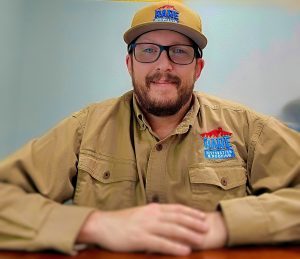 Doug Weatherman, fondly known as "Dougie" or "The Weatherman," is the Chief Operating Officer at RARE Restoration and Roofing in Colorado, where he oversees mitigation, reconstruction, sales, and market pricing. With over 15 years in the restoration industry, Doug, alongside his partner Robert Yockel, has built a team of skilled professionals making a significant impact in Colorado. His journey began in college working for ServiceMaster, transitioning to roles at Restoration 1 and Servpro, where he acquired valuable large-loss experience and numerous IICRC certifications. A dedicated father, Doug enjoys motocross and ranch activities with his son, Reil, and spends his free time on hobbies like snowboarding and mountain biking. Additionally, he manages a digital marketing firm and advocates for trade industry awareness among students.
Related Posts

What If We Built It Differently?
September 16, 2026
2026 Unsung Heroes Award Winners
September 15, 2026