Preface:
In Oct. 2010 at the RIA Fall Conference in Albuquerque, Dale Sailer asked me if I would write a paper of my recollection of the early years of DKI for the purpose of memorializing the organization’s history for posterity purposes. I said I would and after talking with Frank Headen and other DKI members and loyalists, I was encouraged to do so enabling recollections unique to a select few to be captured for future generations of DKI leadership to remember their roots.
Capturing the early years of DKI would first entail talking about the organization’s founder, who was named as the Grandfather of the cleaning industry by Cleanfax magazine several years ago. Ed York was an enigma in so many ways, but what he was more than anything else was a brilliant visionary who created the critical business models that make-up the Cleaning and Restoration industry we know today.
DKI’s Founder:
I first became aware of Ed York in the mid 1970’s from a mentor of mine who took me under his wing early in my career when I lived in Stamford, CT. At the time I was primarily a “cleaner” as the field of restoration was very early in its development as a standalone business. My mentor turned me on to the ASCR (then known as AIDS) and later SCT (the original name of SCRT), and said if I wanted to grow in the industry that I should check out these associations. I joined both organizations and in March of 1977 I attended my first ASCR convention at the Sheraton Bal Harbor on Miami Beach. I attended my first SCT convention in 1978 held at the Wagon Wheel Resort in Rockford, IL. Miami Beach versus Rockford, does one need to say anymore to differentiate ASCR and SCT? The fact is that difference, perception or reality that distinguishes the two associations still exists in the mind of the industry today!
Talking about Ed’s history is an important part of understanding how and why he founded DKI. Ed was all about the little guy and he so detested the “Blue Blood Elites” as he often referred to the “Big Boys” of the day. The story goes that Ed got into the business in the late 1960’s as a salesman for carpet cleaning machines. Before the advent of truck mounted units the steam cleaning machines that followed the early “shampoo” machines was when Ed got into the cleaning business.
He represented a stainless steel unit that looked like a big double coffee pot that used a 7 jet weighted drag tool and had a #2 blower which could support over a 100 ft. of hose. When you turned it on, the sound was deafening and you had to oil the motor periodically so it didn’t burn out. That all said, it cleaned like heck and also was the best early unit used for water extraction on flooded carpets due to its high recovery rate which made drying the carpet on site faster than conventional steam cleaning units or wet vacuums. I believe this last component of this machine is what might have shown Ed the opportunity that existed in the restoration part of the cleaning business.
Ed had the complete “picture” in his head of what the cleaning and restoration industry should look like, and he created the various business models that make up the present day landscape of the industry. SCT was the anti ASCR, and the early set of manuals that every SCT member got upon joining had a regional chapter map of the US included. He also started the IICUC (changed to IICRC and the present day Clean Trust) that would serve as a standalone certification body for the owner operators of SCT.
These certified owner operators needed a place to get trained and to also buy their equipment and supplies, so he stared the Fiber Cleaning Schools of America and Steam Services. The latter being the model for Jon Don and Bridgepoint and the former being the model for an IICRC approved school.
Over the years Ed also had other business model ideas he sold to people under his influence, like Sir Clean-a-Lot and Techni-Clean. Both of these were licensed type offerings for the “cleaner” but never really took traction. His grand experiment in the restoration portion of the business is an entirely different story!
Restoration’s Grand Experiment:
Sometime in the mid 70’s the concept of DKI was formulated as Ed recognized a commercial entity was needed to help the cleaners who were serious about the emerging field of restoration to become more successful. The way I remember the story is that Ed assembled a small group of people to assist in laying out the DKI model. Tom Hill and Ron Toney were part of that group as I can recall as well as an insurance adjuster and some central California cleaner/restorer types who were followers of Ed in SCT, IICUC and customers of his training and supply businesses. Jeff Bishop and Lee Pemberton were closely aligned with Ed in those days, but I am not sure how much input if any, they had as part of developing the original DKI Business model.
The early DKI manual was written along with a special 1 day course called the Restoration Contractor of Record (RCR) which was designed to teach wannabe restorers the insurance dynamic to being a damage repair contractor. Joining DKI in the early days entailed a 3 day orientation period, day 1 was the RCR course and days 2 and 3 was learning and understanding the DKI manuals. This is where the unique terminology was explained about the use of the colored hard hats, understanding Phase 1 and Phase 2 of a restoration project, along with other DKI nomenclature like what was a DCO (Disaster Control Officer). The early guys who signed up where primarily from the west coast and California in particular.
People like Don Bragonia from Merced, CA, Dave Dudley from Visilia,CA, Niles Fletcher from Redlands, CA, John Dean from Bakersfield, CA and Denny Jensen and Mike Davis to just name a few. One of the challenges that some of those early restorers had with Ed was their desire to learn more about smoke and fire restoration as well as other specialty restoration areas such as tear gas, oil spills, skunk emissions and trauma scene clean-up. The body of knowledge in this area was only to be found at ASCR from a Marty King seminar. This created some friction, because SCT was behind in this technical area of restoration. I remember when the first DKI guys started coming to ASCR events, Marty made a condescending comment about DKI because it was spelled wrong! He didn’t like the “K” being used in the word Clean-up, but none the less everyone got over that and moved on and the rest is history as they say.
Consigli Goes West and a DCO is Born:
In 1979, for personal reasons, I wanted to move to the San Francisco bay area and I contacted Ed at SCT and asked for some member referrals in the area to contact that I could network with.
Ed had written an SCT bulletin called the Associates Program that explained the unique dynamic between a Procurement Company and a Production Company. The procurers understood the business side, and the production guy (owner operator types in the day) was a technician who needed the work.
This model was most successfully used in the northeast by ASCR fire restoration contractors who called the production guys their “captive subs”. I had all the supplier training of the day and owned the best equipment that money could buy and I wanted to moved west with my then girlfriend (later to be my wife) along with her brother who I was teaching the business and was my “helper” as they said in the day. A production team was made up of a crew chief and a helper; today we probably say a lead tech and assistant.
In March of 1980, I left Stamford, with 2 vans loaded with equipment and personal belongings with my eventual wife and a friend of hers and my soon to be brother-in-law in tow. The first destination in the cross country adventure was San Diego for the ASCR convention in Del Coronado. After the convention my wife, her friend and brother drove to the bay area as her sister had moved there a couple of years earlier and I stopped in Fresno, CA to attend one of Ed’s certification courses. Back then an IICUC course was a 5 day affair and you were dubbed a “Certified Operator” upon passing the exam. It was in this class that I met Jim Holland who was an instructor for Ed and Darrell and Rodney Paulson you were also attending the course with 4 of their employees.
I eventually settled in Fremont, CA with a company called Larwalk Services owned by Don and Priscilla Larsen. Larwalk was an SCT company and the name Larwalk stood for Larsen and Walker. They got started in the business by buying and selling houses and had bought an old steam machine from Ed to clean the carpets. They eventually did a flood clean up with that extraction unit when one of their buildings had a pipe break and this gave them exposure to the insurance repair market.
Don’s company provided an important component in tweaking the DKI operations model. As Larwalk grew, Don eventually bought out Walker and started to develop some unique ways to perform restoration work. His business was also located across the street from a major waterbed company and in those days that industry was considered unreliable and couldn’t get liability insurance coverage so they self-insured warranty claims. Don built his business in the early years by doing 5-10 water losses a week in the Bay Area for this one company.
The word filtered down to Ed about some of the creative things Don was doing so Ed visited Don in Fremont to see what all the buzz was about. I recall them each telling the story of the “waves” of carpet drying outside in the sun and Don’s way of restoring 95% of all the wet carpet he removed to his plant for processing. But the biggest thing Ed got from Don that became integrated into the DKI Phase 1 procedures came from Don’s police training. Don was an ex highway patrol officer who became disabled due to an incident and he never recovered to be able to return to active duty. That is how he started Larwalk to make a living as his growing young family couldn’t make it on his disability pay.
Don’s police background enabled him to do what came naturally when responding to an emergency; he had back-up beepers on all his service vans along with flashing emergency lights on top. He used two-way Motorola radios and had all his people use the police “10” code when talking on the radio!
This “missing” component from the original DKI manual was soon integrated into the next version and for all subsequent DKI orientations. There are many more things Don did to capitalize off this “emergency” way of thinking and many of those ideas were shared with other DKI members during their biannual marketing exchange meetings that Ed led. I started out with Larwalk as a production sub-contractor per Ed’s Associates Program model and over time became a key employee, which has a short story attached to it that isn’t really salient to this paper.
DKI in the 1980’s:
During my years at Larwalk, I learned and grew in the restoration business. I brought the importance of joining ASCR to Don and other DKI members who were only SCT members. This was important since being a member of ASCR was where the higher learning took place and the national networking that eventually allowed DKI To go from a west coast organization to a national player in the 1990’s.
During the 80’s DKI established their identify with the insurance industry by attending/exhibiting at conventions like the NAIIA and we used to wear these ugly blue and then yellow blazers with the triangle logo/patch that attracted attention in the exhibit hall. Ed was a genius at making us stand out, even if it wasn’t the way Marty would prefer professional restorers attract attention at an insurance show!
There always used to be a marketing workshop around these events and all the DKI companies would bring a small bag of all their marketing materials and exchange them with everyone else. So depending on how many people attended, each member brought an appropriate number of bags and went home with the same amount from every other company after the exchange ritual.
By the mid 80’s I had internalized the DKI way and was becoming proficient as a DCO (DKI’s version of a restoration project manager), and as was the case in the networking and “sharing” meetings exclusive to DKI I always had interesting stories to tell. A big selling point of belonging to DKI was its exclusivity and the fact that not everyone could join which differentiated DKI from an ASCR membership and the “type and level” of sharing. At one of these meetings, I had a particularly high profile job I managed and Ed was so proud that a DKI company was now doing the type of jobs only the Blue Bloods would brag about, that he introduced me as the “Best DCO in the Land” and had me share some insights and lessons learned with the group!
One other part of DKI membership in those days was each member needed to take out what was called a Trademark in column ad in the yellow pages under the new emerging category called Fire and Water Restoration. This was a way to help create continuity and help promote the DKI brand and the individual member’s affiliation. Other than a company like Denny Jensen’s whose company name included the words DKI, most companies operated under their own name, so this trademark identification was an important part of doing regional or national promotion and DKI network members agreed by contract to run these ads in their local yellow pages.
By the late 1980’s DKI had built a solid reputation within the ASCR ranks as being good operators. The industry was starting to mature and cleaning and restoration were starting to become separate businesses as the NIFR division of ASCR grew and reconstruction/remodeling type contactors were starting to join ASCR and participate in NIFR workshops and seminars. In 1988, I got divorced and my ex-wife moved back east and I accepted a job offer to work for Dri-eaz.
Claude Blackburn had approached me at an ASCR convention a couple of years earlier to be the first Dri-eaz instructor to replace him once the company started to grow and he needed to focus on being the President. I was the first “industry “person to work for Dri-eaz and was the first manger of their training department.
DKI Goes National:
In the early 1990’s, Ed was starting to divest himself of his business models as he sold his interest in Steam Services, Fiber Cleaning Schools, SCT (Joel Reets ,Jeremy’s dad and Sonny Bass) and started a process to turn over IICRC by selling stock to 4 individual shareholders, Darrell and Rodney Paulson, Lee Pemberton and Tom Hill. That left DKI as the last significant company he had a financial stake in, still standing that he needed to find a buyer(s) for.
By the early 90’s the restoration marketplace was starting to get competitive as several franchise/network groups aggressively were going after national referrals with major insurers. Paul Davis Systems, First General Services, ServiceMaster, ServPro, Steamatic were the established known entities. Companies like Rainbow where starting to rebrand and go after restoration work and had the financing of a larger organization, the Dwyer Group. Many of the more prominent members in ASCR where ex ServiceMaster guys, like Alan Goeltz and David Mystic ( Paul Campbell) or past First General guys like, Frank Headen, Micheal Griggs, David Collier and others. This group and others recognized that the market was changing and running as an independent would soon be a thing of the past.
A pioneering group from the Northeast led by Alan, Phil McLaughlin, Cliff Ellis, Rusty Amarante, Rea Jones and Steve Osman started talking with Denny and other DKI guys about using DKI as a national brand that prominent independent restorers could use to compete in the new emerging restoration marketplace. That led to a negotiation to buy out Ed. Ed had already started to sell stock to some of his most loyal supporters like the Paulson’s and the Fletchers. Denny Jensen was instrumental in facilitating the original 20 shareholders who bought out Ed and helped steer DKI in the immediate post Ed DKI days.
I was approached to be one of these guys due to the influence I had working at Dri-eaz and based on my networking contacts in the industry from my decade long activities in ASCR. I also had a unique connection to the west coast DKI guys. Claude agreed to me buying stock as one of the original 20 as he “saw” where this would help Dri-eaz by having influence with the most prominent restorers in the industry. During the early 90’s the first region to organize was the Northeast.
Part of the process for someone to join the DKI network besides the financial commitment was the mandatory 3 day orientation of which Ed did the RCR course himself and then he recruited other DKI members to assist with the 2 day orientation sessions. I assisted with some of these to help deliver the message and spirit of the “DKI Way” to the new guys.
After that 2 significant events took place on the west coast to help “unite” the country. One year when ASCR had their convention in San Diego, Darrell hired a cruise ship and invited several prominent restorers from around the country who were at the convention to join the original 20 for a party like atmosphere to informally “sell” them as to why they should join DKI. A formal presentation was given with a “pitch”, and it got the attention of many, not the least being Frank Headen.
The other significant west coast event that really helped “launch” the new DKI was a meeting hosted by Dean Russell of Cromwell in Vancouver, BC. This meeting was attended by Derry Strong who eventually joined and helped organize the DKI members in eastern Canada to better directly compete with the Paul Davis and First General networks in the area who were both very strong players in that market. One other important reason to join a network that came out of this meeting was the idea of coop buying.
An item that all restorers used was the rubber “Chem” sponge and they were expensive. An informal survey was taken of the group as to how many cases would they being willing to buy if the price was right. Based on that survey, several hundred dozens of sponges eventually were ordered and after that DKI approached key suppliers for similar arrangements. Claude was at that meeting, and that single event validated his reasoning as to why it was a good idea for him to allow me as a Dri-eaz employee to also have this sideline interest to participate in. Subsequent to that meeting Dri-eaz made a deal with DKI to private label yellow air movers.
DKI Becomes a Major Player:
By the mid 1990’s DKI started to organize and grow exponentially. Shortly after the original 20 bought out Ed and the recruiting meetings garnered interest around the country DKI hired its first Executive Director, who was Marty Berry the ex ASCR Exec. Director who had been replaced by Claudia Ramirez. I was on that first board of directors which was made up of shareholders only and Cliff Ellis was the first president as I can recall. During the time Marty managed the fledgling new emerging national group, DKI was referred to as a “business fraternity”.
Marty’s stay was only about a year and at some point in the mid 90’s Derry was hired and offered a stock option as I can recall. During this time the DKI HQ was located in Indianapolis and friction started behind the scenes about the differences between DKI US and the DKI Canadian entity. During this growth period of DKI, regional chapters were established and most of the DKI members maintained their ASCR membership and used ASCR as the entity to get their technical training and credentialing through the CR program. During that early transitional time period, DKI had a specialty affiliation for drying contractors and other service providers who did not offer full service restoration like the typical DKI network member.
This affiliation type “membership” was eventually eliminated as DKI focused on growing the primary full service network and didn’t want to give an “out” for some companies to have a cheaper way to market under the DKI brand. That said, many of these companies still continued to work with DKI members through their affiliation as ASCR members.
After Marty’s departure and before Derry came on board, DKI needed an infusion of money and there was some disagreement among the shareholders as to how that would work.
It was during this time that my “work” with helping DKI make the transition from Ed to the original 20 was over and I sold my stock to the next person on a waiting list that had been established during the recruitment meetings. Frank Headen coincidentally was the next up on the list and he bought my shares.
Around this time, a “take over” of DKI led by Denny and a few others took place because they were the one’s willing to infuse the cash the organization required to become a significant player on the national scene. There were some bruised feelings as part of this “necessary evil” that hard business decisions often require. I agree with the sentiment of the “take over” group that DKI would never have been able to reach the next level and be the force it is today if what happened never had happened!
The Future is Bright:
This would seem to be a good place to wrap-up my recollection of an historical account of DKI’s early years. Although Dale didn’t come on board until 2002, there are many DKI insiders who can pick up the story from where I left off. I appreciate the opportunity be able to write this paper and I hope the information is useful to an organization to which I have a strong connection and many fond memories. If Ed were alive today, I think he’d be amazed at where his grand restoration experiment has gone. May DKI’s founder rest in peace knowing his idea has helped so many and will forever be an indelible part of the restoration landscape!
G. Pete Consigli, CR, WLS, Industry Adviser, RIA Honorary Member & Historian
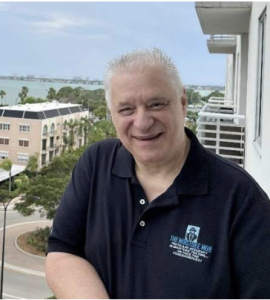 Pete Consigli is a Restoration Industry Association (RIA) Certified Restorer (CR) and Water Loss Specialist (WLS) and has been a member of the Restoration Industry Association since 1977. Over the years he has been an active volunteer and filled various association leadership roles. Pete is RIA’s “Resident” Historian and an archival resource to the industry. In 2008, Pete received RIA’s most prestigious honor for excellence in restoration, the Martin L. King award.
In 2015 in Dallas Texas the Indoor Air Quality Association (IAQA) inducted Pete into the IAQA Hall of Fame. Pete has been an adviser and bridge between the restoration industry and IAQ and Building Science communities since the 1990’s.
Pete Consigli has been in the cleaning, restoration, and IAQ industry for five decades. He contributes to trade publications and standards development and participates in industry events. Pete has been an Adviser for RIA’s Water Loss Specialist (WLS) advanced certification designation and enjoys Emeritus status as one of the WLS program’s founding fathers to the program since its inception in 1999. When asked, he serves as an advisor for RIA education.
The RIA recognized Pete in 2021 at their 75th Diamond Anniversary Convention in Orlando, Florida by naming its new scholarship program, “The RIA Pete Consigli Educational Scholarship Award” in his honor. RIA presents the award at its Annual Convention and Exposition. Pete has been an advocate of Purdue University’s Disaster Restoration and Reconstruction Management (DRRM) program, providing guest lectures to students and advising the program over the years.
In February of 2024, Pete served as host, in addition to his long-standing role as the program facilitator of the decade long Winter Break technical conference held in South Florida. The 2024 conference, for its 4th consecutive sellout, was rebranded to, “Restoration Winter Break: The Sunshine State Customer Intimate Summit!”. Pete enjoys his reoccurring role as the “Restoration Global Watchdog, with his longtime friend Cliff “Z-man” Zlotnik on IAQradio+, whom he shares RIA honorary member, IAQA hall of fame inductee, and WLS founding father.
In October of 2024, the IICRC appointed Pete as the Institute’s “Higher Education Outreach Liaison”, in this volunteer role, Pete will advise the IICRC on restoration activities in academia.
Related Posts