Key Takeaways:
- AI advancements will enhance and allow for more purposeful human touch in the claims process.
- Better data and true understanding of risk could help carriers be more inclined to insure properties once believed to be of greater risk than they actually are.
- All parts of the industry need to lean into making properties more resilient and resistance to loss.
- Digital twins will continue to be a growing part of the insurability and restoration framework.
- Compound risk is a critical component of the property claims environment today and something everyone should seek to understand, especially within their markets.
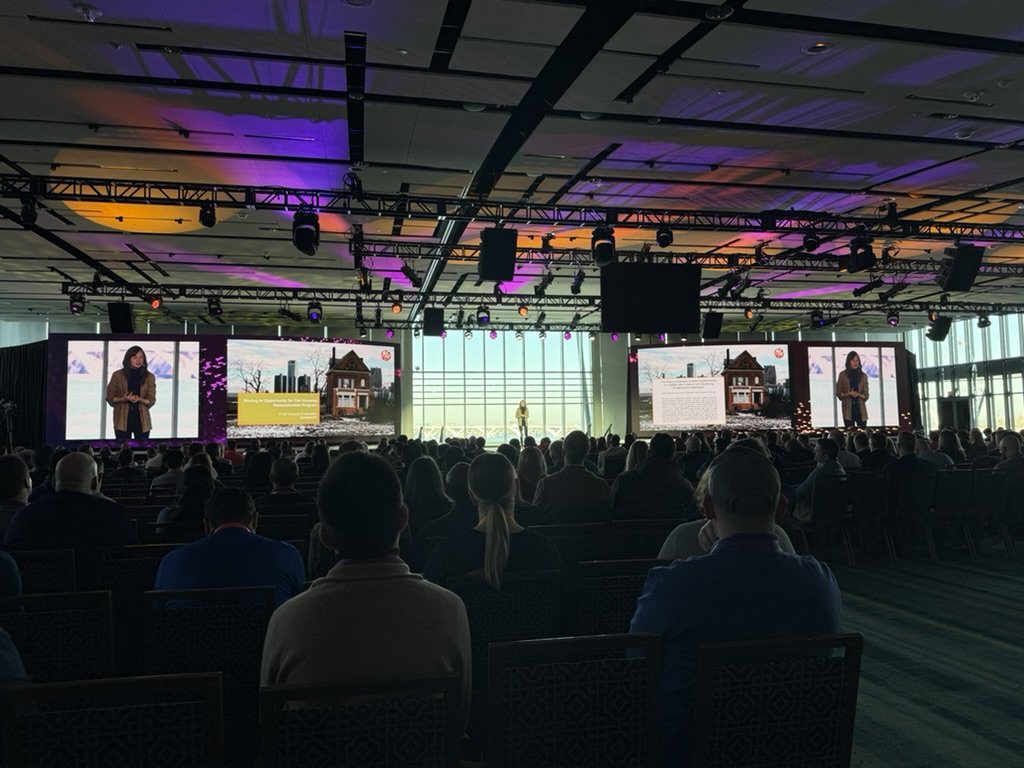
Image courtesy of C&R Magazine
In a period everyone admits as challenging for the property insurance ecosystem, Cotality’s team took a personal approach to INTRConnect 2026. It is accepted as fact that overall, claims volume is down, and policyholder behavior has shifted. Garret Gray, president of Global Insurance Solutions at Cotality, opened the conference with a more personal look at the current state of our industry. The keynote was visually engaging, and wove a number of stories from restorers, property owners, and members of the Cotality team to give a birds eye view of all sides of the claims environment.
At the core of the keynote was a recurring theme: the future of insurance and restoration will not be shaped by choosing between technology and people, but by learning how to design intentionally for both. In his keynote, he talked about the human touch as a strategic asset in the insurance ecosystem; one that becomes more important, not less, as AI and automation accelerate the overall claims process. Rather than removing relationships, technology now has the potential to increase meaningful touchpoints, improve visibility into risk, and help carriers and contractors navigate markets that are becoming partially uninsurable due to severe weather risk, or in some cases – perceived risk.
Better hazard modeling, smarter underwriting with the help of technology but human oversight and verification where needed, and more precise claims workflows are allowing carriers and restorers to understand risk earlier, intervene faster, and, in some cases, preserve insurability in markets that would otherwise be written off. It set the tone for the days and sessions that followed focusing on how technology, discipline, and leadership now intersect in an industry operating inside growing unknowns.
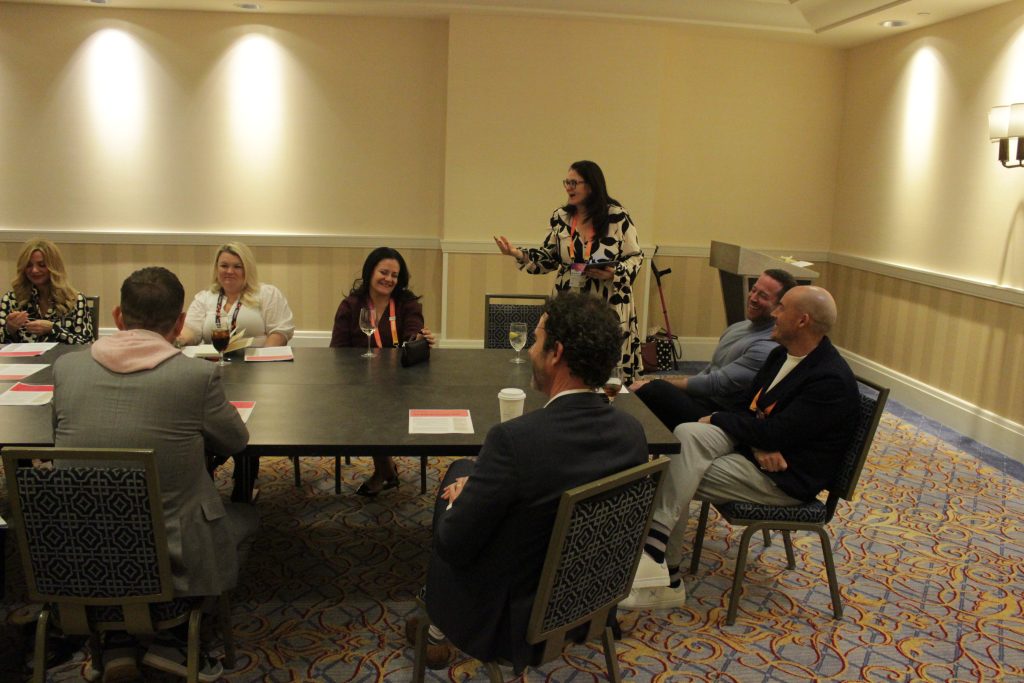
Image courtesy of C&R Magazine
That theme carried directly into the Media Roundtable, where the conversation shifted from future possibility to current operating reality. This closed session brought together invited media, content creators, and industry influencers to have direct industry-related conversations with many of Cotality’s leadership. Compound risk – multiple perils, secondary losses, and infrastructure failures stacking on top of each other – was no longer discussed as a theoretical trend. It is now the environment restoration companies are working in. The questions focused less on single-event catastrophes and more on how overlapping events are changing what carriers expect from contractors in documentation, scope, cause of loss, and cycle time. As hazard models become more precise and underwriting tighter, file quality and clarity are moving from back-office concerns to frontline differentiators.
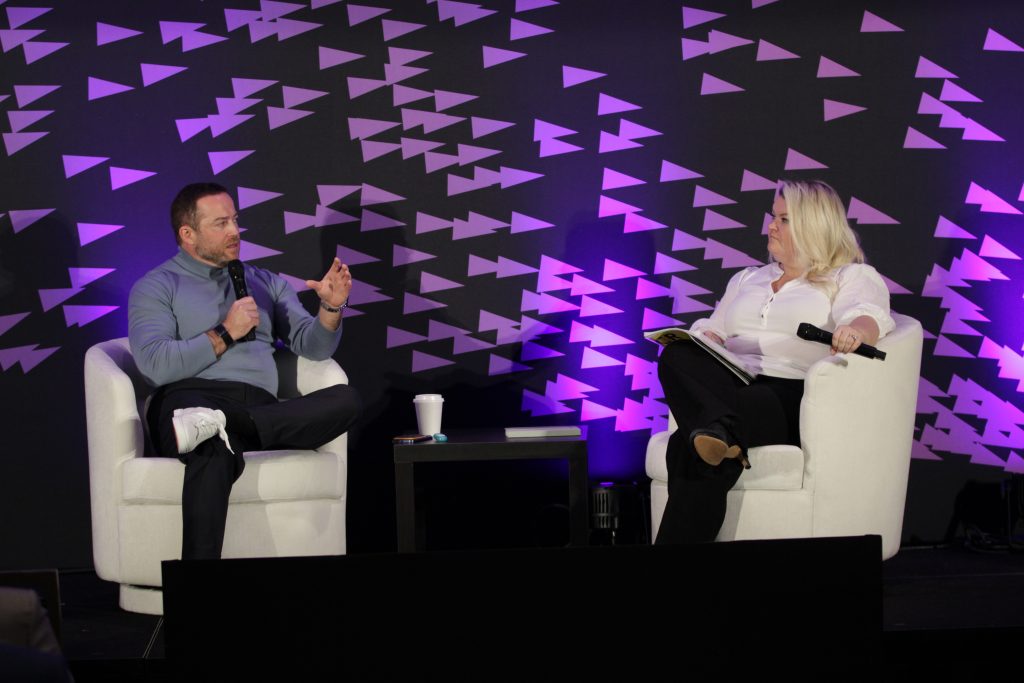
Image courtesy of C&R Magazine
That same theme of discipline over instinct surfaced again in the Fireside Chat I led with Garret later that day. Rather than focusing on growth tactics, the conversation centered on the internal transitions owners face as their companies scale – from working in the field to, in Garret’s case, leading hundreds of people. He discussed the pivotal concept of letting go to grow – going from problem-solver to system designer, and from control to trust in the team around you. He spoke candidly about how leadership evolution, not market conditions, ultimately determines how far a company can grow. It was a reminder that enterprise value is built as much through identity change as operational change.
From the C&R podcast booth, those macro forces translated quickly into operational realities. Across conversations on scaling, estimating, and hazard risk, a consistent pattern emerged: volatility is rising even as overall demand stabilizes. Remote estimating, flexible capacity, and disciplined file standards are no longer simply growth tools. They are risk controls. In our discussion on remote estimating, the focus was less on efficiency and more on how estimating becomes a margin-protecting system when volume swings, surge events, and carrier scrutiny increase at the same time. The question owners are now facing is not whether to standardize, but how quickly they can turn estimating from a bottleneck into a scalable function.
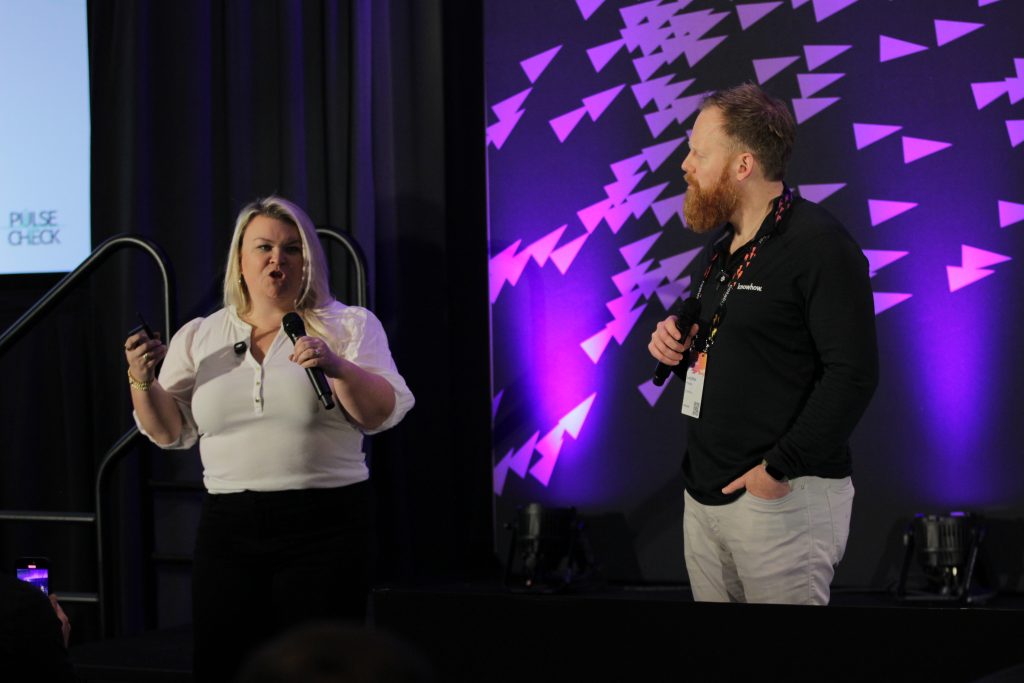
Image courtesy of C&R Magazine
The State of the Industry sessions reinforced many of the topics above – while also leaning into contractor resilience. This is not the first “tough period” for the industry; they come and go. The resilient contractors survive. The contractors pulling ahead are not simply adopting more technology – they are building systems that align documentation, estimating, production, and cashflow/financial health. The gap forming is not between large and small firms, but between disciplined operators and everyone else.
In the coming weeks, our podcast conversations will dig deeper into these fault lines:
- How emerging hazard data should influence market selection and branch placement – with Maiclaire Bolton Smith, VP of Product Marketing at Cotality
- How AI and aerial imagery are reshaping inspections and estimating – The season 4 debut of the Restoration MasterClass with Nelson Higgins of DocuSketch.
- Unpacking whether AI is fueling sustainable growth or the next bubble – and what today’s shifting economy, rising costs, and uneven recovery mean for restoration contractors – with Selma Hepp, Chief Economist at Cotality
The common thread across all of it is clear. Enterprise value in this industry is increasingly created not by chasing more work, but by building organizations that can operate profitably and continue to grow the bottom line inside a changing ecosystem.
Michelle Blevins
 Michelle Blevins is a content creator, marketing consultant, and entrepreneur whose career has been centered around education and fostering relationships within the industry she serves.
A journalist by trade, Michelle is passionate about running a publication rooted in integrity and valuable education. She views her role as owner and publisher of C&R Magazine as a bridge between industry experts and restoration and cleaning contractors.
Since joining the restoration industry, Michelle has made it her business to stay on top of the latest industry trends. She has become a go-to resource for anyone looking to learn more about what’s happening within today’s restoration industry. This has earned her a spot on many industry stages facilitating panels and helpful discussion with industry experts on the biggest topics facing restorers and cleaners in the current market.
Related Posts