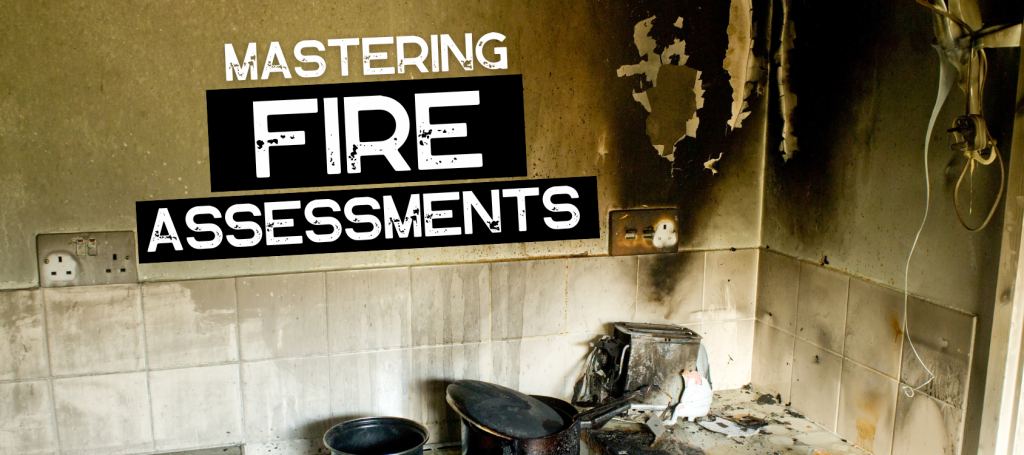
Assessing damage caused by fire, be it structural or wildfire, is an essential task. However, it is a challenging one, as there are no standard guidelines outlining the necessary criteria and potential methods for restorers to assess the damage. Nonetheless, we can gain the necessary awareness to understand fire pressure, movement, smoke, soot, odor, cleaning, and remediation techniques through education, articles, industry books and magazines, and experience.
During the fire assessment process, we may encounter limitations, complexities, complications, or conflicts (LCCC) with the assessment process. It is crucial to understand and communicate these issues to all relevant parties. First responders may also cordon off certain areas with signage and caution tapes that should be documented and recorded.
Fire assessment is also an excellent opportunity to call contacts and let them know what is needed, such as power, additional equipment, dumpsters, board-up teams, and reporting to support whether or not it is safe to start the cleanup. The assessment is meant to support the RWP or Protocol by addressing:
- initial site awareness
- emergency response
- thorough damage assessment
- information investigation
- authorities having jurisdiction (AHJ) inspection reports;
- appearance testing
- odor perception
The extent of project documentation and recordkeeping varies with each cleaning and restoration project. We, as restorers, should record all information relevant to the project over the duration of the project to protect their interests in addition to the client’s and other MIPs’ interests.
There is no way to determine what was burned through visual or olfactory tests. The only reliable method is for a qualified person to collect samples, according to the American Industrial Hygiene Association’s recommendations. A third party is usually responsible for collecting and submitting the samples to an accredited laboratory for analysis. Once the laboratory completes its analysis, the information is recorded in the RWP or protocol and shared with all MIPs.
The industry is in its infancy in writing and putting together fire assessments that may not cover all the possible situations, as each structure is unique but has similar structural sciences. Still, every building is designed, built, used, and located differently. So, the visual fire assessment and necessary documentation are crucial in writing a Restoration Work Plan (RWP) or Protocol unique to that site and client.
When a fire occurs, the restorer’s evaluation of the damage to the structure, exterior, and interior, along with any losses from the wildfire and the associated costs of cleaning and restoration services, can significantly impact the project. As restorers, we must be honest, unbiased, and ethical throughout the process. Industry associations like IICRC, RIA, and ACAC have established codes of ethics that all participants should read and follow.
As we have progressed from the ‘early days’ of cleanup and remediation after fires using rudimentary methods, we now have advanced techniques such as laboratory analysis to assist us in many ways. Including scene assessment, differentiating between wet or dry fire scene cleanup, the style of the building, the type of fire, and more. Laboratory analysis is the only form of quantitative testing for fire particulates, smoke, and soot, making the RWP and protocol accurately reflect the fire event.
The person responsible for assessing the damage caused by fire should be adequately trained, experienced, and possess the necessary knowledge to apply effective fire cleaning and restoration methods. It’s also essential to seek assistance from specialized experts in cases where there’s unfamiliarity with the materials, surfaces, assemblies, and items that need to be cleaned or remediated. This approach ensures that the structure and its contents are restored to a more realistic expectation.
During the fire assessment process, the team first evaluated the affected area to determine whether it was a continuous burn or a sudden flame burst. They also check for any unusual odors. The assessment starts from the outside and moves inward, with a focus on identifying any safety or health risks, as well as any security concerns. Any additional resources needed are also documented at this stage. This assessment provides important context for the decontamination plan, outlining what needs to be cleaned and what restoration services are required.
Fire assessments provide an RWP or protocol for the structure’s exterior and interior environments and the contents’ cleaning and remediation process. Sometimes, we are asked to clean and restore a particular content whose perceived value is cheap but potentially costly in its consideration in cleaning and restoration. Yet, the client requests it to be processed. We know there is potentially more cost to the cleaning and restoration charges, and our client may be responsible for the price.
When performing a fire assessment, we should gather the facts from the client, family members, and potentially from other sources such as neighbors, witnesses, and other on-site personnel and document any relevant information regarding building history (e.g., year of construction, recent work performed on building systems, building use.) This information gathering could be used to provide information to supplement the RWP or Protocol.
It is essential to maintain thorough documentation and record-keeping throughout the execution and completion of a successful restoration project. This information is valuable if there is a need to review or reconstruct the restoration process or project at some point after completion. To properly develop and document a fire smoke restoration project, it is suggested that the restorer should obtain all relevant project information that was acquired before, during, and after the involvement of the project. It is also recommended that all communications be documented to reduce the potential for misunderstanding and miscommunication.
To sum up, evaluating fire damage can involve collecting information that ranges from basic to complex. Cleaning and restoring fire-damaged properties demands expertise, proper training, and a fundamental comprehension of construction methods, materials, and building structures from both past and present times. Investigating and assessing a fire incident may call for a multi-disciplinary team comprising professionals from various fields.
Ref:
RIA – Guidelines Fire and Smoke Damage Repair
Additional Literature for Awareness and Knowledge.
The Red Guide to Recovery- Sean Scott
The Leadership Guide to Drying – Ken Larsen
EMSL – Fire & Smoke Damage Testing “Pocket Guide”
King, Martin L. and Kovar, Brad: Evaluating Smoke Odor Damage, Journal of Cleaning, Restoration and Inspection (IICRC), February 2015, P23-P26, http://digitaledition.qwinc.com/publication/?i=243779&p=24
Related Posts