Imagine this: a family experiences a devastating house fire. Emotions are high. Expectations are higher. Your team shows up not just with empathy and skill, but with the right tech tools in hand. Photos automatically sync. Job notes are voice-dictated and instantly accessible. Customer updates are sent in real time. That’s not a futuristic scenario; that’s what happens when technology is adopted well, within a system designed to support it.
Welcome to the Tech Talk column, where each month we’ll unpack how technology can move the restoration industry forward, one bite-sized insight at a time. This first edition is just the introduction, laying the foundation for what you can expect moving forward.
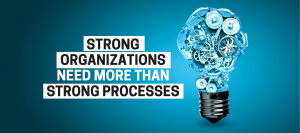
Here’s the big idea: technology alone doesn’t change your business. Systems do. Because as Michael E. Gerber put it, “People don’t run businesses, people run systems, and systems run businesses.”
At Southeast Restoration, we believe that technology should serve as a key part of those systems, not a standalone solution, and definitely not just a shiny object. When technology is introduced without a clear process, or without supporting systems to guide its use, it creates friction. That friction can show up as forgotten follow-ups, delayed invoices, or overwhelmed team members. Left unaddressed, it chips away at consistency, communication, and customer trust.
That’s why we treat friction as a systems problem, not a people problem.
When something slips, whether it’s a missed adjuster call or a job that stalls, we don’t just remind the person. We ask, “What part of the system allowed this to happen?” More often than not, the answer lies in a gap we can close with a workflow, a checklist, or a clear point of ownership. Our checklists aren’t just task reminders. They’re friction-finders, designed to drive clarity, consistency, and accountability across the team.
Because here’s what we’ve learned: when systems are clear and well-supported, your team feels capable in their role, confident in their decisions, and empowered to show they care for the customer, the mission, and the result.
And yes, technology plays a major role in bringing those systems to life. From automation to mobile apps to dashboards and documentation tools, technology gives us leverage, but only when it's implemented with intention and reinforced with structure.
Future editions of Tech Talk will bring you:
- Bite-sized case studies from the field
- Perspectives from vendors and technology leaders
- Lessons learned in user adoption and rollouts
- Practical tips to help your teams stay ahead of the technology learning curve
This isn’t a place for overwhelming technical manuals or shiny-object syndrome. Think of it more like a TED Talk at TikTok length. Quick, engaging, and applicable.
So here’s your call to action: before rolling out the next piece of technology, start by identifying the real friction. Where are things breaking down? What’s frustrating your team, slowing the customer experience, or impacting results? Once you’ve named those pressure points, then ask, “Could technology help solve this, and will it actually support the people doing the work?”
When we lead with friction first, we build smarter systems. And when those systems are thoughtfully designed and supported, they create teams who feel capable, confident, and who truly care.
In the restoration industry, we often walk into people’s worst days. Technology won’t replace compassion, but when built into the right system, it can multiply our impact and help us serve with excellence.
Let’s build that future, one byte at a time.
Taylor Carmichael
 Taylor Carmichael is the Director of Systems at Southeast Restoration, where she leads the integration of technology and operations across the cleaning and restoration industry. With a Master of Information Systems and over a decade of industry experience, Taylor focuses on streamlining workflows, improving communication, and driving scalable solutions. She’s passionate about making technology practical by bridging innovation with day-to-day execution to help restoration teams work smarter and grow stronger.
Related Posts