The restoration industry is a unique business model. It’s hectic, fast-paced, and leaves very little room for error. With over 50,000 restoration companies in North America, you must maintain an edge to succeed, or someone will gladly take your place.
Oddly enough, we tend to focus on tech and equipment when what we should focus on is usually the last on anyone’s list: PEOPLE. No part of your business has the potential to impact your business as much as the people you employ. We all know this, yet we often fail to create a process to ensure we bring in the right people by defining the qualities and traits that we feel would make some successful at their roles and within our unique organizations. Instead, we often prioritize availability, technical skill, and experience. While those are important, they are only part of the equation. I would argue that soft skills and cultural fit are equally, if not more important. I would rather have an eager, energetic, hungry, communicative newcomer with the same values as me than a 15-year vet who can’t effectively communicate with my customers and demonstrate my values daily.
Remember, the people you employ are walking and talking billboards for your company, so you should take the time to ensure that they will represent the company the same way you would. Hiring individuals who resonate with company values and fit the mold that you have created for a particular role creates a collaborative work environment, enhances employee engagement, and drives long-term success.
Recruiting–Are You the Problem?
I spoke with a restorer a few weeks ago, and he told me he had hired and fired 40 project managers over the past two years. He asked me if I knew good recruiters because the ones he was working with clearly weren’t working. I told him I knew some great recruiters, but that wasn’t his issue. I asked him one simple question: “What’s the common denominator across all 40 of those project managers?” He seemed puzzled for a moment. “It’s you,” I said. I asked him to interview me for the role, and we did a mock interview. When it was over, I asked if he would hire me based on my answers, and he immediately said yes. So then I asked how many of my answers demonstrated the traits and principles he wanted from an employee and watched as the light bulb went off.
Many of us expect new hires to adopt our values. Values are developed from years of life experience and are deeply rooted and hard to change. A new employee is much more likely to adopt your values if they already share some of them.
Identify Your Company’s Values
Your company’s values define your identity and work as a beacon to help guide your business. They shape culture by providing a roadmap for how employees interact, make decisions, and approach challenges. When you create a team of like-minded people with the same values, the team will feel more connected and committed to achieving shared goals. Remember, hiring someone who aligns with your values is only one part of this equation–we still need to be able to assess the candidate properly to determine if they have the skills we feel will make them successful in their role.
First, we have to define the different roles and common traits that successful people within those roles possess. There is no one-size-fits-all to this, but a few that I’ve always leaned on are:
- Adaptability: The unpredictable nature of what we do requires individuals who can quickly adjust to changing conditions and solve problems on the fly.
- Resilience: Emotional and physical stamina are crucial, given the demanding environments and the often distressing situations.
- Communication: Can they effectively communicate in high-pressure scenarios with clients and coworkers?
- Spatial awareness: Do they understand space and distance?
How to Determine if a Candidate Aligns with Your Values
So, now that you’ve identified the traits you want, how do you determine if the candidate possesses them?
Traditional hiring practices rely on resumes and interviews, and we aren’t asking the right questions. You must change your interview tactics and stop wasting time with questions like “What did you do at your last job?” Does it even matter? Employers need to incorporate a more holistic approach to evaluating candidates more effectively.
- Tailor Your Questions: Use behavioral interview techniques to ask candidates to provide concrete examples of past experiences where they demonstrated these qualities. Can you describe when you faced an unexpected challenge or change in a project or work environment? How did you adjust to address this challenge, and what was the outcome? This question will provide some insight into their decision-making process and problem-solving skills.
- Employ Situational Scenarios: Incorporate situational questions that place the candidate in hypothetical scenarios. Imagine a major hurricane has caused extensive damage, and despite planning, you have setbacks, including equipment failures, inaccessible areas, and unforeseen structural issues. How would you personally manage these issues and the stress of this situation? While this question is certainly advanced, I think you get the point. You can scale the question to fit the role, but the idea is to put the candidate in a complex, high-pressure scenario that tests their resilience and leadership. Find out how they would handle a series of setbacks.
- Focus on Cultural Fit: Go beyond technical skills and explore the candidate’s alignment with your organization’s culture and values. Questions about how they handle conflict, work in teams, and their motivations for joining your field can provide insights into their potential fit.
- Use Competency-Based Assessments: Assign a task or project that simulates a job-related challenge. I always used to ask estimator candidates to look at our room and tell me how many basketballs would fit. I had already done my calculations and wanted them to be close to mine, but I was more interested in their process. Did they understand the space, and how well could they “estimate” the numbers needed to come up with an answer?
- Incorporate Behavioral Assessments: DiSC is an example that is widely used in various settings to help people understand a person’s professional and personal persona.
- Encourage Two-Way Dialogue: Remember, the interview process is also an opportunity for candidates to gauge their interest and fit with your organization. Encourage them to ask questions, which can sometimes tell you as much as their answers.
Identifying the right blend of individual capabilities and organizational compatibility is the key. Organizations can build cohesive teams by prioritizing cultural fit alongside qualifications, creating a positive work environment, and driving sustainable success.
Remember, the goal is to find professionals who not only excel in their roles but also contribute positively to the organization’s culture.
If you want to supercharge your business, focus on people, implement effective strategies that empower them to be successful, and sit back and watch.
Jason Gilstrap
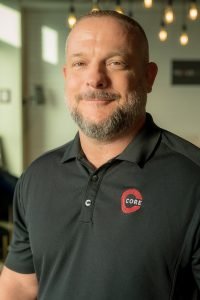 Jason has over 25 years of experience in construction and restoration. He started out pushing a broom and swinging a hammer in high school, eventually growing to hold more advanced roles in the field. He has been involved in project management for 25,000+ square foot custom homes, multifamily developments, and commercial construction. He eventually accepted the challenge of starting his own business and self-performing general construction projects. In 2008, Jason began working in restoration as an independent contractor, working with restoration companies as a traveling large loss project manager before becoming part of a national catastrophe team that responded to natural disasters nationwide. Jason currently serves as the Senior VP of Operations at CORE, where he works to support CORE members by helping them develop new growth strategies, champion employee development, and discover lost efficiency.
Related Posts