 Share a little bit about your company – its background, location, etc.
1-800 Packouts is a content-focused restoration company and national franchise. The NW Philadelphia location is the first in Pennsylvania, and Keith is excited to support his hometown, where he has lived for the past 25 years. This location serves all of Bucks and Montgomery counties, along with Philadelphia and the entire metro area.
When did you first get the call about the loss? How did you land this job?
We received the call on Tuesday, Feb.11, 2025, from a water mitigation company that was already on-site and needed packout support. Our location has a strong relationship with this mitigation company, as we both serve the same region, and our offices are only about a 10-minute drive apart. While they use multiple packout companies, our proximity and ability to handle logistical challenges made us the ideal choice for this job.
Walk us through the loss:
This was a water loss caused by a failed fire suppression sprinkler located just outside the shower in a bathroom. The homeowner suspected that the pipe may have frozen, as the region had just experienced a stretch of sub-freezing temperatures. The sprinkler head was also near a window, which may have contributed to the issue. Another possibility was that the sprinkler head was simply old and failed due to wear and tear. The homeowner shared a video showing water pouring from a ceiling light outside the shower, resembling a waterfall.
The entire one-bedroom condo sustained water damage, affecting the flooring and portions of the walls. Water also seeped outside the unit, entering the freight elevator shaft adjacent to the condo. This caused the elevator to malfunction, rendering it inoperable for the duration of the project.
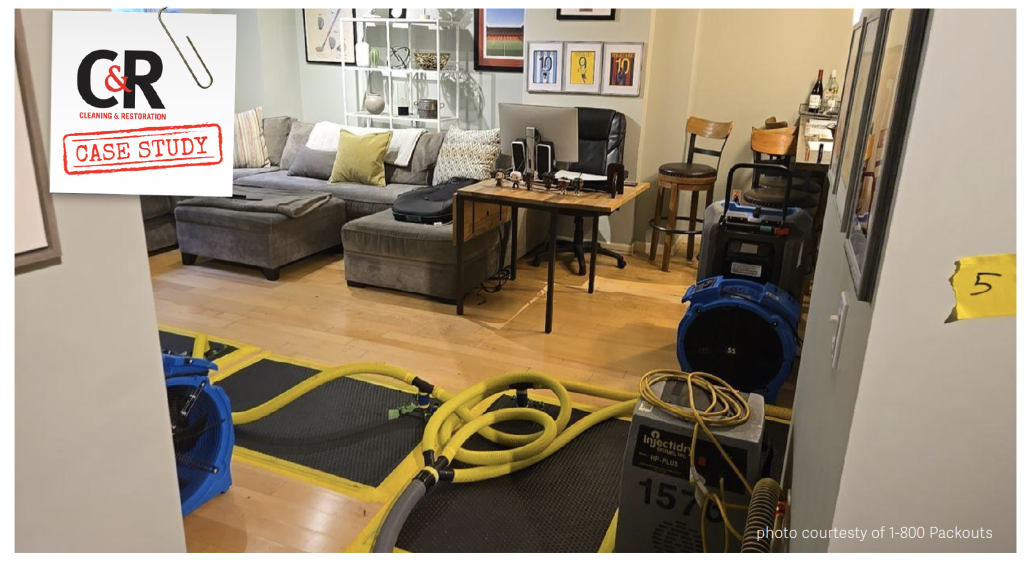
Mitigation was necessary to remove standing water from the floors and beneath the engineered plank tiles. The flooring had to be demolished, revealing a concrete subfloor. Additionally, water had penetrated the walls, requiring the bottom two feet to be removed and rebuilt. The condo also contained numerous belongings with no available storage space, making a full packout essential.
The packout crew consisted of seven people: one supervisor and six technicians.
What was the biggest challenge on this loss? What was the biggest win?
Challenges:
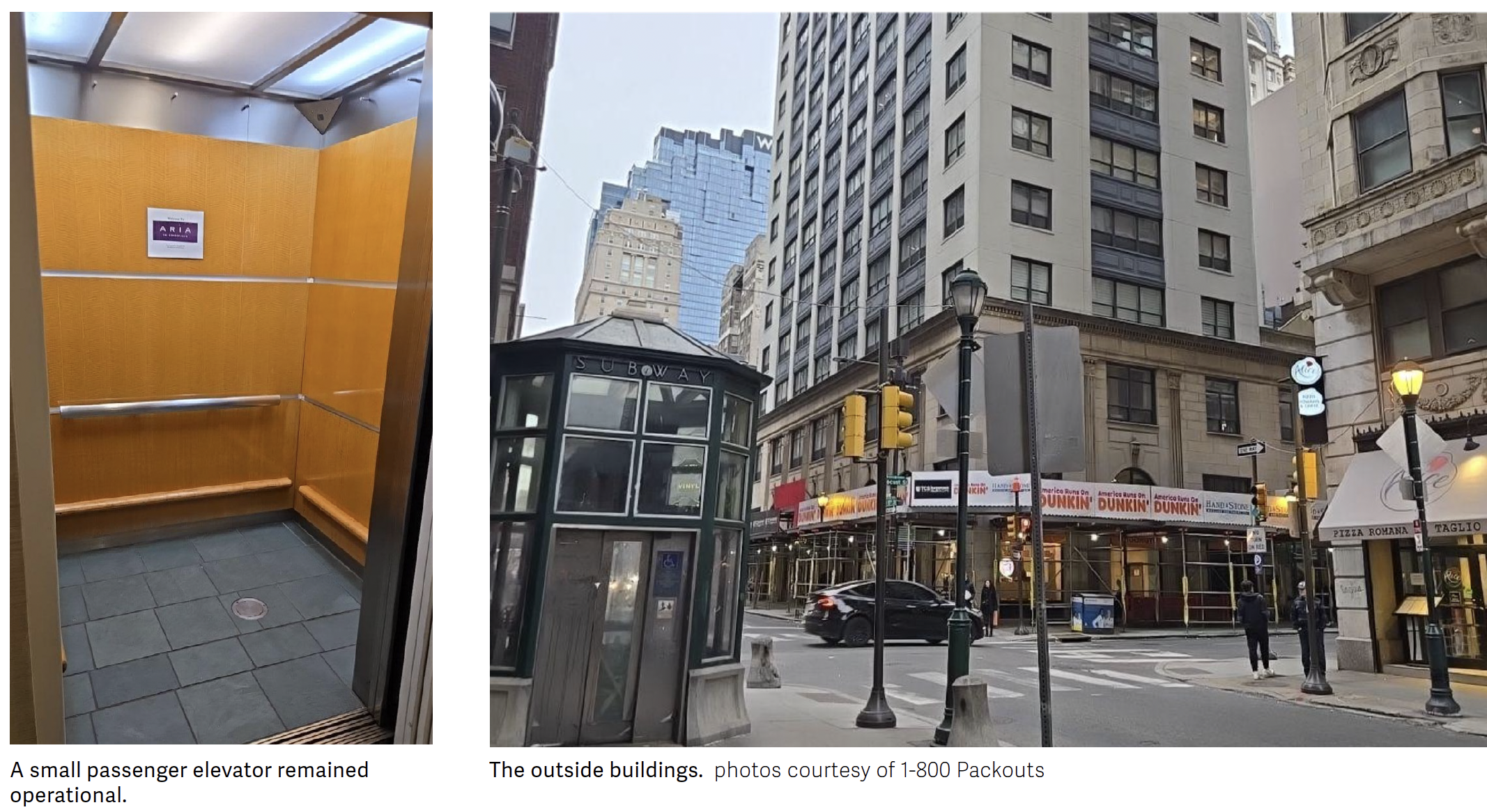
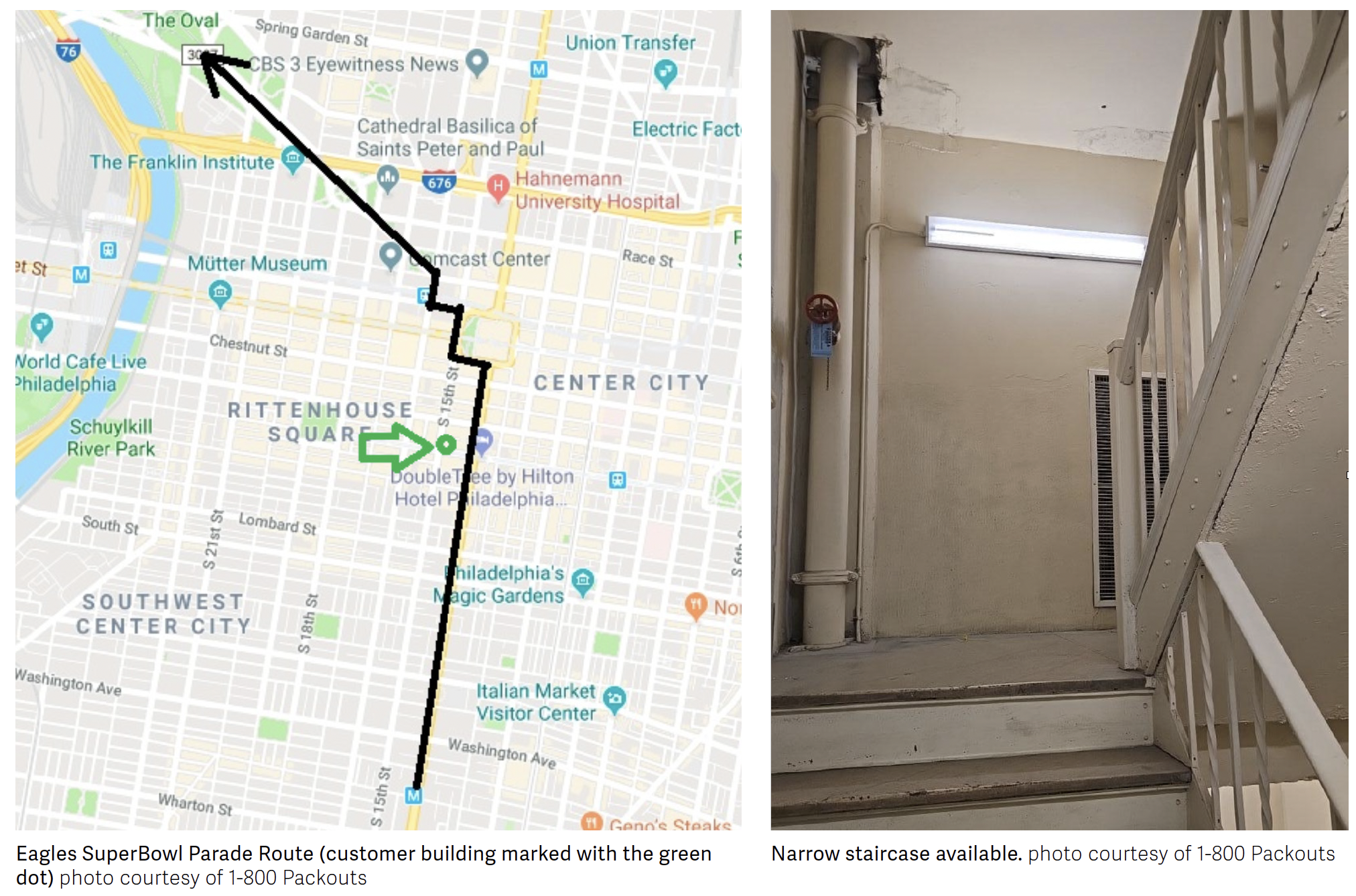
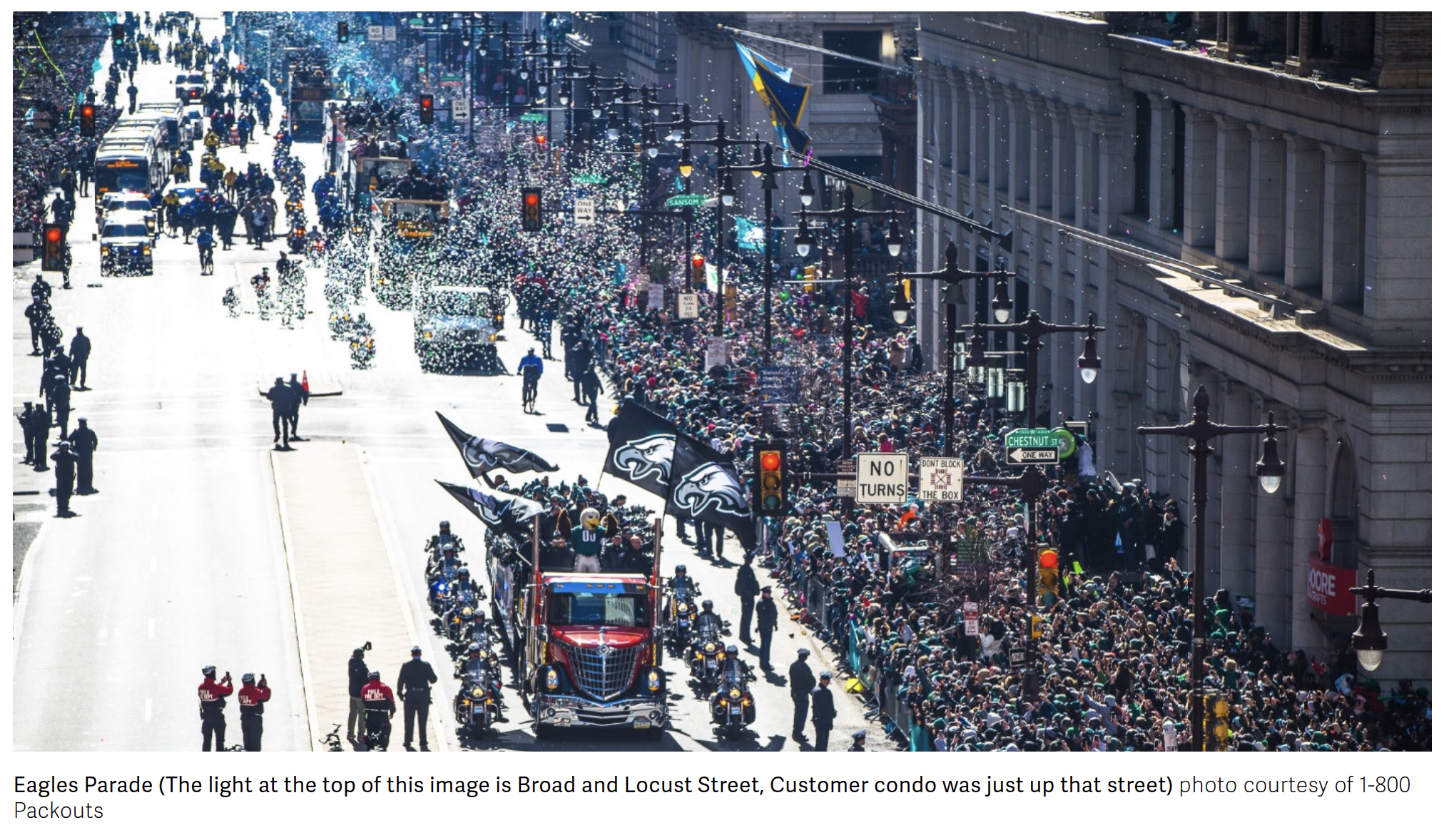
- Location: The condo was at 15th and Locust Street in downtown Philadelphia. Just two days before our scheduled work, the Philadelphia Eagles won the Super Bowl. This area is a major gathering spot for fans celebrating significant victories, and a Super Bowl parade was planned for Friday, February 14. The parade route ran just a few hundred feet from the building entrance, and the area was scheduled to be closed to all traffic from Thursday to Saturday.
- Parking and Traffic: The area has limited parking, heavy vehicle congestion, and significant foot traffic. While there was a loading zone across the street, it could not be reserved and had a one-hour time limit.
- Building Restrictions: The condo concierge informed us that we could only work between 10 AM and 4 PM. Additionally, we were prohibited from using the front entrance and had to access the building through a utility entrance, which required someone inside to unlock it.
- Elevator Issues: Due to the water damage, the freight elevator was out of service. Only a small passenger elevator remained operational, servicing all 26 floors and shared among all residents. A narrow staircase was available, but moving large items through it presented significant challenges.
Wins:
- Customer Flexibility: The homeowner understood the challenges posed by the Eagles celebration and parade, allowing us to postpone the packout until the following week.
- Parking Solution: When we arrived, the loading zone was available. By always keeping one person in the truck for security, we were able to maintain our position there for the duration of the packout
- Strategic Planning: We carefully assigned roles to maximize efficiency. Three team members focused on packing and preparing furniture in the condo, while another three transported items to a staging area near the access doors. Once enough items were gathered, we moved them to the truck while monitoring traffic. This strategy allowed us to complete the packout within the designated time frame, finishing with an hour to spare.
What is the biggest lesson your team learned, good or bad, on this loss?
Planning is critical for all packout projects, but it becomes even more crucial when logistics are challenging. Our team coordinated early, developed a detailed plan, and created a mock timeframe. Before leaving the warehouse, we briefed everyone on the strategy and then reinforced it on-site. As the project progressed, we maintained constant communication, making necessary real-time adjustments to ensure success.
How long did the restoration process take?
The packout took one day, with our team on-site for approximately four hours. The full restoration is still in progress and is expected to take several more months before the contents can be returned.
How was communication with the carrier/adjuster throughout the process? How long did it take to receive full payment?
We prioritized proactive communication and provided updates as soon as they occurred. We contacted the adjuster as soon as we received the lead, followed up after the initial visit, provided an estimate, and maintained communication throughout planning and completion. The adjuster was understanding of the logistical challenges and approved additional staffing to meet the project’s needs. As of now, we are still awaiting payment for the packout. However, it has only been 25 days since invoicing, and we operate on net 30 payment terms.
Anything else?
This project was a great experience, and I’m incredibly proud of how my team executed the plan while adapting to challenges as needed.
Do you have a case study to share with C&R readers? Click here and submit your case study today!
Related Posts