Publisher’s Note: This podcast and article are part of an ongoing conversation with leadership at Verisk. Check out our previous conversations with Aaron and David here and here, and be on the lookout for future dialogue on industry data, trends, etc. Have a question you would like asked in a future podcast? Email [email protected]
The 2024 Atlantic hurricane season was widely anticipated to be one of the most active on record. Forecasts from the National Oceanic and Atmospheric Administration (NOAA) predicted an exceptional number of named storms and hurricanes, raising concerns for communities along the Atlantic coast. As the season unfolded, it both met and defied these expectations, providing valuable insights through the contrasting impacts of Hurricanes Helene and Milton.
NOAA’s forecast projected 24 named storms, 13 hurricanes, and 7 major hurricanes (Category 3 or higher). These figures surpassed the 30-year (1991–2020) averages, setting the stage for a potentially record-breaking season. By season’s end, the Atlantic had produced 17 named storms—aligning with the lower end of predictions—and 11 hurricanes, including 5 major hurricanes, matching the anticipated intensity levels.
However, the number of named storms fell short due to the unexpected influence of the Saharan Air Layer (SAL). An influx of dry, dusty air from the Sahara Desert suppressed storm formation by stabilizing the atmosphere and reducing humidity. This phenomenon offset the warm ocean waters that typically fuel tropical systems, demonstrating the complex interplay of factors influencing hurricane development.
Remarkably, 2024 witnessed five hurricanes making landfall in the United States—a rare event that has occurred only eight other times since 1851. This frequency tested emergency services and infrastructure resilience, underscoring the critical importance of preparedness and robust building practices in hurricane-prone regions.
Hurricane Helene: The Expansive Giant
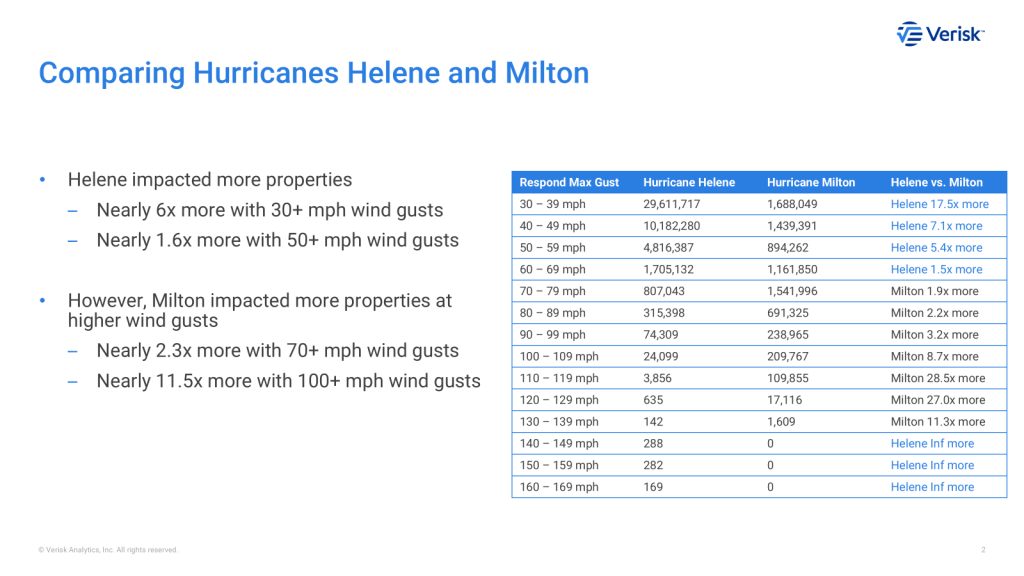
Helene stood out due to its massive size, boasting one of the largest tropical-storm-force wind fields ever recorded for a Florida landfalling hurricane. At its peak, Helene was a Category 4 storm—the strongest on record for Florida’s Big Bend region—with sustained winds between 130 and 156 mph.
The hurricane’s extensive wind field meant that millions of properties across Florida, Georgia, and the Carolinas experienced wind gusts exceeding 30 mph. Although it made landfall in a sparsely populated area, limiting high-wind structural damage, the storm’s vast reach led to widespread power outages affecting nearly 5 million customers. The most devastating impact was the catastrophic inland flooding. Helene dumped over 24 inches of rain in parts of southern Appalachia, causing rivers and streams to swell to record levels. Communities faced severe flooding, infrastructure damage, and long-term economic hardships as buildings and roads were washed away.
A significant issue highlighted by Helene was the lack of flood insurance coverage. Standard homeowners’ insurance policies typically do not cover flooding, and nationally, less than 4% of homes have flood insurance—a figure that drops to 1–2% in the hardest-hit areas. This gap left most flood damage uninsured, placing immense financial strain on homeowners and hindering community recovery efforts.
Hurricane Milton: The Intense Powerhouse
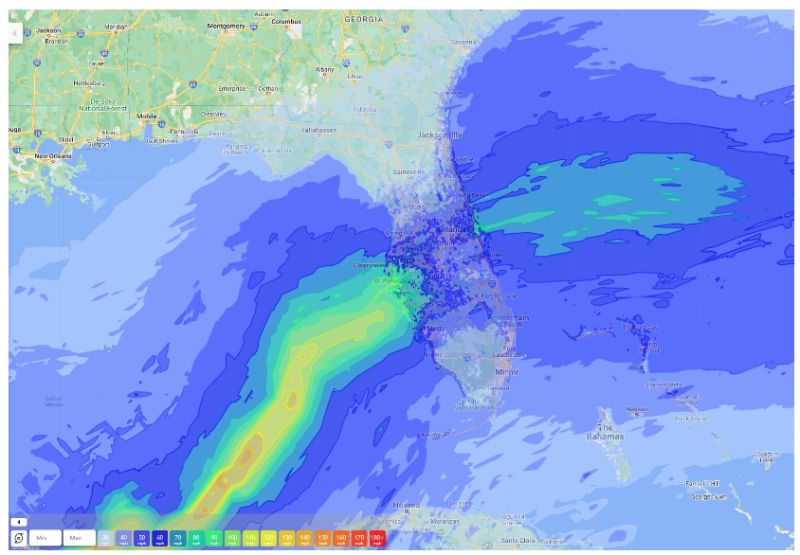 In contrast, Hurricane Milton was more compact but intensely powerful. Before landfall, Milton achieved Category 5 status with sustained winds exceeding 157 mph and recorded the fifth-lowest minimum central pressure of any Atlantic hurricane—a key indicator of storm strength.
Initial forecasts raised alarms that Milton might make a direct hit on Tampa Bay, potentially causing catastrophic storm surge due to the bay’s shallow waters and densely populated shores. Fortunately, Milton veered slightly south, sparing Tampa Bay from the worst-case scenario. The storm made landfall as a Category 3 hurricane, impacting central Florida, including Tampa and Orlando.
As Milton transitioned into a post-tropical system during landfall, its wind field expanded, affecting a broader area with strong winds. Over 3 million customers lost power, signaling significant impacts despite the storm’s smaller size compared to Helene. Florida’s stringent building codes, implemented after the devastation of Hurricane Andrew in 1992, played a crucial role in mitigating damage from Milton. These codes require new constructions to withstand high wind speeds, with specific regulations for roofing, windows, and overall structural integrity.
Areas impacted by Milton had also been affected by recent hurricanes like Ian in 2022, leading to rebuilds and retrofits that met or exceeded current codes. This investment in resilience paid off, resulting in less severe damage than expected for a storm of Milton’s intensity striking populated areas.
Despite Milton’s strong winds affecting densely populated regions, insurance claims were lower compared to Helene. Several factors contributed to this disparity: stronger building codes resulted in less damage, many homeowners increased their deductibles to offset rising insurance premiums, and recent legislative reforms in Florida aimed at reducing fraudulent claims and litigation influenced the claims landscape.
Conclusion
Hurricanes Helene and Milton serve as powerful reminders of the diverse challenges hurricanes present. The 2024 Atlantic hurricane season reinforces the need for continual vigilance, investment in resilience, and adaptive strategies to protect communities. By learning from each storm and implementing comprehensive measures, we can better prepare for future seasons and mitigate the impacts of these formidable natural events.
Related Posts