In 2017, there were 9,560 wildfires in the state of California that burned over 1.5 million acres of land, many of which affected heavily populated areas around Los Angeles. During these events, I had the privilege of working with a client who made some bold moves in asset acquisition based on predictable weather patterns and the likelihood of this repeating itself the next year.
In 2018, there were 8,527 wildfires, burning 1.9 million acres, including one in particular that destroyed 1,643 homes and buildings and damaged another 364—right in the client’s backyard. The result for his company was a $9.1 million increase in revenue in just one year!
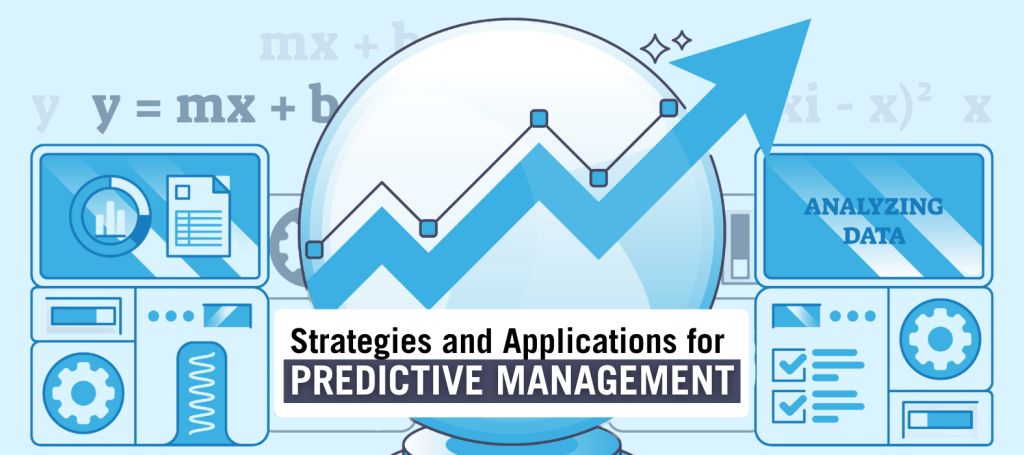
This was a huge lesson for me in how business strategy relates to the laws of supply and demand, as well as how strategies in predictive management can be applied to the restoration industry to maximize returns on recurring events. Serving as an introduction to this topic, my previous article set the stage with the basics of predictive management and its related benefits. To gain a greater understanding of the practical application, let’s dive into the strategies and applications for this approach.
Business managers have been using historical data to plan and make decisions on future growth initiatives for as long as transactional records have existed. Applying this thinking to the restoration industry only seems logical when you consider the cause-and-effect relationship between events and the demand for restoration-related services. These events follow predictable patterns both seasonally and cyclically. Understanding this, restorers would benefit greatly from making the following strategies a staple in their management routine.
Demand Forecasting
Historical job data alone can give us a reliable look at what we can expect throughout the year. For most areas of the country, this is driven by weather. Obviously, meteorologists are not paid for performance or known for their accuracy of predictions. However, advances in technology and a greater understanding of global weather patterns such as El Nino and La Nina carry some weight in the scientific community. When we combine this information with job histories, we can make assumptions about what to expect in terms of demand months in advance, just like my client from California.
Resource Planning
Resources are unarguably the single most limited factor when it comes to capacity and productivity. Project management and job supervision are the top two on my list. Again, we can use past performance metrics to gauge future performance expectations. The key to this formulation is the ratio of jobs to individuals. Maximizing utilization in these areas is important not only from a capacity standpoint but also from a quality approach. Doing more work isn’t always the right answer, but doing more of the right work the right way leads to happy customers who pay their bills on time and become referral sources for more work.
Dynamic Staffing
Closely related to resource planning, dynamic staffing involves creating a scalable operating model that can wax and wane with demand. Whether it is through using temporary labor services, subcontracting, or strategic partnerships, restorers can leverage these methods to quickly balance the supply side of the equation. This is a strategy largely used by contractors traveling for catastrophe work, but it should also be a mainstay in local markets for large loss opportunities or regional events such as tornados, flooding, and cold snaps. Using predictive insights to scale staffing up or down can create a competitive advantage in local markets, especially where the labor pool is thin.
Inventory and Equipment Readiness
Nothing gives me heartburn more than visiting a client’s warehouse and seeing rows of air movers and dehumidifiers and boxes of supplies lined up neatly on the shelves. They are not making any money sitting on the shelves!
I believe that restoration contractors stand to gain a great deal of valuable knowledge from other industries that track inventory turnover and equipment utilization rates. My suspicion is that the idle profits are staggering. Right-sizing these asset inventories to match the average demand across the year is critical to the lean periods, but knowing when to increase them during surges in work is even more important. This is when supplier relationships are critical. Bulk purchasing programs, delay or drop shipment options, just-in-time (JIT) inventory management, on-demand rental agreements, and many other options are available from most suppliers if you plan in advance with solid data to support your needs.
Insurance Claim Patterning
Because the demand for restoration services is so closely aligned with property claims, restorers should not ignore claims patterns at any level. Fortunately, there is plenty of data available. Organizations like the Insurance Information Institute (www.iii.org) can be abundant sources for data and statistics that can be cross-referenced with contractor job data to identify insightful correlations useful for predicting workloads. Frequency is important, but loss type and severity are equally important when planning because they give us the ability to plan our business development efforts with targeted marketing campaigns when these times come around. Nothing screams “experience” better than telling your customers they’re going to need you BEFORE they know they need you!
Tools and Technologies of the Trade
You don’t need to be a research scientist to use predictive management in your business. You just need the right tools and good data. Broadly speaking, data is not an issue in the restoration industry. There are thousands of data points available to every contractor, every day inside their own job management systems. Managing the data so that it is clean, timely, and accurate must be a priority. Remember, good data equals good decisions.
Many job management systems have some degree of basic analytics and reporting capabilities that are resident to their systems. Having the ability to get the data and reports out of the system is equally as important when it comes to cross-referencing the information with other data sources like weather patterns and claims information referenced above. This is where data becomes insightful and significant. This will require some basic to intermediate use of spreadsheets, pivot tables, and business intelligence (BI) tools. Applications like Microsoft Power BI, Tableau, and Domo provide more than enough horsepower to get started without extensive training.
Once we have good data and it’s in a place where we can slice it and dice it, then we need to create predictive models to forecast future outcomes. This sounds complex, but with recent advances in AI technologies, it’s really quite simple. Take the data, dump it into ChatGPT (or your favorite version of it), and ask it to forecast the result. Keep in mind that the more criteria you give it, the more informative the result.
For the AI critics out there who might be skeptical of the accuracy of AI models (present company included), I would recommend creating some “what-if” based models using an old-fashioned spreadsheet where you can input assumptions to the variables and consider the results under various business conditions.
Anticipation
Bringing this full circle to the client example we started with, we had solid data from previous wildfire job history. We knew the client base and their needs, along with the resources that were required to provide those services and the associated costs. Armed with this data, we cross-referenced the weather pattern predictions for the coming year and the likelihood of those events happening again. The predictions all looked favorable, and a blockbuster decision was made to purchase all the air-filtration and deodorization equipment the client could get its hands on. This bold move created a unique selling position for the client, which they used to create a windfall for the business.
Anticipation is one of the most underrated skills in business. The ability to use past experience and knowledge to create a vision of expected outcomes is the mark of a great manager. When you couple these instincts with data, you get invaluable institutional knowledge that can be used to create limitless possibilities for growth.
My advice to restoration contractors today is to start small. Focus on cleaning up your data and then get curious. Start asking insightful questions about what the data is telling you. Dig in and then add some layers by seeing if there are patterns or relationships between workloads and other factors like time of the year, insurance claims, weather, economic conditions, population, building types, and so on. Then, add more layers to your resources. The deeper you dig and the more layers you add, the more insightful information you will find. Those insights will lead to predictions, and those predictions will lead to decisions, and those decisions will lead to success.
Timothy E. Hull, CR
 Timothy E. Hull, CR, is President of Violand Management Associates. He has a vast knowledge of all facets of business, enhanced by strong analytical and negotiating abilities, and extensive experience in the disaster restoration industry. Early in his career, Tim spent time in the building trades before working in top positions for two well-respected, high-performing restoration companies. He joined Violand in 2008 as a business development advisor and purchased the company in January 2025. To reach him, visit violand.com or call (330) 966-0700.
Related Posts