As someone who has spent years recruiting, hiring, and managing sales teams, I’ve experienced the highs of landing a promising new hire and the crushing lows of seeing their potential unravel because of missteps I could have prevented. Early in my career, I was guilty of what many leaders do: recruiting someone I believed was a rock star, handing them a laptop and a list of contacts, and saying, “Go make it happen.” I expected results without providing the map to get there.
The consequences were predictable but still painful. Talented people struggled to find footing, fell short of performance standards, and eventually left or were let go. This vicious cycle costs time and money and leaves a hole in our team’s morale and momentum. As I reflect on those experiences, I now see how much of the failure was on me, not them.
Imagine you’re a new salesperson, walking into what you hope will be the next exciting chapter of your career. But instead of a warm welcome and clear direction, you’re met with a quick handshake, a pile of expectations, and vague instructions to “shadow the team.” Confusion sets in as the days pass, and that initial excitement begins to fade.
This lack of direction leads to missteps. You might fumble through conversations with potential clients, not understanding your company’s offerings well enough to position them confidently. Perhaps you alienate the operations team because you don’t fully grasp their role and end up overpromising about what they can deliver. Over time, frustration builds. You start to question if you made the right career move. Eventually, the spark that brought you to this role dims—and soon, you’re out the door—just another casualty of a broken system.
I’ve seen this play out not only in my own company but also in the businesses I now consult. The problem is universal: we focus so much on recruiting the right talent that we neglect what comes after.
It was only when I reframed onboarding as a critical investment that things began to change. Bringing on a new salesperson is like acquiring a company. The hiring process is the deal, but onboarding is the integration—aligning cultures, building systems, and setting the stage for growth. Skip the integration, and the deal falls apart.
So, we revamped our approach. Day one now starts with a deep dive into our core values. I sit down with new hires and help them identify their values. Then, we connect the dots between those values and our company’s mission, vision, and culture. This exercise isn’t just fluff; it creates alignment. They see where they fit, and they begin to feel like they belong.
A few years ago, we brought in a new Business Development Associate, someone who had been successful in previous roles but was new to our industry. Instead of throwing them into the deep end, we followed our onboarding roadmap. Over the first month, they spent time shadowing our operations team on water loss jobs, working alongside project managers, and sitting in on customer meetings. This wasn’t busy work—it was intentional.
By the end of that first month, they could confidently explain our process to a prospect. They had built rapport with the team, understood what was realistic to promise, and had already secured their first Emergency Response Plan (ERP) discussion. Four months in, they were consistently hitting their quota. More importantly, they felt part of something bigger than themselves, which made them want to stay and grow with us.
Contrast that with a hire from my earlier days—someone just as talented but without the onboarding structure. They spent their first weeks isolated, unclear on how to navigate the job, and hesitant to ask for help. They left within six months, frustrated and defeated.
The impact of proper onboarding extends beyond the individual. When a new hire integrates well, the entire team benefits. Siloed thinking breaks down as salespeople understand the roles of operations and production. Communication improves because everyone speaks the same language. Customers notice the difference too—they sense the alignment and confidence that comes from a cohesive team.
Onboarding is also a form of communication with your employees. It tells them what to expect and what’s expected of them. It demonstrates that you value their success as much as they do. And let’s be honest—your employees are your internal customers. If you don’t solve their pain points, why would they believe you care about solving your external customers’ problems?
A critical part of our onboarding process is setting clear expectations and progressive goals. We don’t expect a new hire to perform at full capacity on day one. Instead, we use a four-month ramp-up schedule, gradually increasing activity and quota targets.
For example:
- In the first month, the focus is on learning. We set modest activity goals—15 to 20 fresh contacts per week and two discovery meetings.
- By month four, the targets rise to 50 fresh contacts weekly and five new business meetings, with full quota attainment expected.
This gradual progression allows the salesperson to build momentum like a train picking up speed. It’s not just about hitting numbers—it’s about instilling the habits and confidence that lead to long-term success.
For a closer look at how this works in practice, check out my detailed ramp-up process here.
If you’re leading a sales team or considering growing one, I urge you to treat onboarding as a non-negotiable priority. It’s not just about training someone to do a job; it’s about integrating them into your vision and setting them up to thrive.
I’ve learned this the hard way, but I’m grateful for the lessons. Today, I have seen the payoff in our team’s cohesion, our client’s satisfaction, and the success of the businesses I consulted. Proper onboarding doesn’t just protect your investment—it transforms it into something invaluable.
So, the next time you hire a salesperson, ask yourself: Do I have a plan for their success? If not, start today. Your team, your clients, and your bottom line will thank you.
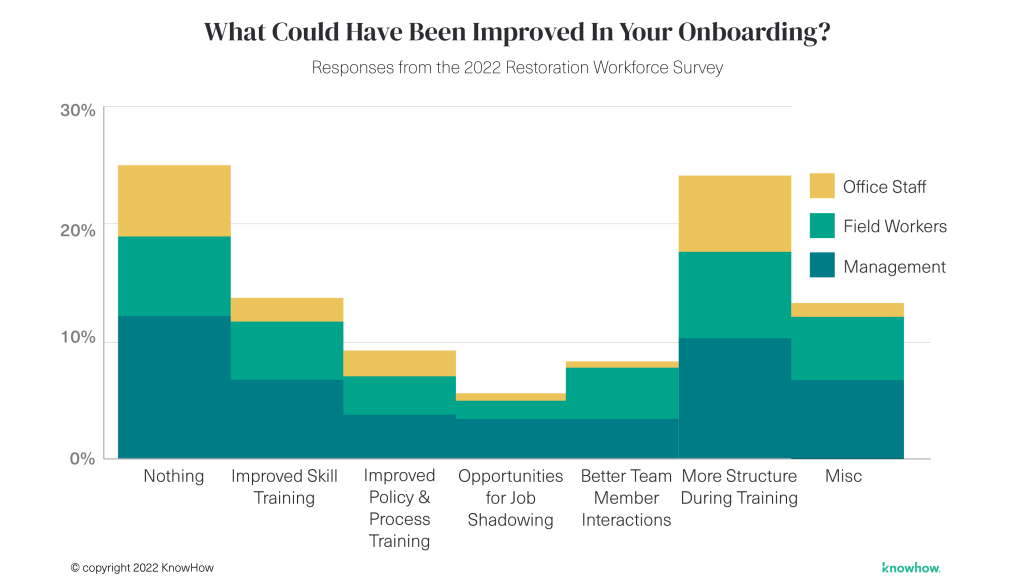
Special thanks to Knowhow for being a source of information for this article!
Scott Maysura

Scott Maysura is a business advisor, fractional executive, and project consultant with more than 25 years of experience in restoration, construction, plumbing, HVAC, and other service-based businesses. His background includes business ownership, operational leadership, commercial large-loss management, complex project support, and helping organizations build the structure needed to grow profitably.
Through Clarity Business Solutions, Scott partners with owners, leadership teams, insurance professionals, and contractors to improve financial visibility, strengthen operations, develop leaders, and implement practical systems that drive accountability and sustainable growth. He also provides project-based consulting and executive support for large-loss, commercial, and complex property losses when organizations need experienced operational leadership or subject matter expertise.
Scott holds a bachelor's degree in Psychology, a diploma in Small Business Management, and the designation of IICRC Triple Master Restorer.
Connect with Scott on LinkedIn or at [email protected].
Related Posts