Mold Remediation

A key service offered by restoration and remediation companies, this page holds resources on proper mold remediation and removal techniques, tools, products, industry best practices, and caring for customers affected by mold.

The Mold Industry’s Opportunity to Modernize, Innovate, and Affect the Healing Potential of Millions

Introduction The mold remediation industry is lagging behind science. For years, it has failed to adapt to noteworthy scientific evidence highlighting the serious health risks associated with water-damaged buildings and the mold and other microbial contamination they can harbor. Additionally, the industry tends to overlook abundant evidence indicating that mold and its by products pose a bioaerosol problem with potentially significant health implications for a large percentage of the population. State-regulated and other unregulated water-damage remediation projects are currently limited to visibly contaminated or compromised areas, neglecting the impacts of water-damage contamination on the

Read More »

The Delicate Dance of Humidity Control: A Restorer’s Tale

In the realm of restoration, where time is of the essence, controlling humidity is both an art and a science. Envision a water-damaged structure, its walls saturated with moisture, and a team of restoration professionals racing against the clock to mitigate further damage. This scenario sets the stage for our narrative. Initial Assessment and Strategy Formulation As our experienced restoration specialist, Sarah, enters the affected building, she’s acutely aware of the urgency. Her primary objective is to control humidity and temperature to minimize moisture migration, prevent secondary damage, and inhibit microbial amplification. Sarah’s trained

Read More »

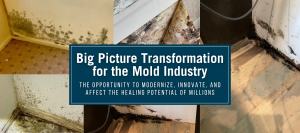
Big Picture Transformation for the Mold Industry: The Opportunity to Modernize, Innovate, and Affect the Healing Potential of Millions

Introduction The mold remediation industry is lagging behind science. For years, it has failed to adapt to noteworthy scientific evidence highlighting the serious health risks associated with water-damaged buildings and the mold and other microbial contamination they can harbor. Additionally, the industry tends to overlook abundant evidence indicating that mold and its by products pose a bioaerosol problem with potentially significant health implications for a large percentage of the population. State-regulated and other unregulated water-damage remediation projects are currently limited to visibly contaminated or compromised areas, neglecting the impacts of water-damage contamination on the

Read More »

Botanical Solutions for Effective Mold and Water Remediation

When it comes to the chemical part of the job, disaster remediation and restoration projects can be reliably evaluated by considering the “Clean, Kill, Coat” approach.  For restoration professionals, applying the right product technologies, like botanical cleaners and disinfectants, can add further value to your services. Severe weather events are on the rise. Look no further than the most recent Atlantic hurricane season, which saw several major storms rip through the American Southeast, leading to record flooding in several locations.  The potential water damage resulting from storms like these can have long-lasting negative impacts

Read More »

Restauración de Daños Por Agua – Para Restauradores con Prisa part 6

Read this article in English El agua en su estado gaseoso está compuesta por moléculas individuales de H₂O. Es fascinante notar que se necesitan aproximadamente 1.36 billones de estas diminutas moléculas para formar una sola gota de agua. Una molécula de H₂O mide alrededor de 0.000275μ, lo que la hace increíblemente pequeña en comparación con las bacterias y esporas de moho, que son significativamente más grandes y pesadas. Esto significa que la humedad por sí sola no puede transportar estos microorganismos debido a su masa. Atracción Molecular, Transición de Fase y Malentendidos  Las moléculas

Read More »

Water Restoration for Restorers In a Hurry | Part 6

Lea el artículo en Español Water in its gaseous state is composed of individual H₂O molecules. It’s fascinating to note that it takes approximately 1.36 trillion of these tiny molecules to form a single drop of water. An H₂O molecule measures about 0.000275μ, making it incredibly small compared to bacteria and mold spores, which are significantly larger and heavier. This means that humidity itself cannot carry these microorganisms due to their mass. Molecular Attraction, Phase Transition and Misunderstandings  H₂O molecules have a magnetic field attraction (polarity): hydrogen carries a positive charge, while oxygen carries

Read More »

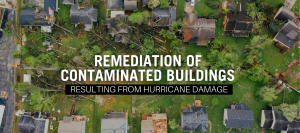
Remediation of Contaminated Buildings Resulting from Hurricane Damage

As an active IICRC instructor, I train and certify hundreds of restoration professionals annually. I am also heavily involved in the development and updates to the IICRC (Institute of Inspection, Cleaning, and Restoration Certification) standards, including the ANSI IICRC S500 The Standard for Professional Water Damage Restoration, and the ANSI IICRC S520 The Standard for Professional Mold Remediation. Both of these standards directly apply to the mitigation services being performed by restoration companies responding to water and storm damage as a result of impacts from hurricanes. Understanding Water Damage Categories and Restoration Guidelines The

Read More »

The Difference Between Sorption

In chemistry, physics, and environmental science, the terms sorption, absorption, adsorption, and desorption describe different mechanisms of how substances interact with each other. These processes are critical in a wide variety of applications, from water treatment and catalysis to drug delivery systems and material science. This article will explain these terms in detail, highlight their differences, and include relevant scientific references to provide a deeper understanding. 1. Sorption: The General Term Sorption is an umbrella term that refers to the process in which one substance becomes attached to another. Sorption encompasses both adsorption and

Read More »

Restauración de Daños Por Agua – Para Restauradores con Prisa parte 5

Read this article in English En el campo de la restauración de agua y la remediación de moho, los antimicrobianos o biocidas se usan comúnmente con la esperanza de eliminar el crecimiento microbiano y prevenir su reaparición. Sin embargo, su aplicación requiere una consideración cuidadosa debido a los posibles riesgos para la salud y las implicaciones legales. Antimicrobianos  Antes de usar cualquier producto antimicrobiano, es crucial leer y entender sus Hojas de Datos de Seguridad (SDS). Estos documentos proporcionan información esencial sobre la composición química, los peligros potenciales y las instrucciones de manejo seguro.

Read More »

Water Restoration for Restorers In a Hurry | Part 5

Lea el artículo en Español In the field of water restoration and even mold remediation, antimicrobials or biocides are commonly used in hopes of eliminating microbial growth and preventing its regrowth. However, their application requires careful consideration due to their potential health risks and legal implications. Antimicrobials  Before using any antimicrobial products, it is crucial to thoroughly read and understand their Safety Data Sheets (SDS). These documents provide essential information on the chemical composition, potential hazards, and safe handling instructions. Many antimicrobials are classified as pesticides (another word for poison), which underscores their potency

Read More »
Latest Posts
Most Popular