Mold Remediation

A key service offered by restoration and remediation companies, this page holds resources on proper mold remediation and removal techniques, tools, products, industry best practices, and caring for customers affected by mold.

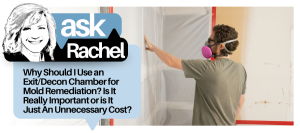
Why Should I Use an Exit/Decon Chamber for Mold Remediation? Is It Really Important or is It Just An Unnecessary Cost?

There are several important components needed for successful containment. One of the most important components is the use of an exit/decon chamber. These chambers are attached to the main containment chamber and function as a transitionary space between the contained area and the unaffected areas. It provides a space for the technician to don and doff their personal protective equipment to prevent contaminants from being released from contaminated suits and gloves upon exit. It also provides a spot for bags of debris and contaminated equipment to be placed and decontaminated prior to removing it

Read More »

Why Should I Go to the Expense of Buying a Manometer to Measure Negative Pressure?

If My Plastic is Sucking In, That is Proof Enough That My Containment is Under Negative Air! The primary liability for a mold remediation contractor is cross-contamination from a failure in containment. Failure can result from poor construction, not using an exit/decon chamber, improper doffing of PPE, poor cleaning techniques, and not maintaining adequate pressure differentials.  When I ask most restorers how they determine if they have created negative pressure inside containment, the most common answer I get is, “Well, of course! If my plastic pulls in, we have plenty of negative air!” But

Read More »

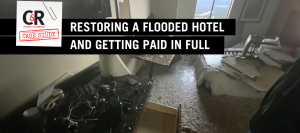
Case Study: Restoring a Flooded Hotel and Getting Paid in Full

We are Rare Restoration and Roofing, a local, family-owned, operated, culture-first, full-service restoration company based in Colorado Springs. We service commercial and residential clients all over the front range from our two brick-and-mortar locations. Between Rare and our sister carpet cleaning company, we have the most truck-mounted extractors in the region, allowing us to respond to losses much larger than we could take on alone. We have a team of 20 certified restorers with varying years of experience.  Tell us about the loss. This call came in on a Sunday evening from a Google

Read More »

What Are the Best Biocides I Can Use to Kill Mold on Mold Remediation Jobs?

Introducing “Ask Rachel,” a new, must-read column in C&R! Written by none other than restoration educator extraordinaire Rachel Adams, this column offers you the unique opportunity to tap into Rachel’s vast reservoir of knowledge and experience. Send in your queries and buckle up for insightful, practical advice. Don’t miss your chance to learn from the best! Using chemicals to “kill” mold should not be the goal of the remediation contractor.  Non-viable mold spores contain the same toxigenic and/or allergenic properties as their viable counterparts. The majority of mold is non-viable to begin with. This

Read More »

Understanding the Construction of Carpet – Why It Matters

It is crucial to have a comprehensive understanding of the construction process of a carpet, particularly regarding how the backings are bound. Not understanding this process can result in further damage being done to the carpet by well-meaning restoration and cleaning professionals. The Carpet Bonding Process First, the bonding is applied to the underside of the carpet, which acts as a foundation and supports the fibers. The bonding process involves the application of adhesives to the backing, which allows it to be pressed firmly onto the carpet’s underside. The result is a solid and

Read More »

Restauración de Daños Por Agua – Para Restauradores con Prisa | Parte 3

Read this article in English Parte 3 de 8 La lección clave de esta sección es que muchos restauradores afirman que cuando el agua entra en contacto con el suelo, automáticamente se convierte en agua sucia, lo que lleva a un cambio de categoría. Algunas personas hacen afirmaciones simplistas, como “Tú NO la beberías”, mientras que otros basan los cambios de categoría en factores como la presencia de crecimiento microbiano (MOHO). Sin embargo, como se explicó en el artículo anterior, los materiales Regulados y Peligrosos no son lo mismo que la categoría de agua

Read More »

Water Restoration for Restorers In a Hurry: Part 3

Lea el artículo en Español The key takeaway from this section is that many restorers assert that when water comes into contact with the floor, it automatically becomes dirty water, leading to a change in category. Some individuals make simplistic statements, such as “you wouldn’t drink it,” while others base category changes on factors like the presence of microbial growth (MOLD). However, as previously explained at the end of part 2, Regulated and Hazardous materials are not the same as the category of water and may cause confusion when attempting to categorize. It’s essential

Read More »

2023 C&R Top Content

In 2023, C&R shared and published hundreds of articles, podcasts, videos, news releases, and more! Here are the most popular posts in every category this year! Most-Read Articles in 2023 Allstate Pays Contractor $335,000 to Settle Dispute over $33,000 Restoration Invoice http://candrmagazine.com/allstate-pays-contractor-335000-to-settle-dispute-over-33000-restoration-invoice/ written by Edward H. Cross, esq. of Restoration CrossCheck & Law Offices of Edward H. Cross & Associates 10 Secret Xactimate Line Items http://candrmagazine.com/10-secret-xactimate-line-items/ written by Matt Gregory of RestorationX Dehumidification Capacity in Structural Drying http://candrmagazine.com/dehumidification-capacity-in-structural-drying/ written by of Josh Woolen of EGA-Commissioner (EGA-Cx) 2023 Restoration Industry Predictions http://candrmagazine.com/2023-restoration-industry-predictions/ written by Phillip

Read More »

Determining Water Category, Class of Drying, and Environment Condition

Is there a Need to Know, and What Should We Do?  When we are planning and coordinating the loss, we understand why we need to be able to properly define the category, know the classification, and consider the condition of the environment within the building, its structural materials, assembly, and contents as they are codified by the ANSI/IICRC individual standards of care. The value this instills in what we do for the client entrusting us with their dreams or financial livelihood. We must take advantage of a class seat or training time; before loss

Read More »

The Restoration Dictionary

I’m so happy to be part of and actively participate in the IICRC Standards of Care for this industry. I can’t rely on waiting for the old standards and the new standards to go public, there are so many redefined and defined (new) words. They even clarified language for us. But here are some definitions that have been in our industry. I can’t wait to see how they are cleaned up and/or presenting new definitions.  Knockdown (verb): (syn.) pulldown: 1. An act of using aerosolized fine liquid droplets to reduce airborne solid particles by

Read More »
Latest Posts
Most Popular